Question on defense against grappling in street fight

Again, irrelevant. Ukemi is for controlled falling bodyweight, and we're discussing uncontrolled.
It may not be relevant to your point.... but it got me thinking about a different issue and was curious. If you don't want to share the types of ukemi practice your class does.... I will live without that information.... but I really was just curious.....
 
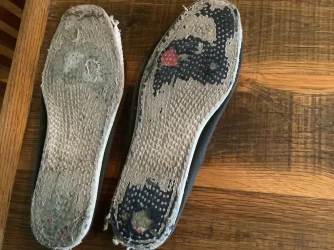
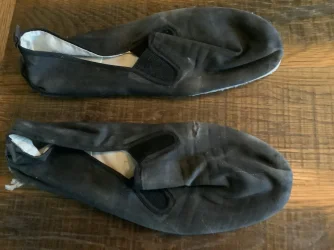
My students always wear cotton soled shoes on a waxed and polished concrete floor. It is incredibly slippery to almost frictionless. This has many benefits in training that apply somewhat to what you say here. Many people only train barefoot, this is fine, but bare feet grip mats very well and this allows people to kick higher and punch harder without the control needed for alternate environments. I occasionally have people put street shoes on and do the exercises outside on asphalt so they get a sense of the differences. It is a significant feature in my teaching methodology.
Make them practice with regularly shoe sometimes outside is very important, at least they know what to expect. I was SURPRISED, this just happened lately after all these years.
 
Muay Thai fighters may be better at not getting punched in the head than TKD fighters, because Muay Thai fighters spar with punches to the head.

But you know what? By not training Muay Thai, I also don't get punched in the head.

I could take your side of the argument further and say that by not actually breaking people's arms in jiu-jitsu I'm not training effectively because I'm training to stop it, or that people who train kali or do force-on-force training with simunitions aren't training effectively because they're not using real weapons or ammunition and actually hurting each other.

What's the point in "self-defense" if, like my friend, you can never walk normal again because of the training for it?
I agree about not training to the point of injury to some degree. It’s part of why I don’t teach children. You are a BJJ guy and I am not, so I have less standing in this debate. As I see it, takedowns are inherently dangerous, yet very necessary in order to achieve success using grappling in a self defense scenario. Serious question, how would you use BJJ effectively without takedowns against a skilled striker? I’m not saying it can’t be done, I’m just curious.
 
I could take your side of the argument further and say that by not actually breaking people's arms in jiu-jitsu I'm not training effectively because I'm training to stop it
I used to train with a guy that practiced one of the striking forms of martial arts, where they only allow very light contact to the head... he got in a real fight, threw a punch he meant to hit the other guy with and it stopped short before making face contact. It still worked out for him, the other guy backed down after seeing how fast the punch came....

I also met a guy who got in a real fight with a guy that was very trained in grappling. He recognized he was in trouble and tapped out early to a submission attempt.... the other guy let go.... the guy I met immediately punched him in the head, instead of getting up and it was enough to change the outcome of the fight.

The way I have always been trained is that when you apply a submission and the other guy taps, instead of letting go, you stop applying more. Then you exit with control of the other guy. Obviously, I don't compete.... But this type of training stops us from training in the habit of letting go of the advantage you just worked for.

Royce Gracie made a similar change.... He choked out Ken Shamrock, Ken tapped and Royce let go.... then the ref said "fight on," because he missed the tap. The fights that Royce was in after that, he held his submission until the ref physically pulled him off, so that there would be no more confusion.
 
Almost nothing for us.

Yeah. I think its weird. I do takedowns that kind of remove the need for it.

Actually I think the muay Thai class might be worse as the falls are more ballistic. And they don't do falls either.

If you only expect to fall on a mat no big deal. It’s not hard to train break falls, seems odd you guys don’t have it at least for beginners.
 
I used to train with a guy that practiced one of the striking forms of martial arts, where they only allow very light contact to the head... he got in a real fight, threw a punch he meant to hit the other guy with and it stopped short before making face contact. It still worked out for him, the other guy backed down after seeing how fast the punch came....

I also met a guy who got in a real fight with a guy that was very trained in grappling. He recognized he was in trouble and tapped out early to a submission attempt.... the other guy let go.... the guy I met immediately punched him in the head, instead of getting up and it was enough to change the outcome of the fight.

The way I have always been trained is that when you apply a submission and the other guy taps, instead of letting go, you stop applying more. Then you exit with control of the other guy. Obviously, I don't compete.... But this type of training stops us from training in the habit of letting go of the advantage you just worked for.

Royce Gracie made a similar change.... He choked out Ken Shamrock, Ken tapped and Royce let go.... then the ref said "fight on," because he missed the tap. The fights that Royce was in after that, he held his submission until the ref physically pulled him off, so that there would be no more confusion.
Valid points. Street equals cheat. Under stress and duress most folks do what they practiced, the way they practiced it.
 
Make them practice with regularly shoe sometimes outside is very important, at least they know what to expect. I was SURPRISED, this just happened lately after all these years.
 

Attachments

  • IMG_0362.webp
    IMG_0362.webp
    1.9 MB · Views: 33
  • IMG_0361.webp
    IMG_0361.webp
    1.6 MB · Views: 42
Make them practice with regularly shoe sometimes outside is very important, at least they know what to expect. I was SURPRISED, this just happened lately after all these years.
Get a block of hard paraffin wax and shave tiny bits on your concrete floor and then rub it in and polish until it’s like glass. Then get cotton soled shoes like I showed in the picture and put some wax on the soles of shoes. Now go hit your bag or post and see what happens. If you want extra slippery then sprinkle dance wax around too. BE CAREFUL! You already have one prosthesis…
 
I agree about not training to the point of injury to some degree. It’s part of why I don’t teach children. You are a BJJ guy and I am not, so I have less standing in this debate. As I see it, takedowns are inherently dangerous, yet very necessary in order to achieve success using grappling in a self defense scenario. Serious question, how would you use BJJ effectively without takedowns against a skilled striker? I’m not saying it can’t be done, I’m just curious.
For self defence I would suggest learning takedowns.

But learn ones you can control.

Shivworks Aparently kind of has that issue that because they do seminars they really have to have takedowns that can be trained resisted. But cand also be drilled enough times that people can learn it.


And there are enough of them out there to put together a decent layman's system.

Body locks and back takes.

Which still can go pair shaped because people can sit on your knee. But. You tell them not to.

Now obviously you can lower someone down or smash them.

And all those eye gouging, neck slapping guys have a much harder time with this. Because they are not front on. And their arms are often pinned.

A police one. Where he pins the arms a bit more and takes the back.

(Bear in mind Kenny Florian is a legitimate guy. Kenny Florian - Wikipedia)

And the older John will method that kind of shows live entries.


And last of all if you are good at them.

I still hit a ridiculous rolling guillotine. And I can do it on guys who haven't taken falls before. And not cripple them.

And on concrete. I have done it on the street.
 
Last edited:
For self defence I would suggest learning takedowns.

But learn ones you can control.

Shivworks Aparently kind of has that issue that because they do seminars they really have to have takedowns that can be trained resisted. But cand also be drilled enough times that people can learn it.


And there are enough of them out there to put together a decent layman's system.

Body locks and back takes.

Which still can go pair shaped because people can sit on your knee. But. You tell them not to.

Now obviously you can lower someone down or smash them.

And all those eye gouging, neck slapping guys have a much harder time with this. Because they are not front on. And their arms are often pinned.

A police one. Where he pins the arms a bit more and takes the back.

(Bear in mind Kenny Florian is a legitimate guy. Kenny Florian - Wikipedia)

And the older John will method that kind of shows live entries.


And last of all if you are good at them.

I still hit a ridiculous rolling guillotine. And I can do it on guys who haven't taken falls before. And not cripple them.

And on concrete. I have done it on the street.
That’s the thing, you have done it on concrete. You do it well enough to avoid destroying partner legs. That requires skill and trust. Kudos. I would not let a stranger work those on me. I’m 54 and my knees are still real good, I’m not about to let some 20 something wreck me for practice. I can see why people don’t want to do it and I can see why it’s necessary to get a certain skill set that works reliably.
 
For self defence I would suggest learning takedowns.

But learn ones you can control.

Shivworks Aparently kind of has that issue that because they do seminars they really have to have takedowns that can be trained resisted. But cand also be drilled enough times that people can learn it.


And there are enough of them out there to put together a decent layman's system.

Body locks and back takes.

Which still can go pair shaped because people can sit on your knee. But. You tell them not to.

Now obviously you can lower someone down or smash them.

And all those eye gouging, neck slapping guys have a much harder time with this. Because they are not front on. And their arms are often pinned.

A police one. Where he pins the arms a bit more and takes the back.

(Bear in mind Kenny Florian is a legitimate guy. Kenny Florian - Wikipedia)

And the older John will method that kind of shows live entries.


And last of all if you are good at them.

I still hit a ridiculous rolling guillotine. And I can do it on guys who haven't taken falls before. And not cripple them.

And on concrete. I have done it on the street.
I’m pretty good at DLT because it’s in my Tai Chi form but I always prefer leg sweeps because I’m better at that and I don’t need my hands to do it. I have done both on concrete, both inside and outside the gym.
 
"Rhino guard" should work better than "crazy monkey". At least your opponent's uppercut won't be able to reach to your chin because your long guard.

I learn from the first video. I always practice 2 punched to top and then go to the tummy to punch. The idea is high punch bring the hands up leaving the tummy open. Then I attack the tummy. I practice high and low punches every day like this.

The second video doesn't mean anything, the guy punch so slow you have time to do all the fancy stuffs. Typical I saw in all the "teaching" videos. IT's all in high speed in real life, like the first video, 4 punches(2 high, 2low) in one second or less. The key is to know how to punch hard that hurts. That is a lot of practice on heavy bag using heel, foot, hips, waste, shoulder and arms. That to me is where people should spend a lot of time practicing simple punches. Takes months and months to get it good. You can lose the timing if you slack off. You stop practicing 3months, you lose the timing.

When I see those fancy stuffs, I yawn. I concentrate on punching fast and hard. Step in to punch, step away back, to the side to avoid follow ups. When you punch it right, all of a sudden, the bag gives a loud echoey sound, you see the punch penetrate into the bag, the bag just jump a little but NOT moving back. Then you know you get it.

I am so glad I went to a school that supposedly TKD, but the teacher was strongly influenced by Bruce Lee ( that's in 1984). We only do forms 2wks before the belt test. We literally doing kick boxing instead of TKD, we practice boxing hands only. We spend a lot of time working in pairs, one holding a big bag, the other do punching and kicking. Then we do sparing. We concentrate on punching and kicking the right way. I spent around 2 hours before the class working on the heavy bag all by myself before the class. He actually invited instructor of jujitsu to teach us all the moves. Too bad I never took it that serious. I should have pay more attention if I know jujitsu is so important. My school is way ahead of time.
 
Last edited:
At the same time, I get where it comes from. We have one guy that used to train at my gym, had a horrific leg injury as a result of a take-down attempt that trapped his leg. He'll probably never walk right again.

Danaher has been very widely quoted as saying, "The number one source of catastrophic injury in Brazilian Jiu-Jitsu is uncontrolled falling body weight."

You eliminate most of that when you don't have take-downs.
To be honest there are only a few take downs that fall into that category: Tani Otoshi and Kani Bashami. Jumping guard also but that's not really a take down
None of those are banned in BJJ, it's just that they have a high injury rate so many academies don't allow beginners to train them

Pretty much everything you see in Judo and wrestling are fair game in BJJ - albeit with adaptions/exclusions for the ruleset
 
For self defence I would suggest learning takedowns.

But learn ones you can control.

Shivworks Aparently kind of has that issue that because they do seminars they really have to have takedowns that can be trained resisted. But cand also be drilled enough times that people can learn it.


And there are enough of them out there to put together a decent layman's system.

Body locks and back takes.

Which still can go pair shaped because people can sit on your knee. But. You tell them not to.

Now obviously you can lower someone down or smash them.

And all those eye gouging, neck slapping guys have a much harder time with this. Because they are not front on. And their arms are often pinned.

A police one. Where he pins the arms a bit more and takes the back.

(Bear in mind Kenny Florian is a legitimate guy. Kenny Florian - Wikipedia)

And the older John will method that kind of shows live entries.


And last of all if you are good at them.

I still hit a ridiculous rolling guillotine. And I can do it on guys who haven't taken falls before. And not cripple them.

And on concrete. I have done it on the street.

This is an important point I think

Being able to take someone down with a low impact, high control method (often favoured in BJJ) is preferable for many (not all) self defence situations and generally speaking ethically preferable
 
I think I stir up enough controversies. Talk about real life self defense vs in dojo, it's a huge difference.

For bare hand fights, space is not a huge difference, BUT it's very different if you fight bare foot in level surface in dojo than with shoes in real life environment. In MA, we always learn to keep the feet on the ground, sliding on the floor when moving. BE CAREFUL in real life. I never question this until I had my hip replacement lately where I can start punching and stick fight practice without kicking. I used to practice in the garage with my heavy bags bare footed for kicking. But since I cannot kick after the the hip replacement for a few weeks, I started wearing shoes( sandles) so I don't dirty my feet in the garage. WHAT A BIG DIFFERENCE. I almost trip when I sliding my feet around with shoes. It's a completely different feel with shoes on.

Then I started wearing shoes inside the house to practice. I was tripping left and right, shoes get caught by carpet. I started raising the feet up slightly so I don't trip. BUT still there are accidents that my feet still get caught.

Don't listen to me. Just wear your shoes and practice and see what happen.

So far I am only doing upper body exercise, kicking is completely different with shoes in real environment that you have uneven ground, rough ground on the street. People better practice in real life environment first to determine what technique is useful or not.

This is more important for fighting using a cane. I spend half and half time on bare handed and stick. I research all the style I can find and there is NONE to me that is practical stick defense in real life. The most common ones are Philippine escrima and Irish stick fight. They all use single handed with lighter stick. They gather speed by swinging the stick in big circles to gather speed. This is ABSOLUTELY USELESS IN REAL LIFE where you have people around, furniture and all that get in the way of the swing. Sure they look pretty and unique with the Irish style. I started practicing with one hand until I saw a competition where both people wacked each other stupid from beginning to end. They both still standing at the end. Sure they wear protection, BUT STILL STANDING AFTER BEING HIT LIKE 50 TO 100 TIMES? I dropper the single hand stick since that day.

I ended up using a heavy stick of almost 2lbs, swinging with both hands in very compact swing so I can use it in real life environment. I practice in hallway and in bathroom with confined space and generate power with shorting swing. I learn this from Lamont Glass, one of the founder of this site. Here is the video. Simple, no nonsense, not pretty but it is the only one that is useful in real life.


But this is off the topic here. I just want to stress TO USE COMMON SENSE, THINK ABOUT IT BEFORE BLINDLY FOLLOW ANY TEACHING. THINK SCIENTIFICALLY, NOT TRUST WHAT IS TAUGHT FROM OLDER MASTERS.

I've been practice over 2 years like the video, adding footwork learned from kick boxing to go in and out, left and right together with hitting. Keep it simple, no fancy stuffs. I put more effort in hitting the knees and lower part of the legs as it's harder to block.
Yes agree with the princple

If you train TMA or for self defence then you must have technique that works in a natural environment
Similar to my point about the rules changing things - this changes your technique significantly

Eg break falls on uneven or unforgiving surfaces need a different technique to those on mats. The way of stepping is different on uneven or slippery surfaces etc etc

Having run a TMA (Bujinkan) class on hard floors for many years and recently switching to mats it's interesting how everyone's ukemi has already changed somewhat despite being taught the "correct" (ie concrete proof) way
Evolution in martial arts is very quick actually.....
 
This is an important point I think

Being able to take someone down with a low impact, high control method (often favoured in BJJ) is preferable for many (not all) self defence situations and generally speaking ethically preferable
Yeah. It is the more moral option.

It is also easier to train. If I do huge high aptitude throws. How many rounds can I spar?
 
Back
Top