Collision or impulse

Can you push a car when you sit on a highchair with your feet off the ground?

šŸ¤” down hill or on ice maybe...


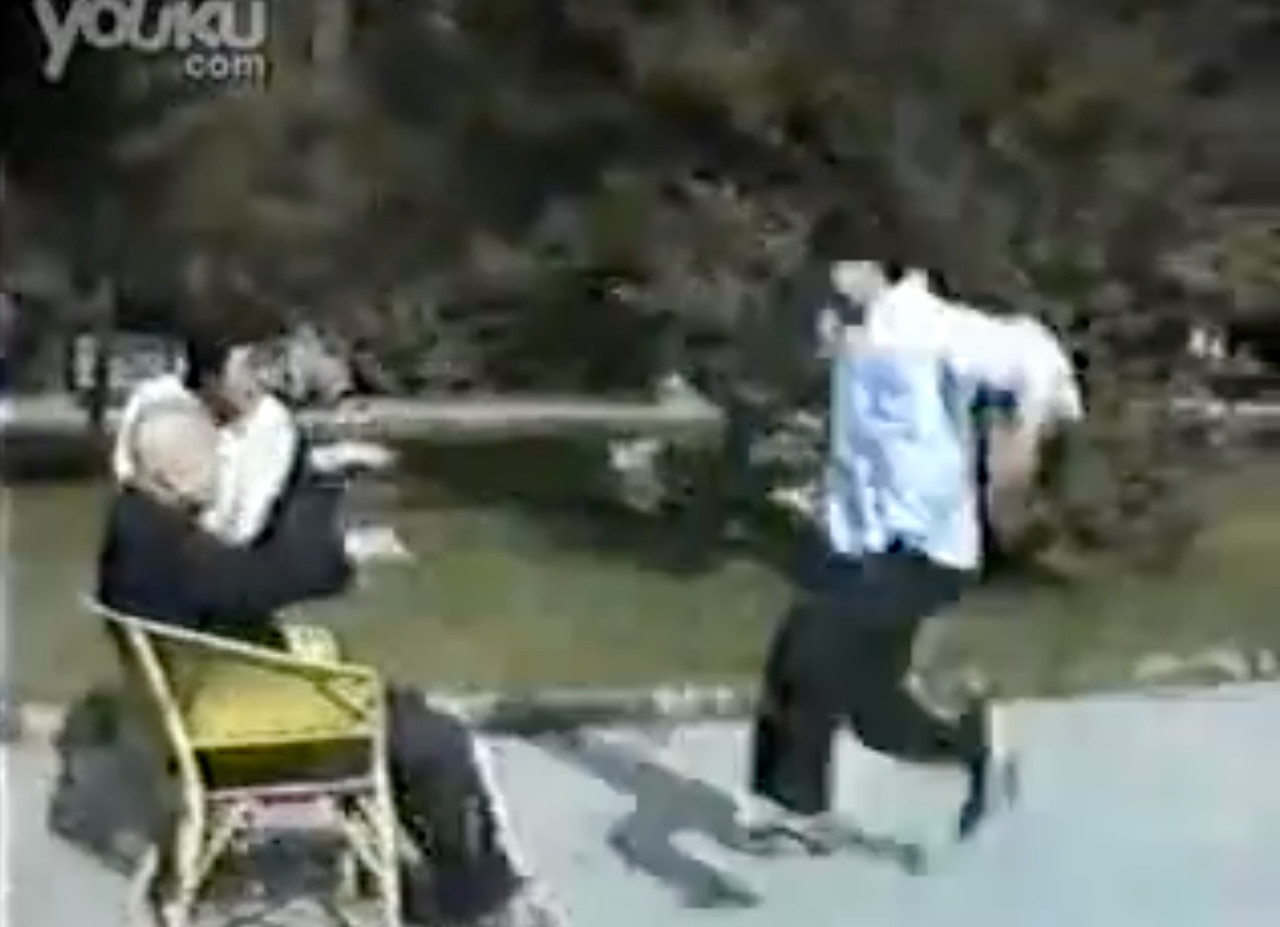
IWang_Yongquan_could_issue_fajin.jpg


Wang Yongquan could fajin while seated in a chair.

Jack Dempsey showed that power can come from falling mass rather than pushing the ground. "falling step"
Mike Sigman, took scattered traditional ideas, reframed them in engineering/mechanical language.

"ground path"

"Wang Yongquan, a prominent Yang-style Taijiquan master, learned from Yang Jianhou, Yang Chengfu, and Yang Shaohou. Over decades, he developed profound Taiji skills, blending tradition with innovation. His unique style, referred to as ā€œWang’s Transmissionā€ (ę±Ŗä¼ ), emphasizes the principle of ā€œusing one’s center to strike the opponent’s centerā€ (仄中碰中) through internal energy (ē„žć€ę„ć€ę°”)."


Last edited:
Are you a ā€œChen guyā€ ?. Someone claimed ā€œChen guysā€ don’t do ground path, only believe in dantian

Chen is about 50% of what I know. I did Yang style and Wu style for over 10 years before switching to Chen. My current teachers also taught me Xinyi liuhe, Xingyi quan, and some "sifu set" northern forms from various arts like bajiquan, fanziquan, tantui, choujiao-inspired, chaquan etc. My sifus told me to focus on Chen style the most since it's what I'm best at now. In retrospect I think I was lucky to find these teachers in particular as they were able to bridge what I had come up with in Yang style directly into my Chen style. This, alongside the heavy push into northern styles like baji and the historical perspective of xinyi liuhe has given me a unique insight into the arts I feel is valuable. I welcome people to take what I say with a grain of salt, but my recommendation is to try taking it with a grain of pepper for a change!
 
Wang Yongquan could fajin while seated in a chair.
If his feet are on the ground, can he generate more power than he is sitting?

My definition of "Fajin" is to generate "maximum power" and not just "partial power".
 
Last edited:
Again, push is not "maximum power generation". Can he knock out/down, or even kill his opponent with his punch while he is sitting on his chair?

A better question is whether the person asking has actually felt or can replicate what’s being shown.
Without that, the discussion remains theoretical.

There’s no need to invoke other examples. He isn’t pushing, the effects shown can’t be produced through ordinary pushing mechanics or leverage-based force chains. It’s a different mechanism, producing a different outcome.

The demand for ā€œmaximum powerā€ assumes a kinetic model of force. Taiji often operates in a different way — not by maximizing force, but by disrupting structure and reference points.
 
Taiji often operates in a different way — not by maximizing force,
We are discussing whether "ground path" is used in Taiji Fajin or not. In your video, if his feet are on the ground, can he generate more power than he is sitting?

I believe in this video, he tries to generate maximum power.

 
Last edited:
We are discussing whether "ground path" is used in Taiji Fajin or not. In your video, if his feet are on the ground, can he generate more power than he is sitting?

I believe in this video, he tries to generate maximum power.
Then, go and generate maximum power! That is good! But why bother to call whatever you come up with "Tai Chi"? Why would you even want to be associated with such a slow moving, minimum power art? One of the founding principles of Tai Chi is like in judo, to use a small force to overcome a larger one! And you want to use Tai Chi to generate "maximum power"? I do not understand this.
 
One of the founding principles of Tai Chi is like in judo, to use a small force to overcome a larger one! And you want to use Tai Chi to generate "maximum power"? I do not understand this.
If you treat Taiji as a wrestling art, maximum power generation will not be needed. But if you treat Taiji also as a striking art then maximum power generation is needed.

Taiji can generate maximum power. "Turn around hammer" is a good example. Someone in Nanjing Central CMA Institute had used this move to knock his opponent down/out.

Taiji can also generate maximum power from "left/right striking tiger".


Last edited:
The demand for ā€œmaximum powerā€
Rather than being preoccupied with "maximum power," how about concentrating on "sufficient power?"

I know this is a bit off topic, but I think a point that should be noted. Less than max power will usually get the job done if delivered with good execution and timing. Achieving "maximum" in one combat element often comes at a cost to others. A Desert Eagle .44 magnum for example will be less accurate over multiple rounds than a Glock 40 which will usually kill someone just as dead and will be sufficient in most cases.
 
It might help to clarify what is meant by ā€œground pathā€ and ā€œdantian,ā€ since people often use these terms in very different ways.
I usually don’t put any thought/effort into such labels and theories, I just do and let happen.

Anyways here I go - Dantian, the point/area in lower abdomen just below bellybutton and an inch or so within, the body central point and kind of the minds point of relaxed state., the Chinese word can hold the meaning - Cinnabar Field - cinnabar(ā€œdanā€) a red mineral, red earth/soil, ā€œtianā€meaning field/(farm)land, it’s an interesting take since that’s what the Biblical name Adam(Man(human) ) actually also refers to,(created out of red soil) .
When I first came to study with my Yiquan teacher here in China(Beijing) I asked silly questions about Dantian and Qi, he became a little irritated (meaning may questions were silly, I should understand better) and said [about Dantian] is the whole body not a single specific point…quite an reference to the Biblican ā€œAdamā€ without him(my teacher) having that in mind..
Hmm, Denmark in Chinese kind of also mean ā€˜red land/soilā€ā€¦, how dare an Orange bully up against that ?!

Ground path - Well it’s the path we walk on the ground from which we were created .
But since we are created as upright walking creatures and are ourselves of the soil(ground) the path is not just on the horizontal plane but also vertical, very much inline with creations 6 directions .
So the Ground path is the force/awareness of/in six directions, of which we to harness refinement in through the Taolu(s) we practice especially the Taijiquan Taolu.
Taolu hold the meaning of path(road) and it is practiced on the ground..


One can probably dig deeper into this for a clearer definition , but as I said, I don’t put to much thought into these kind of things šŸ¤“
 
šŸ¤” down hill or on ice maybe...


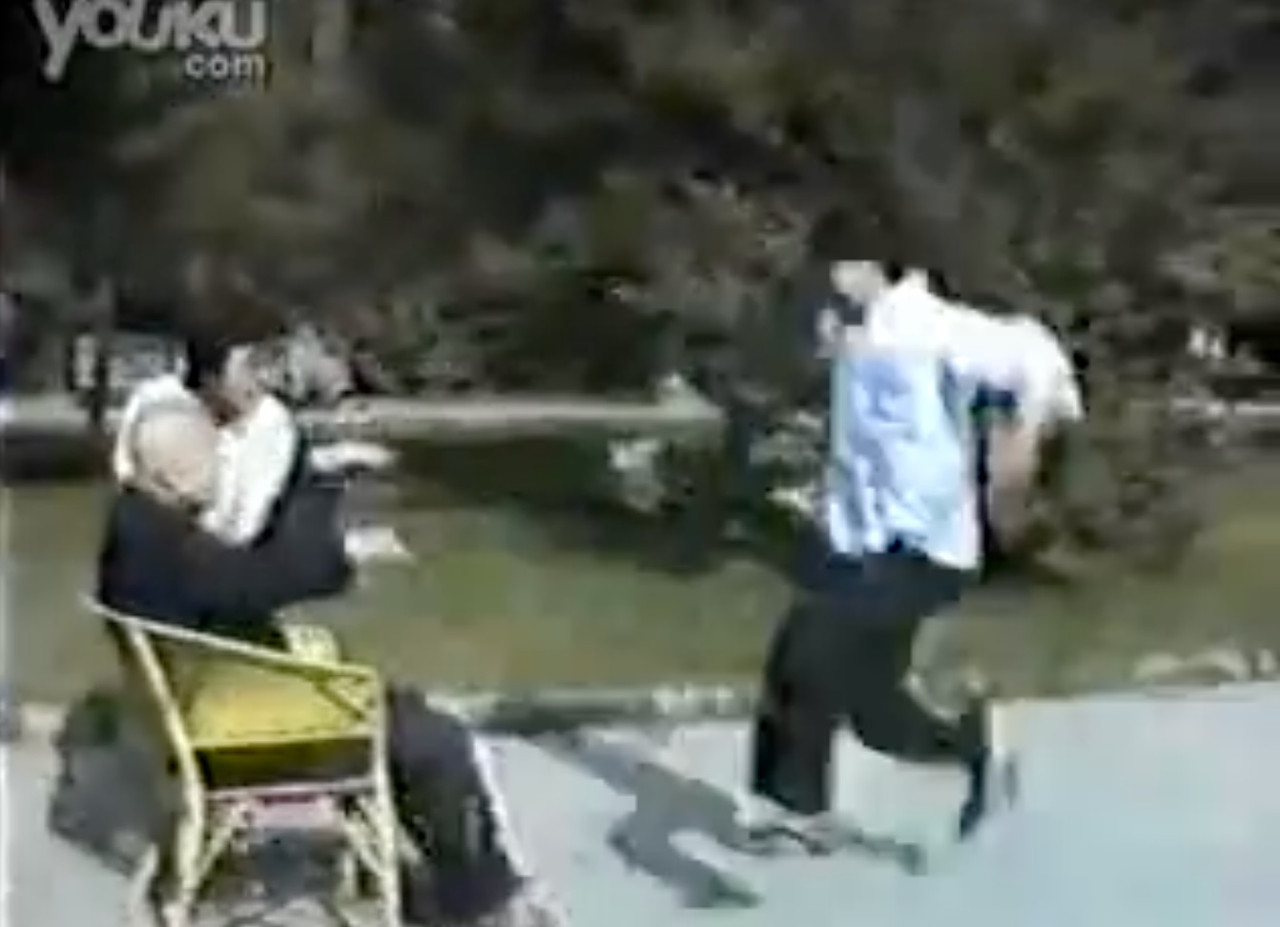
IWang_Yongquan_could_issue_fajin.jpg


Wang Yongquan could fajin while seated in a chair.

Jack Dempsey showed that power can come from falling mass rather than pushing the ground. "falling step"
Mike Sigman, took scattered traditional ideas, reframed them in engineering/mechanical language.

"ground path"

"Wang Yongquan, a prominent Yang-style Taijiquan master, learned from Yang Jianhou, Yang Chengfu, and Yang Shaohou. Over decades, he developed profound Taiji skills, blending tradition with innovation. His unique style, referred to as ā€œWang’s Transmissionā€ (ę±Ŗä¼ ), emphasizes the principle of ā€œusing one’s center to strike the opponent’s centerā€ (仄中碰中) through internal energy (ē„žć€ę„ć€ę°”)."


I’d say ā€œfalling massā€ also belong to ground path….if one think about it a little further
 
Chen is about 50% of what I know. I did Yang style and Wu style for over 10 years before switching to Chen. My current teachers also taught me Xinyi liuhe, Xingyi quan, and some "sifu set" northern forms from various arts like bajiquan, fanziquan, tantui, choujiao-inspired, chaquan etc. My sifus told me to focus on Chen style the most since it's what I'm best at now. In retrospect I think I was lucky to find these teachers in particular as they were able to bridge what I had come up with in Yang style directly into my Chen style. This, alongside the heavy push into northern styles like baji and the historical perspective of xinyi liuhe has given me a unique insight into the arts I feel is valuable. I welcome people to take what I say with a grain of salt, but my recommendation is to try taking it with a grain of pepper for a change!
Yes I thought you’ve mentioned you’re into Chen TJQ, so how is it is there any ground path in use.
I do Hunyuan TJQ and the ground path is strong, I mean when going through the solo exercises
 
Ground path - Well it’s the path we walk on the ground from which we were created .
But since we are created as upright walking creatures and are ourselves of the soil(ground) the path is not just on the horizontal plane but also vertical, very much inline with creations 6 directions .
So the Ground path is the force/awareness of/in six directions, of which we to harness refinement in through the Taolu(s) we practice especially the Taijiquan Taolu.
Taolu hold the meaning of path(road) and it is practiced on the ground..


One can probably dig deeper into this for a clearer definition , but as I said, I don’t put to much thought into these kind of things šŸ¤“


Neither do I, except to try to understand what others mean when they use the term..

ā€œGround pathā€ is a modern analytical term, not a classical Taiji concept. Traditional Taiji language speaks of root, center, connection, and six directions, it does not describe these ideas as a single mechanical ā€œpath.ā€

Mike Sigman didn’t invent the idea of rooting, but he was one of the first to systematically describe internal power in terms of structural load paths to the ground using modern biomechanical language. Whether that framework fully explains Taiji application is another question.

Personally, I’ve rarely heard the term ā€œground pathā€ used outside of Sigman’s work. It’s a Western explanatory model, not a term commonly used within the cultural tradition it attempts to describe. Sigman did demonstrate skill in support of his terminology, but it’s unclear whether noted Chen stylists—or other traditional practitioners—would describe their methods using the same language, or through a different conceptual framework.
 
Yes I thought you’ve mentioned you’re into Chen TJQ, so how is it is there any ground path in use.
I do Hunyuan TJQ and the ground path is strong, I mean when going through the solo exercises
That comes from xinyi liuhe and it's transitional. It's used and it's not used. Hunyuan is a special beast!
 
Neither do I, except to try to understand what others mean when they use the term..

ā€œGround pathā€ is a modern analytical term, not a classical Taiji concept. Traditional Taiji language speaks of root, center, connection, and six directions, it does not describe these ideas as a single mechanical ā€œpath.ā€

Mike Sigman didn’t invent the idea of rooting, but he was one of the first to systematically describe internal power in terms of structural load paths to the ground using modern biomechanical language. Whether that framework fully explains Taiji application is another question.

Personally, I’ve rarely heard the term ā€œground pathā€ used outside of Sigman’s work. It’s a Western explanatory model, not a term commonly used within the cultural tradition it attempts to describe. Sigman did demonstrate skill in support of his terminology, but it’s unclear whether noted Chen stylists—or other traditional practitioners—would describe their methods using the same language, or through a different conceptual framework.
Yes, I haven’t read/heard ā€œgound pathā€ until recently.
It was interesting to explore the ā€œground pathā€ label.
 
That comes from xinyi liuhe and it's transitional. It's used and it's not used. Hunyuan is a special beast!
Feng Zhiqiang ā€˜s Xinyi was actually a branch of Xingyi. There’s a splash of Tongbeiquan too in Hunyuan TJQ
 
Feng Zhiqiang ā€˜s Xinyi was actually a branch of Xingyi. There’s a splash of Tongbeiquan too in Hunyuan TJQ
The most fun thing I like about Hunyuan is it gives you license to explore the component styles. I really think it is the best modern evolution, a true sixth style of Tai Chi.
 
The most fun thing I like about Hunyuan is it gives you license to explore the component styles. I really think it is the best modern evolution, a true sixth style of Tai Chi.
Absolutely, I’m lucky to learn from two skilled teachers that was close to Feng Zhiqiang
 
Yes, I haven’t read/heard ā€œgound pathā€ until recently.
It was interesting to explore the ā€œground pathā€ label.


Yes it is interesting.

People using different models to explain what they do, then trying to map those models onto what others are doing as if they’re the same thing. I tend to look at outcomes. That’s why I often ask: can the people debating this actually produce the same results with their method? If they can’t, or won’t show their work, arguing terminology or models doesn’t get us very far. It just becomes theory layered over different experiences.


1769628871368.webp


Pushing: Front Leg and Back Leg
by Mike Sigman

Sigman’s ā€œground pathā€ is not sequential.

In his model, the ground path is a continuous, unified structural connection rather than a series of linked actions. Force is not passed step-by-step through joints in a linear kinetic chain; it emerges from an integrated whole-body structure that is already connected to the ground.


Image-1-26-26-at-6-44-PM.jpg

Wang Yongquan , the other is reacting to what he feels.

Wang Yongquan’s approach appears to operate on a different level.

Whether sitting or standing, the outcome would be fundamentally the same. Standing does not increase the effect, just as sitting does not reduce it. This suggests that the mechanism is not driven by external kinetic chains or posture-dependent force, but by internal structural reorganization and center-based interaction.

The resulting effect does not necessarily depend on a visible or fully developed kinetic chain.
In that sense, ā€œwave mechanicsā€ may be a more accurate way to describe what is happening.

In my own practice, what I experience aligns more closely with that second view. Instead of feeling like power is being sent through a chain, it feels like the opponent’s center and balance are being shifted so that their own structure generates the movement. When we say ā€œpower must go up before it goes forward,ā€ that’s true within a kinetic model, it may not be able to describe how Taiji operates in all cases.
 
Last edited:
Sigman’s ā€œground pathā€ is not sequential.
You have to store/compress before you can release. The process is sequential. The store/compress can be invisible to your opponent, but you still have to store it. You can't by-pass that store/compress process.
 
You have to store/compress before you can release. The process is sequential. The store/compress can be invisible to your opponent, but you still have to store it. You can't by-pass that store/compress process.
When the body is truly integrated, there is no separate stage of storing and releasing power. The body is already unified; the conditions for expression are already present before contact.

If one part moves, the whole moves. There is no linear transmission from the feet to the waist and then to the hands. Instead, the body responds as a single system. What appears sequential is often only the observer’s description, not the actual mode of function.

What is called internal power is not accumulated and then discharged. It exists continuously as potential and manifests through change. The essential work is not storing force, but maintaining integration so that empty and full can shift without interruption through the center.
 
Back
Top