"classic" martial art vs "modern" martial arts

Shoto-kai- the group who studied with Gichin Funakoshi.
Shoto-kan - the hall(dojo) were Gichin Funakoshi taught

The branch style Shotokai that developed later by Shigeru Egami, the more fluid of the Shoto branches is stylistically probably most unlike Gishin Funakoshis ….except for the frequent use of ipponken
The Shotokan seen today is from Funakoshi's son.
Lower snail like stances which I absolutely hated when I tried Shotokan
Funakoshi used higher stances
 
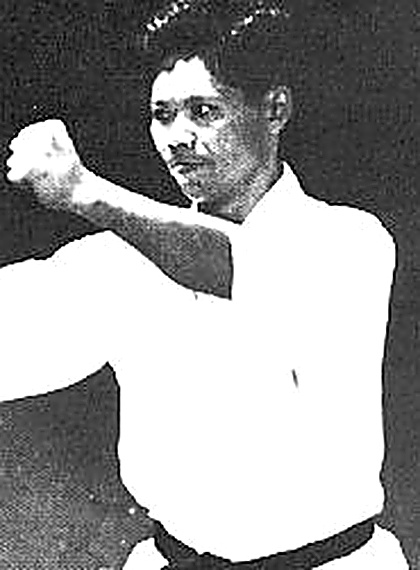
Yes, and actually so did I with the pic I linked too, is a pic from Shigeru Egamis books displaying (at least in his books) the extremely low and wide leg stances in his style development of Gichin Funakoshis Karate.
Compare pictures in Mastoshi Nakayama’s(JKA/shotokan) Dynamick Karate book and Best Karate book series with the books of Shigeru Egami, you’ll see that JKA Shotokan is not necessarily “snail stances “.
You mentioned you tried Shotokan but maybe it was Shotokai you tried ?
Funakoshi Gichin’s original Shotokan, based on Okinawan te, emphasized higher, more natural stances for self-defense, prioritizing mobility, balance, and shorter,, direct movements over the deep, low stances popularized later. While his son, Yoshitaka (Gigo), introduced lower stances and higher kicks,
 
Through his teaching position and understanding of Japanese martial arts, Gigō became the technical creator of modern Shōtōkan karate. In 1946 the book Karate Do Nyumon by Gigō and Gichin Funakoshi was released. Gigo had written the technical part, whereas his father Gichin wrote the preamble and historical parts.[4]

While the ancient arts of To-de and shuri-te emphasized the use and development of the upper body, open hand attacks, short distances, joint locks, basic grappling, pressure point striking and use of the front kick and variations of it, Gigō developed long distance striking techniques using the low stances found in old style kendo and Iaido kata. Gigō also developed higher kicks including mawashi geri (round kick), yoko geri kekomi (thrusting side kick), yoko geri keage (side snap kick), fumikiri (cutting side kick directed to soft targets), ura mawashi geri (quarter rotation front-round kick—though some credit Kase-sensei with the creation of this technique) and ushiro geri kekomi (thrusting back kick). Yoshitaka was especially known for his deep stances and kicking techniques, and he introduced fudo dachi (rooted stance/immovable stance), yoko geri (side kick), and mae geri (front kick) forms to the Shōtōkan style.[8] All these techniques became part of the already large arsenal brought from the ancient Okinawan styles. Another big changement of Gigō was the introduction of the Kiba Dachi instead of Shiko Dachi and implementing the Kokutsu Dachi (which he took from japanese classical fencing or "kenjutsu") instead of Neko Ashi Dachi stance in Shōtōkan Kata.

Gigō's kicking techniques were performed with a much higher knee-lift than in previous styles, and the use of the hips was emphasized. Other technical developments included the turning of the torso to a half-facing position (hanmi) when blocking, and thrusting the rear leg and hips when performing the techniques. These adaptations allowed the delivery of a penetrating attack with the whole body through correct body alignment. Gigō also promoted free sparring.[9]

Gigō's kumite (fighting) style was to strike hard and fast, using low stances and long attacks, chained techniques and foot sweeps (taken from old style Kendō and Judō). Integration of these changes into the Shotokan style immediately separated Shotokan from Okinawan karate. Gigō also emphasized the use of oi tsuki (lunge punch) and gyaku tsuki (reverse lunge punch). The training sessions in his dōjō were exhausting, and during these, Gigō expected his students to give twice as much energy as they would put into a real confrontation. He expected this over-training would prepare them for an actual combat situation, should it arise.
 
In the light of classic and modern martial arts all karate even the “classic” okinawan count as modern (according to Japanese standard )
 
I’m a bit lost now; what was the point of this Shotokai/Shotokan debate? Would someone summarise it?

The founder of Wado Ryu, Ohtsuka Hironori, broke away from Funakoshi Gichin’s Karate before the Gigo/Nakayama modification of dropping of the depth and lengthening the stances. You can see a more ‘Okinawan’ form in these early photos.
IMG_4765.webp

IMG_4766.webp

IMG_4764.webp
 
I’m a bit lost now; what was the point of this Shotokai/Shotokan debate? Would someone summarise it?

The founder of Wado Ryu, Ohtsuka Hironori, broke away from Funakoshi Gichin’s Karate before the Gigo/Nakayama modification of dropping of the depth and lengthening the stances. You can see a more ‘Okinawan’ form in these early photos.
View attachment 33782
View attachment 33783
View attachment 33784
I’m the one guilty of dwelling further on the ‘Shotokai’ issue.

Yeah, the Ohtsuka pictures hold most close resemblance to Gishin Funakoshis leg stances , interesting how the kokutsu-dachi almost look as a shiko-dachi

Here’s another interesting article on the development of mainland Japanese karate

• Yasuhiro Konishi — JKR-UK
 
I’m the one guilty of dwelling further on the ‘Shotokai’ issue.
Don’t get me wrong, it’s interesting! 🙏🏽
Yeah, the Ohtsuka pictures hold most close resemblance to Gishin Funakoshis leg stances , interesting how the kokutsu-dachi almost look as a shiko-dachi
It’s actually ‘side viewing cat stance’ (mahanmi no nekoashi). I suspect his advanced age prevent him from opening up his groin to get his foot point toward his opponent! ☺️
Here’s another interesting article on the development of mainland Japanese karate

• Yasuhiro Konishi — JKR-UK
👍🏽
 
Shoto-kai- the group who studied with Gichin Funakoshi.
Shoto-kan - the hall(dojo) were Gichin Funakoshi taught

The branch style Shotokai that developed later by Shigeru Egami, the more fluid of the Shoto branches is stylistically probably most unlike Gishin Funakoshis ….except for the frequent use of ipponken
Egami’s karate took a weird turn into deep stances and Taichi type movements.

I’d say that Tsutomu Ohshima’s version of Shotokan is probably the closest to what Funakoshi brought to Japan, or at least what was being practiced at the time of his death in 1957.
He started training under Funakoshi in 1948, which may actually predate the JKA.
He was the first official Shotokan ambassador to the USA, maybe the first anywhere, in 1955.
He was promoted to 5th degree black belt by Funakoshi himself, the highest rank he ever awarded.
He is still alive as far as I know, probably almost 100 now.

This is him doing Hangetsu (Seisan) from 20 years ago…
 
How would you define differences between "classic" and "modern" marital arts?

Thinking about it, everything starts modern in a way as a reaction of certain threats using available means to defend against them - the own body or maybe weapons or everyday tools that become weapons trained to use them in an efficient way.

Some things always remain important and have to be learned to fight successfully. Like moving the own body, making steps, keeping balance... Everything necessary to be able to strike before been hit. Keeping and taking care for the critical distance, overcome it in a way again to strike before been hit.

Is it the adopting to the kind of threat that is changing (like there are more knives in the streets or more willingness to use them nowadays then years ago) that turns something classic into modern?

What is it for you that makes the difference between "classic" and"modern" marital art? It's there a difference? Are they one again in the end? Do they just morph into each other and back again?

Would love to hear about your thoughts.
Thank you in advance!
Classic/Traditional and modern martial arts I see on a spectrum. The more esoteric arts like Bagua, Tai Ch, Bak Mei are on one end, and BJJ, Kickboxing and Muay Thai on the other. Older styles that haven't changed and still use the original training curriculum/drills and haven't adapted I would deem as classical. Those that change, adapt and changed curriculum based on how modern world as changed, I would deem as more modern. For example, I would place Kali at the midpoint on the spectrum, for it's older but has also undergone tremendous use/adaption by military and law enforcement throughout the world. Kickboxing, though some may argue isn't a martial art, has changed so immensely, especially with it being an international professional full-contact sport.
 
Last edited:
Back
Top