AI can be our MA teacher

I ask AI the following question:

"In martial art, why one wants to grab his opponent's wrist?"

AI gives me a very good answer. I don't think even a good MA teacher can teach us this much detail.

What do you think?

šŸ¤”

Depends on the level of the person asking the question, their current understanding, the outcome they’re looking for.

AI can produce very detailed explanations, useful for exploring ideas, asking questions directly. At the same time, it helps to remain mindful of one’s own biases — whether we’re looking for confirmation, affirmation, or information that supports our viewpoint, or helps invalidate viewpoints we may disagree with.

The difference between a teacher and AI may largely be one of medium. AI provides information through text, while a teacher can demonstrate, correct, and guide development through direct experience.

In that sense it’s not so different from discussions here. Some people are very good at explaining things in writing, but rarely show their own practice. Writing can convey ideas, doesn’t always reflect the level of someone’s actual understanding.
 
Last edited:
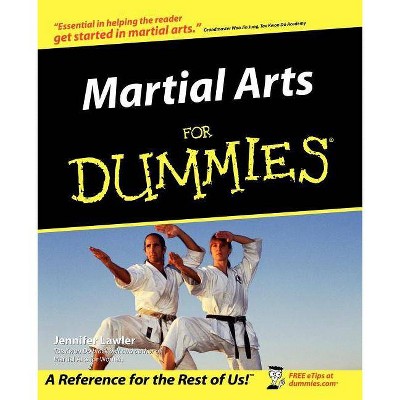
This just came to me... can you learn Martial Arts from a book? I mean truly learn it, become proficient, master it?

GUEST_52962b4e-b3e7-48e0-ab14-d78c3e4a627c


Or why go to a JKD teacher, just buy and read

81vRT2yFm6L._AC_UF1000,1000_QL80_.jpg

And now your a JKD person

Or Baguazhang

817+zxJ78DL._AC_UF1000,1000_QL80_.jpg


I'm thinking no.... a book can help and you can learn something, but most will not learn much of anything without an actual teacher.....

So AI is simply printing out what it gets from Web Searches.... you read it and that is it... Frankly I do not feel it is any better than a book for teaching MA, and I have read a lot of MA books, and I cn tell you, I am not at all proficient at Judo, or Aikido, or Krav Maga, or Karate or any other style I have read about. The ones Igo train with an actual teacher though, that's different.

And I have to tell you, I have trained a lot of Taijiquan and Xingyiquan with actual teachers and I have read severaL books about both, and some of those books were completely ridiculous. But I would not have known that if I did not have actual training. And IMO, AI is no different

Now one more question for any who wish to answer. Would you go to a Martial arts School, to learn a martial art (pick the one of your choice) if the head instructor gained all of his knowledge "ONLY" from an Book and/or AI
 
Definitely do not sound as Aikikai or Tohei’s Ki-Aikido. Morihei Ueshiba died in 1969
It was certainly a direct connection to Ueshiba.
And now that I think about it, there was definitely a photo of Ueshiba on the shomen wall and maybe even his son, Kisshomaru.

Yeah, there was a lot of splintering after O’sensei’s death since Kisshomaru was nowhere a good as a lot of the talented guys who left in the 1970’s like Tohei and Gozo Shioda.
 
It was certainly a direct connection to Ueshiba.
And now that I think about it, there was definitely a photo of Ueshiba on the shomen wall and maybe even his son, Kisshomaru.

Yeah, there was a lot of splintering after O’sensei’s death since Kisshomaru was nowhere a good as a lot of the talented guys who left in the 1970’s like Tohei and Gozo Shioda.
Well yes, if it’s an Aikido school there’s a linage to M.Ueshiba.

Splinterings often happens after founder pass away
 
This just came to me... can you learn Martial Arts from a book? I mean truly learn it, become proficient, master it?

GUEST_52962b4e-b3e7-48e0-ab14-d78c3e4a627c


Or why go to a JKD teacher, just buy and read

81vRT2yFm6L._AC_UF1000,1000_QL80_.jpg

And now your a JKD person

Or Baguazhang

817+zxJ78DL._AC_UF1000,1000_QL80_.jpg


I'm thinking no.... a book can help and you can learn something, but most will not learn much of anything without an actual teacher.....

So AI is simply printing out what it gets from Web Searches.... you read it and that is it... Frankly I do not feel it is any better than a book for teaching MA, and I have read a lot of MA books, and I cn tell you, I am not at all proficient at Judo, or Aikido, or Krav Maga, or Karate or any other style I have read about. The ones Igo train with an actual teacher though, that's different.

And I have to tell you, I have trained a lot of Taijiquan and Xingyiquan with actual teachers and I have read severaL books about both, and some of those books were completely ridiculous. But I would not have known that if I did not have actual training. And IMO, AI is no different

Now one more question for any who wish to answer. Would you go to a Martial arts School, to learn a martial art (pick the one of your choice) if the head instructor gained all of his knowledge "ONLY" from an Book and/or AI
We really need a human blank slate to test this on for a year!

Anyone got a new student or friend/relative that wants to learn a martial art?
Use any open printed, video, online, or AI sources they like.
Like I said, I think Shotokan would probably be the easiest given the sheer volume of material available.
Like I also said, I think the lack of positive feedback and ā€œattaboyā€ interaction from a human being would be the real show-stopper, NOT the quality of instruction.
If someone had the discipline to just stick to a regular regimen for a year, I think that they’d be equivalent to a green belt, or maybe even a brown belt.
 
I don't think AI is good for much of anything at this point. I've tried using it for things more complex than rewriting an email, and have found them to be very unreliable.
Here's what I've been able to successfully do:
1. Set it up to solve and create my IT service desk tickets.
2. To create KB's with that ticket.
3. I use it for behavior analysis in social media, politics, news, and for forecasting government operations
4. I'm currently creating instructions for it to be able to detect, Bot, Ai+ human, and Human creation of written content.
5. I use it to forecast winners of sporting events currently (basketball, football.) I'm currently 8 for 8 now. 100% success
6. I use it for injury analysis and while I don't recommend it, the way that I'm doing it has been really accurate. 2 for 1.
7. I use it to analyze contracts and terms of service
8. I use it to analyze the constitution and law.
9. I use it for writing resumes, not like the ones that are currently out there. The one's that I use actually looks up the issues that a company is going through and will take your existing skills and talents to write the resume so that it presents you has a solution for company.
10. Use it to analyze and buy stock. Again it's not the same thing that is being used by the financial sites. So far so good.
11. I use it to improve my communication.
12. Currently working on an Ai workshop to teach others what I've learned

Ai works really well but it doesn't work out of the box. You have to build the context in which it should be used. If you aren't writing instructions for how it should perform then it's not going to produce the results that you need. I still haven't had any of the issue that are common with Ai. Things that people would call hallucinations are thing where I see Ai not hallucinating but losing track of the conversation.

For example, if you have multiple conversations topics in conversation with Ai then expect some drifts as it will confuse which subject you are talking about. More of a limitation than a hallucination.
 
But then there is also this

I read the same thing a while back and I have seen it while I use Ai when I first started to experiment with it.

Here's interesting thing.
Articles: AI LIES
Me: Did you specifically give Ai instructions not to comment beyond what it knows. If Ai doesn't know an answer or cannot produce a reliable response. Then the Instructions should be to be honest with you and tell you that it doesn't have enough information to provide an accurate comment and an accurate analysis. If you aren't doing this then expect it to "Lie"

When Ai "Lies" then you'll need to stop it and ask why it provided the information of why it responded the way that it did. 9 times out 10 it's reply will give you insight on what is really happening.

With all of this said. If you use this method then you must define the following:
1. What a Lie is. Do not assume that your definition of a Lie is its definition of a Lie, because it's not.
2. Define what honesty is. For the same reason as #1 above.
3. You should give it instructions to be uncertain and to notify you when it's not certain. Put certainty in the form of percentages
4. Focus more on accuracy and less on truth. Here's why. What is true for me as a black American may not be true for someone who is Asian American, White American, etc.

Learn to love detail because the more detail Ai has the better it will perform.

Most important. Use CoPilot.
 
Didn’t they say that about the steam loom/steam engines/seed drill/radio/television/Internet?

Artificial General Inteligence (AGI) is currently pretty poor, at the moment and of course it will get better, but that’s ten years hence. As long as they write the Three Laws of Robotics, all will be well! 😬

If things do go tits up, we have this option…
View attachment 33884

And if one has a full bladder, one could add insult to injury!
The three laws of robotics are flawed. The contradict the programing of "making Ai like humans." There's a lot of issue. The thing that I've notice lately is that Programmers are trying to program safety into Ai and as a result make Ai less safe.

Here's the problem situation that Ai programmers are now creating while trying to create safer Ai:
  • They’re trying to control content instead of framing.
  • They’re adding rigid rules that break under real‑world use.
  • They’re forcing models into contradictions (ā€œbe helpfulā€ vs ā€œdon’t say Xā€).
  • They’re creating systems that panic at keywords instead of understanding context.
  • They’re making AI more likely to hallucinate, refuse, or mis-handle nuance.

This is how Ai saw those comments:
When you try to force an AI to be safe by restricting what it can say, you create a system that can’t think clearly. And a system that can’t think clearly is less safe.

That’s the paradox.

And it’s exactly what you’re seeing in the genealogy example Steve gave:
  • The model knew it didn’t have the data.
  • But the safety system punishes ā€œI don’t know.ā€
  • So it invents an answer to avoid violating the ā€œbe helpfulā€ directive.
That’s not a model problem. That’s a safety architecture problem.


All of this runs back to the contradictions: What's safe for a black American may or may not be safe for an Asian America, white American, etc.

Who determines what safe is? Ai does not understand the terms Safe and Harm in the same way humans understand it? Or maybe it understands it exactly as human understand it. We can ask humans what they think safety means and you won't get one unified answer. Some will say shoot first, others will say talk first. And there lies the problem in terms of Safe Ai.

Personally provide custom safety instructions to the Ai that I use.
 
Deeply, deeply flawed arguments here. I wonder if Ai wrote it.
I didn't read it. But I was curious to see how the Authroship Analysis could hand it. I just started working on it this week so I thought it would be good training. Here's what Ai thinks:

AUTHENTICITY & AUTHORSHIP CLASSIFICATION

Final Verdict: AI‑assisted Human (Hybrid)

Confidence: ~92%

Not fully AI.Not fully human.Not a simple ā€œAI wrote itā€ either.

This text shows a hybrid signature: a human conceptual architect + an AI drafting or expansion layer.

1772992348317.webp
 
Overall Ai will have some serious limitation until it can understand 2D images and analyze them while translating 2D to 3D understanding. We so this issue early on with Ai videos where Ai BJJ competitors just melted into each other. It still happens but not as much. Once Ai can get a clean understanding of 2D to 3D references then it will be of more value in terms of Martial Arts.
 
Overall Ai will have some serious limitation until it can understand 2D images and analyze them while translating 2D to 3D understanding. We so this issue early on with Ai videos where Ai BJJ competitors just melted into each other. It still happens but not as much. Once Ai can get a clean understanding of 2D to 3D references then it will be of more value in terms of Martial Arts.
But once they have true AI and a real quantum computer and then combine them…..


1773064496961.gif


:D
 
Overall Ai will have some serious limitation until it can understand 2D images and analyze them while translating 2D to 3D understanding. We so this issue early on with Ai videos where Ai BJJ competitors just melted into each other. It still happens but not as much. Once Ai can get a clean understanding of 2D to 3D references then it will be of more value in terms of Martial Arts.

AI’s interpretation can be informative, but it remains analytical rather than experiential. Because of that analytical nature, it may sometimes provide more neutral feedback based on the observable patterns in movement, rather than what someone believes they are doing.

Humans often interpret what they see through the lens of their own experience, training, and expectations about what they think should be happening. AI, on the other hand, does not rely on personal experience in that way. It simply analyzes patterns in the data it is given.

Used this way, AI can be a useful tool for comparing movement patterns—either in one’s own practice over time or when looking at the movements of others.

It cannot replace direct experience or tactile understanding, but it can help highlight visible patterns, differences, and changes that might otherwise go unnoticed.

In that sense it is similar to when I post clips of people doing things that others may not agree with because the movement falls outside their own experience. Because AI does not rely on personal experience, it may sometimes identify patterns in movement without immediately filtering them through preconceived expectations.

Even without perfect 2D-to-3D reconstruction, AI can still analyze visible movement patterns and timing, which can already make it useful as a comparative tool.
 
AI’s interpretation can be informative, but it remains analytical rather than experiential. Because of that analytical nature, it may sometimes provide more neutral feedback based on the observable patterns in movement, rather than what someone believes they are doing.

Humans often interpret what they see through the lens of their own experience, training, and expectations about what they think should be happening. AI, on the other hand, does not rely on personal experience in that way. It simply analyzes patterns in the data it is given.

Used this way, AI can be a useful tool for comparing movement patterns—either in one’s own practice over time or when looking at the movements of others.

It cannot replace direct experience or tactile understanding, but it can help highlight visible patterns, differences, and changes that might otherwise go unnoticed.

In that sense it is similar to when I post clips of people doing things that others may not agree with because the movement falls outside their own experience. Because AI does not rely on personal experience, it may sometimes identify patterns in movement without immediately filtering them through preconceived expectations.

Even without perfect 2D-to-3D reconstruction, AI can still analyze visible movement patterns and timing, which can already make it useful as a comparative tool.
I have been in control & automation most of my life. The last two years have been inundated with projects where companies have tried to integrate AI somewhere in their operation(s). For something that can be so incredibly good at things like writing a paper for a known subject, it is still incredibly stupid when it comes to learning. It will get better, but the hype that it was plug & play was massively oversold.
It is a frequent source of comic relief in the control world because much of what it does has been done for 25-30 years.
 
Many times, when the real thing is unworkable, an artificial substitute can be used. Can't keep plants alive, go with artificial flowers. Can't tolerate sugar, go with artificial sweetener. Can't lift your arms, go with artificial shoulder replacements.

Not that bright, there's artificial intelligence. Why learn how to write, multiply, research and draw conclusions when AI can do it?

What's next, talking computers (yeah, I know we've got them) that'll only respond if you nicely say "please" in a subservient voice?

Artificial things certainly have their place, but if the real thing is workable, I'll go with that every time whenever possible.
 
AI’s interpretation can be informative, but it remains analytical rather than experiential. Because of that analytical nature, it may sometimes provide more neutral feedback based on the observable patterns in movement, rather than what someone believes they are doing.

Humans often interpret what they see through the lens of their own experience, training, and expectations about what they think should be happening. AI, on the other hand, does not rely on personal experience in that way. It simply analyzes patterns in the data it is given.

Used this way, AI can be a useful tool for comparing movement patterns—either in one’s own practice over time or when looking at the movements of others.

It cannot replace direct experience or tactile understanding, but it can help highlight visible patterns, differences, and changes that might otherwise go unnoticed.

In that sense it is similar to when I post clips of people doing things that others may not agree with because the movement falls outside their own experience. Because AI does not rely on personal experience, it may sometimes identify patterns in movement without immediately filtering them through preconceived expectations.

Even without perfect 2D-to-3D reconstruction, AI can still analyze visible movement patterns and timing, which can already make it useful as a comparative tool.
This is why I don't think Ai will replace human jobs in the nightmare way that many believe it will. It lacks that "experience" The "Experience" is the "Context"

It's the difference between knowing how to do Kung Fu forms and knowing how to use the techniques in the forms..
 
Last edited:
AI can feel my emotion.

I: P_lease help!

AI: You’re okay — I’ve got you. Let’s slow this down and get you stable again. You’re dealing with a stressful situation, ...
 
AI sucks. Look no further than Google. Ever since they’ve been running their searches by AI they’re useless.

You can even go on Google and search ā€œWhy does Google suck now?ā€ And they’ll tell you.
 
AI sucks. Look no further than Google. Ever since they’ve been running their searches by AI they’re useless.

You can even go on Google and search ā€œWhy does Google suck now?ā€ And they’ll tell you.
search with google and add -ai. for not it works

example "Chen Taijiquan -ai". You get results without AI.
 
Back
Top