"classic" martial art vs "modern" martial arts

When a colleague went to Naha to visit a stem cell facility, he noticed that the staff preparing cells and cultures etc performed exactly the same movements and finger pointing at reagents, Gilson pipettes etc. He asked what they were doing and was told it was ‘stem cell culture kata’. The implementation of this kata reduced mistakes to virtually zero. Shinkansen train drivers do similar safety kata in the cockpit of their bullet trains and we all know how safe and reliable trains are in Japan!

Kata are a great way of ingraining precise procedures, whether they’re to do with setting up and delivering fighting techniques to driving 200mph trains. They’re laborious, Westerners find them dull, but they work. I’d’ve thought gun handling procedure would lend itself to this idea too.
It struggles with movement and timing.
 
Kata struggles with timing and movement.

So if you are trying to execute a technique while both of you are doing stuff. Kata does not deal well with that.
Kata, forms, Poomsae can, but they are seldom practice that way. Think shadow boxing. It is all about visualization.
 
Kata struggles with timing and movement.

So if you are trying to execute a technique while both of you are doing stuff. Kata does not deal well with that.
I think it can be useful for beginners, particularly when handling firearms. It won’t teach gun fighting skills but it can keep people safe by preventing some mishandling mistakes. Learning to shoot past 600 yds requires a sort of kata initially. There are quite a few steps to be followed in order to shoot accurately at long range. Until these steps are ingrained, the process can be slow and sloppy, which is fairly useless. I agree that most multi part “technique” driven kata are pretty worthless for fighting, but a standing arm bar or a choke on a resisting opponent won’t work well if you haven’t practiced it to understand the positioning required. Maybe it’s in how we define kata? Maybe some kata have more inherent value? Maybe its value is commensurate to the skill/ knowledge level of the participants? I see forms/kata as a portion of skill building, but certainly not in a stand alone way. It does offer an objective way for me to see how someone moves without outside influences. That said, most folks will not be able to execute with a resisting opponent in the same way they do alone. So I kind of see forms/kata as a diminished return in highly experienced players. Not to say it’s useless, but there might be better ways to spend training time once people have advanced to a certain degree.
 
Kata struggles with timing and movement.
Timing with regards an uncooperative, aggressive opponent? Well yes, it’s a solo performance. Movement? It all movement. It’s nothing but movement! Movement, movement, movement!
So if you are trying to execute a technique while both of you are doing stuff. Kata does not deal well with that.
‘Both’? Kata’s a solo exercise.
 
There are two man kata sets.


2 man sets teach a lot of different aspects depending on the level of and type of interaction.
My friend Arthur, "double daggers"

back in the day...🙂


"An exciting martial arts set featuring master Arthur Chin and master Rick Wing of the Jing Mo Athletic association. Arthur performs the spear, and Rick Wing the double daggers.

Rick Wing teaches Northern Shaolin Kung Fu at Fort Mason on Wednesday-Friday and Sunday nights, in San Francisco California. He was a student of Wong Jack Man.
Arthur teaches Praying Mantis on Monday nights, also at Fort Mason. This set was taught to them by Sifu William Fong."
 
Last edited:
Not always true. There are two man kata sets.
A lot of the older-minded methods from Japan use the term kata to describe the two-person practice of techniques. These are not the long, highly choreographed two-person forms that people often think of, but rather are brief attack-and-defend interactions. These attack and defense are done in what could be described as a ritualized kind of manner, with movements that are exaggerated, and with cooperation between the participants. This is the kind of thing that often gets criticized as being too compliant, not enough “pressure-testing”. The purpose of the exercise is to train the body to hit every point in the engagement, to emphasize the angles, timing, positioning, etc., to get it “right”. The exercise of kata is not meant to be “realistic” or pressure-tested. It is meant to learn and understand the components of the techniques and how to make them work. Other exercises that are more free-form take a step or more toward spontaneity and application. But kata is not meant to fill that need.
 
2 man sets teach a lot of different aspects depending on the level of and type of interaction.
My friend Arthur, "double daggers"

back in the day...🙂


"An exciting martial arts set featuring master Arthur Chin and master Rick Wing of the Jing Mo Athletic association. Arthur performs the spear, and Rick Wing the double daggers.

Rick Wing teaches Northern Shaolin Kung Fu at Fort Mason on Wednesday-Friday and Sunday nights, in San Francisco California. He was a student of Wong Jack Man.
Arthur teaches Praying Mantis on Monday nights, also at Fort Mason. This set was taught to them by Sifu William Fong."
I met Sifu Wing briefly, many years ago. I visited the training session at Fort Mason and watched the class. I found it interesting. I see he has published a number of books on some of the Shaolin forms from the Jing Mo curriculum.
 
2 man sets teach a lot of different aspects depending on the level of and type of interaction.
My friend Arthur, "double daggers"

back in the day...🙂


"An exciting martial arts set featuring master Arthur Chin and master Rick Wing of the Jing Mo Athletic association. Arthur performs the spear, and Rick Wing the double daggers.

Rick Wing teaches Northern Shaolin Kung Fu at Fort Mason on Wednesday-Friday and Sunday nights, in San Francisco California. He was a student of Wong Jack Man.
Arthur teaches Praying Mantis on Monday nights, also at Fort Mason. This set was taught to them by Sifu William Fong."
That’s ‘pre-arranged sparring’.
 
That’s ‘pre-arranged sparring’.
It isn’t sparring, but it is pre-arranged.
I personally am not a fan of these long, two-man forms. They are heavy on choreography in a way that often strikes me as more performance art than combative training.
 
That’s ‘pre-arranged sparring’.
🤔 We called them sets — they were meant as an introduction to sparring, a way to understand how the style was actually used.
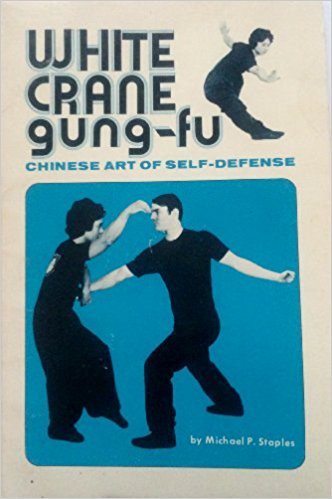

2116d-ef66c-51ymaudvzil-_sx330_bo1204203200_.jpg


My first real introduction to Chinese martial arts many, many years ago.
In the 1970s, it was quite common for people in CMA to train one way, yet in competitive settings what they trained often didn’t show up at all — or the style had to be heavily modified for competition.


Ron Dong / Mike Staples

In my own use of (TWC), tried to correct this misunderstanding, 🙂 whenever I could, with everyone I met.

Taiji feels as though it’s in a similar place today, though in a different way — many who to practice Taiji never really developing the skill sets it was once noted for. Interesting times back then, and now 🤔
 
Last edited:
It isn’t sparring, but it is pre-arranged.
I personally am not a fan of these long, two-man forms. They are heavy on choreography in a way that often strikes me as more performance art than combative training.
I like them, but not for the performance aspect. It helps people see how to use the actual movements against another person/have them used against them, in a low-pressure environment. And if done right, prevents people from just falling into 'sloppy kickboxing' when they try sparring.
 
Timing with regards an uncooperative, aggressive opponent? Well yes, it’s a solo performance. Movement? It all movement. It’s nothing but movement! Movement, movement, movement!

‘Both’? Kata’s a solo exercise.
Yeah. But the idea of using martial arts against another person is that timing has priority over technique. (Mostly)

Which is why combat sports guys often look sloppy and do it wrong.
 
Back
Top