isshinryuronin37 37
Senior Master
I'm guessing 100,000 full kata during my time in TMA.I think you do more kata than you realise. I think everyone does.
Follow along with the video below to see how to install our site as a web app on your home screen.
Note: This feature may not be available in some browsers.
I'm guessing 100,000 full kata during my time in TMA.I think you do more kata than you realise. I think everyone does.
You pressure test something to see if it works rather than assuming it works.Indulge me.
Let's define terms. What do you consider pressure testing, and how it works?
Changed my mind. I don't have the mental bandwidth relitigating what Chris has already spent more time than he needed to on the matter.
You pressure test something to see if it works rather than assuming it works.
So you do literally the opposite of assume that if its in the schools syllabus it must be there for a reason. And you go find out for yourself if it works.
You do literally the opposite of assume that someone must have pressure tested it.
I'm revising this to 85,000 as I didn't fully factor in some years of retirement.I'm guessing 100,000 full kata during my time in TMA.
Kata degraded over the generations due to repurposing in response to new goals, changes by modern teachers who didn't realize the deeper applications and by natural drift, to name a few reasons. Today's kata are often substantially different from when first developed. All this points to the need to explore kata, delve into their history and pressure test the techniques as they currently exist. If they don't pass the test, the application being used is wrong and further study and testing is needed. The old traditional kata were pressure tested by authentic warriors who knew well what real combat was. As developed, kata was combat training. Modern karate separated the art into kata, kihon and kumite whereas in the early days they were entwined and fully synergistic.Then I'm assuming I know more about the school and its kata, philosophy, teachings, pedagogical sensibilities than generations of students and masters.
Sounds like a very naïve thing to do.
Kata degraded over the generations due to repurposing in response to new goals, changes by modern teachers who didn't realize the deeper applications and by natural drift, to name a few reasons.
Today's kata are often substantially different from when first developed. All this points to the need to explore kata, delve into their history and pressure test the techniques as they currently exist. If they don't pass the test, the application being used is wrong and further study and testing is needed.
The old traditional kata were pressure tested by authentic warriors who knew well what real combat was.
You should be able to challenge dogma with pressure testing.Then I'm assuming I know more about the school and its kata, philosophy, teachings, pedagogical sensibilities than generations of students and masters.
Sounds like a very naïve thing to do.
I’m afraid that’s an example of a logical fallacy known as ‘post hoc ergo propter hoc’!It still puzzles me why people question kata pressure testing... Like, they wouldn't be in the school's syllabus if they weren't found to be useful... under pressure... after being tested...
Correlation doesn't equal causation.I’m afraid that’s an example of a logical fallacy known as ‘post hoc ergo propter hoc’!
I’m afraid that’s an example of a logical fallacy known as ‘post hoc ergo propter hoc’!
It seemed (not sure) like you were taking issue with my post. My position is clear:I want my pressure NOW and I want it TESTED (which few in this thread agree on,
I think we agree on this point?the need to explore kata, delve into their history and pressure test the techniques as they currently exist. If they don't pass the test, the application being used is wrong and further study and testing is needed.
By this logic, the obverse must be true as well.Correlation doesn't equal causation is pretty close though.
Because then you could say. Just because Kata is contained in a Combative traditions syllabus. Doesn't mean you can infer it has worth.
Who is this posting and what have you done to drop bear? I’m calling Interpol!Correlation doesn't equal causation is pretty close though.
Because then you could say. Just because Kata is contained in a Combative traditions syllabus. Doesn't mean you can infer it has worth.
It must be post hoc ergo propter hoc because I chose to say it isThat’s not post hoc reasoning.
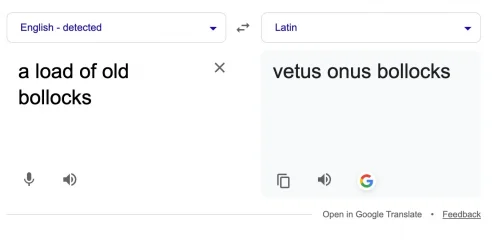
Post hoc ergo propter hoc is Latin for "after this, therefore because of this". It refers to the mistake of assuming that because one event (B) follows another (A), that A caused B.
I wasn’t making a claim about sequence.
My claim is:
If a kata is retained in a combative tradition’s syllabus, it is reasonable to infer it was considered useful within that tradition.
That’s a conditional inference (K → U), not a sequential claim. Post hoc concerns the latter.
If you think syllabus inclusion doesn’t imply prior functional value, that’s the argument to make. But labeling this post hoc misstates the structure of my claim.
Who is this posting and what have you done to drop bear? I’m calling Interpol!
Phew! What a relief!