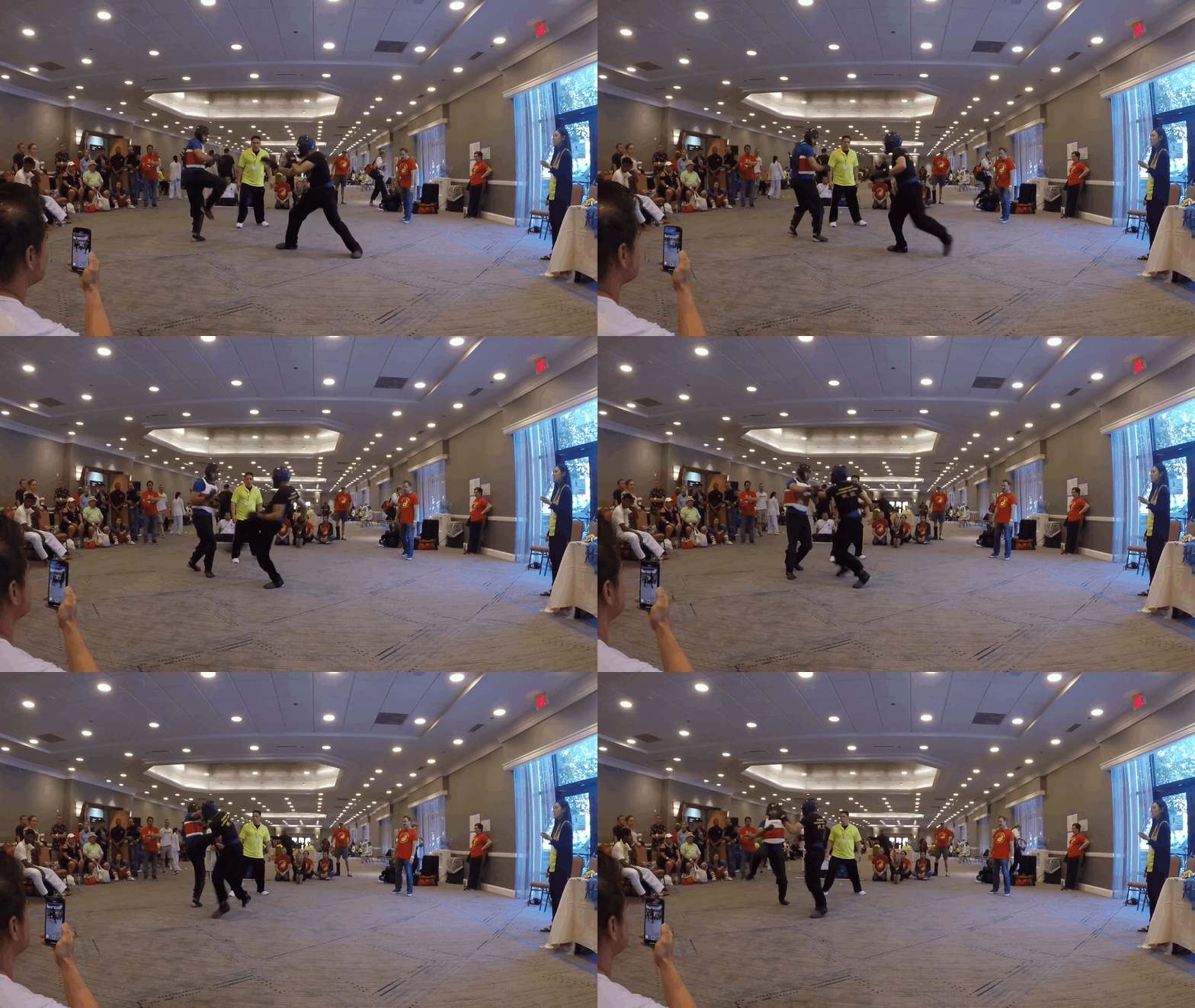
Sparring Styles

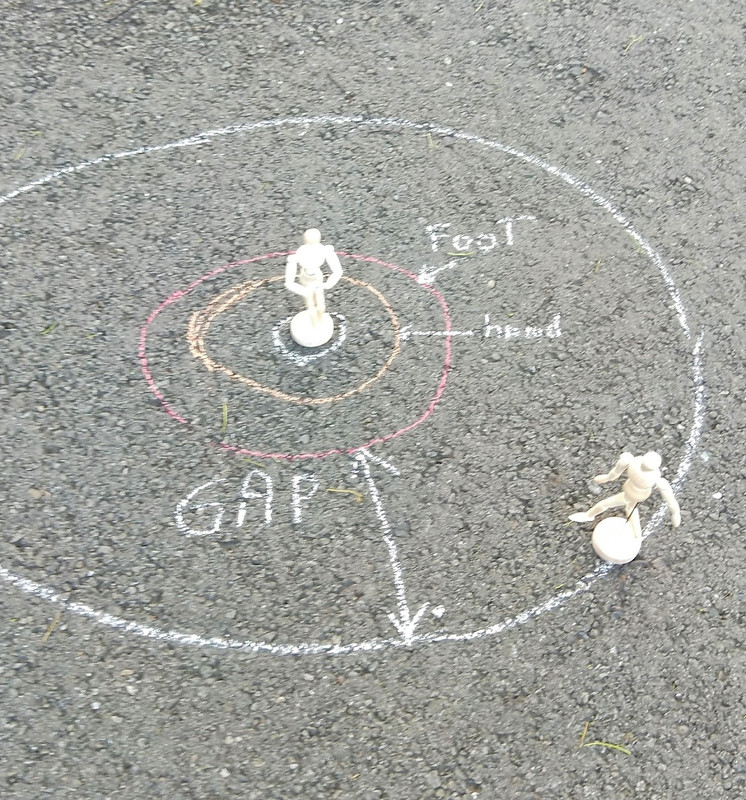
oh it says FOOT. I thought it said 'fool' with an arrow pointing towards the figure
 
oh it says FOOT. I thought it said 'fool' with an arrow pointing towards the figure

😂 an old photo…cement writing…what can one say…🙂

In Beijing, my teacher drew on the dirt in the park where we practiced.
Updated in the US on the cement….going to experiment with
an IPad later on in Taiwan…

Gotta move with the tech 🙂
 
Doesn't this make you predictable?
If you can throw "groin kick, face punch" combo within 1/2 second, even if your opponent may predict what you are going to do, it's still difficult for him to deal with your fast entering.

The more that you have trained your entering strategy, the faster speed that you can reach, the harder for your opponent to deal with.

 
Counterfighting is cool, but not something I'm gifted at.
When you are extreme tired, counter fight can be a good option. For example, instead of for you to move in and get your opponent's leading leg, you let your opponent's leading leg to come to you. This can save you a lot of energy.

Some MA systems (such as Chinese wrestling) don't encourage counter fight. The reason is simple. No matter how god that you can counter a "hip throw", it still doesn't mean that you can go a good "hip throw". People encourage "attack and lose' than "counter and win". Because the person who play "attack and lose", he will have a future (one day he will be good at hip throw). The person who plays "counter and win" won't have any future (such as he will never develop hip throw).
 
A dojo mate literally sent me this the other day, thought it was quite good haha:

------

Types of Sparring Opponents:

*The Wild Puncher*
This is the fighter who abandons game plans and throws volume. No setup, no feints, just overwhelming aggression and chaos. They’re dangerous because pressure breaks structure. You can’t run your techniques if you’re constantly shelled up defending haymakers. They gas out fast, but before they do, they can overwhelm skilled opponents who need space and timing to work. Their unpredictability makes them a nightmare for technical fighters.

*The Silent Killer*
Quiet, calm, and patient. This opponent doesn’t telegraph or waste energy talking. They watch, stay relaxed, and wait for you to make a small error in rhythm or spacing. Then they strike hard and disappear again. The danger is psychological. You don’t get reads from their face or breathing. You relax for a second and they’re already inside your guard. They win rounds by landing the few shots that actually matter.

*The Low Kick Addict*
This fighter’s entire strategy revolves around chopping the legs. They’re not trying to knock you out clean. They’re investing in damage that accumulates. Each kick slows you down, kills your movement, and makes your stance bladed and weak. By round 2, you can’t check, can’t pivot, and can’t push off to punch. You might win the round on points, but you lose the ability to walk tomorrow. They turn sparring into attrition.

*The Counter Fighter*
They give you nothing and take everything. Counter fighters rarely lead. They bait you, draw out your attack, then punish the opening you created. The danger is that you beat yourself. You throw, you miss, you get hit. After a few exchanges you get gun-shy and hesitant, which makes you even easier to counter. Fighting them feels like walking into traps. The more aggressive you are, the worse it gets.

*The Giant White Belt*
Big, strong, and inexperienced. They don’t know the rules, don’t know their own strength, and don’t know how to control contact. That’s what makes them dangerous. A seasoned fighter can slip and tap a skilled opponent. A giant white belt will throw with 100% power because nobody told them not to. They’ll crash the distance, clinch hard, and turn light sparring into a wrestling match. Technique beats them, but one clean shot while you’re “going easy” can still rattle you.

*The Tournament Veteran*
They’ve seen every style and fought under pressure hundreds of times. Calm under fire, they adapt mid-round and exploit habits you didn’t know you had. The danger is in their pattern recognition. If you throw the same jab-cross twice, the third one’s getting countered. They manage distance, energy, and time like it’s second nature. You’re not just fighting their skills. You’re fighting all the people they’ve already beaten to learn those skills.

*The Calm Old Man*
Age slowed their footwork, not their fight IQ. They don’t waste movement. They stand in the pocket, block with minimal motion, and fire back when you overcommit. Decades of timing mean they don’t need speed. They need you to be impatient. The danger is underestimation. You think “I’m faster” and walk into a trap that’s been set since 1990. They win with efficiency, angles, and shots you never saw coming.

*Other Concerns*

*Heavy Breathers*
These are the guys with terrible gas tanks. Dangerous because panic is contagious. They start huffing, sloppy, and slinging wild shots as they tire. Defense disappears, but offense gets desperate. You have to stay sharp because a gassed opponent throws from weird angles and doesn’t pull shots. They’ll also clinch and lean to rest, which drains your stamina too. You can get hurt trying to “be nice” while they’re in survival mode.

*Dirty Fighters*
Not illegal, just cheap. Knees in the clinch during light sparring, grinding forearms, stepping on feet, “accidental” headbutts. They bend the unwritten rules of the gym. The danger is escalation. You either let them get away with it and get banged up, or you match their energy and now nobody’s learning. They turn technical sparring into a street fight and increase injury risk for everyone.

*Trash Talkers*
They fight with their mouth nonstop. The point is to break your focus. If you’re thinking about their last insult, you’re not thinking about your hands being up. They’re dangerous because emotion beats technique. Get mad and you abandon your game plan, swing hard, and walk onto counters. The best ones know exactly what to say to make you fight their fight instead of yours.

*Show Offs*
Flash over function. Spinning kicks, flying knees, and TikTok combos in round 1 of sparring. Most of it doesn’t land, but the danger is when something dumb _does_ land. You’re not prepared for it because no sane person throws a 720 in light sparring. They also tend to go harder than the agreed pace to “look good”. When they get tired or countered, they often get embarrassed and dirty.

FB_IMG_1780037755556.webp
 
I have to say, the least appealing style of fighter are those that only counter attack. They wait and wait and wait for their opponent to attack and hopefully leave a ‘suki’ (隙) never brave enough to attempt an attack…so boring to watch.
 
*The Calm Old Man*
Age slowed their footwork, not their fight IQ. They don’t waste movement. They stand in the pocket, block with minimal motion, and fire back when you overcommit. Decades of timing mean they don’t need speed. They need you to be impatient. The danger is underestimation. You think “I’m faster” and walk into a trap that’s been set since 1990. They win with efficiency, angles, and shots you never saw coming.
That's me! The experience also helps to easily create openings, so the opponent doesn't need to be an impatient attacker. My hands are still quite fast; not so with my legs, but this is where timing helps.
I have to say, the least appealing style of fighter are those that only counter attack. They wait and wait and wait for their opponent to attack and hopefully leave a ‘suki’ (隙) never brave enough to attempt an attack…so boring to watch.
This can be true, but as I said in my post #14, it's good to mix up your basic style occasionally. Not just to catch the other guy off guard, but to keep yourself from getting bored. I don't care about the spectators.
 
This can be true, but as I said in my post #14, it's good to mix up your basic style occasionally. Not just to catch the other guy off guard, but to keep yourself from getting bored. I don't care about the spectators.
It’s slightly contrary to the ‘spirit of Budo’ isn’t it? An accomplished fighter should be able to utilise different styles, but it’s those ‘always a counterattacker’ type that has a stunted repertoire and whom I have no respect. Throw in some ‘sen sen no sen’ or ‘sen no sen’.
Mittsu Sen.webp
 
What is your favorite “style” of sparring? Meaning, what are your favorite techniques to throw, what are some of your favorite ways to set up techniques? Any favorite traps, feints, or throws?

Anything you use in sparring can be discussed. I’m looking to change up the way I spar a bit and I figured I could steal some of your guys favorite techniques!

Thanks!!
Don``t know i just get out there and whatever happens, happens i don`t know if its muscle memory(That what Ive heard) at first i throw a punch or kick, or both, but what Ive learned is never over extend anything and be prepared to get out when you need to, was sparring with this black belt once he had 13 years to my 3 years, i mean it worked on everyone else but i had him and i knew it! so i went in and the next thing i knew was NOTHING AT ALL! great 28 years of filling my brain with all kind of knowledge and there it all went, head to drive to work with one eye completely swollen and closed up and the other eye half way open, then drive 40 miles home and this was during a very bad snow and ice storm, never went in on that guy again.
 
range.jpg


With those I work with, a lot of time is spent on closing the gap and understanding range.

We have a practice called "walking the circle."

A practice for understanding that one is either on the outside or inside the circle.

Outside the circle: the practice is to enter starting with three movements, then two, eventually reaching a point where one can enter and close the gap, using a single movement.

Inside the circle: the practice is to see the entering movement.

hop gar example of this in use

Very similar to my philosophy when I teach someone new, regardless of style. There are approximately 5 ranges I focus on, have them understand each and which ones they like best/worst. Then once they've got a handle on that, a very large portion of training becomes just learning how to transition safely and effectively between ranges. That way, they can always try to get to (in order of importance) the range that's best for the situation, the range they are best at, or the range their opponent seems to struggle in.
 
An accomplished fighter should be able to utilise different styles, but it’s those ‘always a counterattacker’ type that has a stunted repertoire
IMO there is no "always" in combat, other than good execution of fundamental technique and principles. With most all else, flexibility in methods is the spice of life.
 
It’s slightly contrary to the ‘spirit of Budo’ isn’t it? An accomplished fighter should be able to utilise different styles, but it’s those ‘always a counterattacker’ type that has a stunted repertoire and whom I have no respect. Throw in some ‘sen sen no sen’ or ‘sen no sen’.
View attachment 34260
Is it true that swordsmanship is less flexible in stylistic individuality? I can get away with some slop on a punch without injury but with a blade in hand, particularly a long one it seems like any variance in technique execution could result in self injury. Perhaps the reason for a more strict adherence to specific rules of how to execute?
 
Is it true that swordsmanship is less flexible in stylistic individuality? I can get away with some slop on a punch without injury but with a blade in hand, particularly a long one it seems like any variance in technique execution could result in self injury. Perhaps the reason for a more strict adherence to specific rules of how to execute?
Ive always been of the opinion that there is probably more leeway in things like sword than what is typically messaged. Yes, technique and methodology and understanding the weapon are important. But if your technique is a bit off or not perfect, which is highly likely in the chaos of real battlefield combat, the sword is still highly effective and won’t be a danger to yourself. I think imperfection with a sword doesn’t automatically lead to catastrophe. It is an intuitive weapon: stab him with the pointy end. Cut him with the edge. Poor technique still gets it done, probably without injury to yourself.


Training is important and the goal should be to rise to a superior skill level. But you don’t need to be at that high level for the weapon to be effective, without danger to yourself.
 
Is it true that swordsmanship is less flexible in stylistic individuality? I can get away with some slop on a punch without injury but with a blade in hand, particularly a long one it seems like any variance in technique execution could result in self injury. Perhaps the reason for a more strict adherence to specific rules of how to execute?
That’s a great question and the answers are different for fencing and for quick draw Iai.

In fencing, the differences are of timing that are most obvious in different swordsmen, particularly in domineering the centre line. The trick is to keep the point of the sword pointing at the enemy for as long as possible because if you don’t, the enemy will rush in and try to cut you. So you hold the centre, press forward (seme) an only at the very end of the step ‘lift-cut’.

In Iai things are different because the sword isn’t even drawn. Thus, there’s a bit of ‘wait and see’ if the imaginary enemy (kaso teki) is actually going to attack you. There are times you will draw the sword, at constant acceleration, to allow teki to back down (the silly sod never does) before saya snare (the point of no return when the sword leaves the scabbard) cutting across the face/chest and then delivering the coup de gras. There’s quite a bit of flexibility depend on how the practitioner decides kaso teki behaves!

I‘d fear shorter swords and daggers over unwieldy long swords in real combat! 🗡️

Thanks, I enjoyed that!🙏🏽
 
Ive always been of the opinion that there is probably more leeway in things like sword than what is typically messaged. Yes, technique and methodology and understanding the weapon are important. But if your technique is a bit off or not perfect, which is highly likely in the chaos of real battlefield combat, the sword is still highly effective and won’t be a danger to yourself.
Yes, literally anyone can be lethal with a sword; you don’t really need specialist training.
I think imperfection with a sword doesn’t automatically lead to catastrophe. It is an intuitive weapon: stab him with the pointy end. Cut him with the edge. Poor technique still gets it done, probably without injury to yourself.
Absolutely.
Training is important and the goal should be to rise to a superior skill level. But you don’t need to be at that high level for the weapon to be effective, without danger to yourself.
Swords bend and snap and good technique avoids that danger.

In the Zombie apocalypse, choose a sturdy sword; perhaps a European broad sword!
 
Back
Top