More translation help requested 2

How’s this gyoshō style font?
ChatGPT Image Aug 10, 2026 at 10_14_13 AM.webp
 
My word processing program has over 400 fonts available. I created a file with

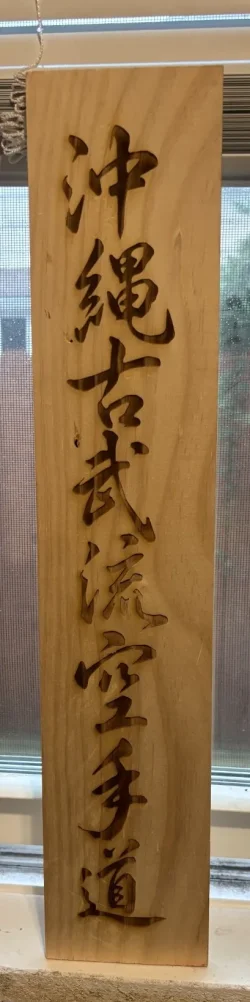
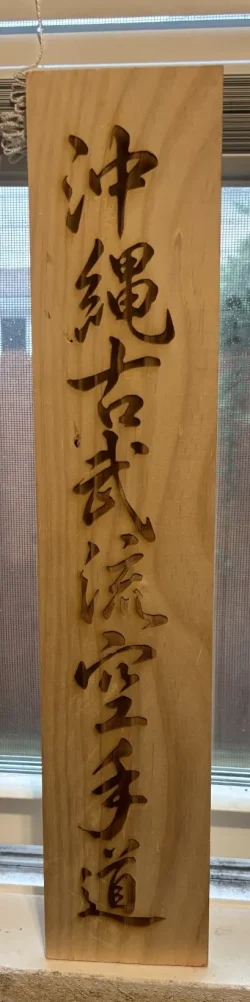
沖
縄
孝
武
流
空
手

道


And then changed the font. The "block" as you called it basically remained unchanged. I tried typing "gyosho" into the font block but nothing came up. I found 2 fonts that had Japanese in the title but they still looked like above.

When I go to the library tomorrow I will ask if they have it. Thanks again for the help.
 
In a different time, when I wore a younger man's clothes and was in the military, My supervisor had spent several years in Japan and had earned 2d dan in Aikido. He brought his certificate in to show me one day. I asked him if he could read the Japanese language? He said no one could read it as his teacher had been very old and his handwriting was very poor and could not be read even by Japanese themselves.
 
IMG_5128.webp
Kaisho is standard ‘written with a brush’ font. Gyoshō is more cursive like handwriting (with a brush). Sōshō is ‘grass writing’ like it’s been written with a blade of grass and is usually unreadable!

I doubt they’ll have those styles on their laser etcher.
 
I found some small pieces of red oak locally. I was surprised at how little red was in it.

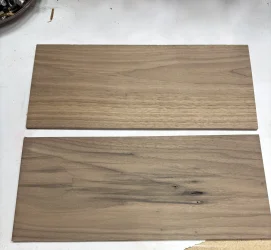
I also found a source of hardwood on line. I ordered a piece of walnut.

Thanks for the pictures of fonts. I saved it.
 
I found another source of wood on line that offers over 150 different types of wood. I ordered 2 pieces of purpleheart, 1/4"x3"x 24" The shipping was more than the cost of the wood!

Interestingly, both are in Michigan, USA, where I live. one in Detroit, 150 miles east of me. And, the other in the upper peninsula, about 500 miles North from here.
 
Purple heart is lovely. I have a bokutō made of it and if you leave it in the sun, its purple colour becomes more vibrant. Black walnut seems to be ubiquitous in the USA (not common in Europe) which is why I recommended it.

Have a look on Ebay/Etsy for timber.
 
I am quite pleased with how this turned out. The library did not have any Japanese fonts. Thanks.
 

Attachments

  • Kobu-ryu   jpeg 1.webp
    Kobu-ryu jpeg 1.webp
    80.4 KB · Views: 26
‘Suffer in the dojo, triumph on the battlefield’

「道場で苦しみ、戦場で勝利する」

I believe I like this version (above) better than the following:
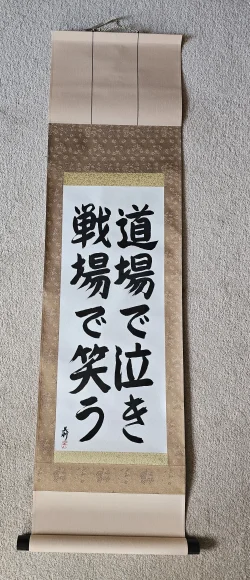
"Cry in the dojo, laugh on the battlefield”
 
I could not get link to take me to a translation site. I copied and pasted link into browser. went to weird sites????

Ok, I just realized it was an attachment to a picture of the names of 3 fonts mentioned in earlier post. Operator error.
 
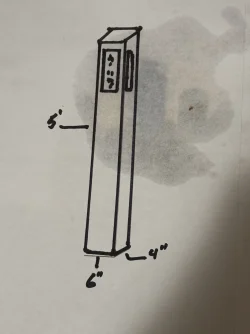
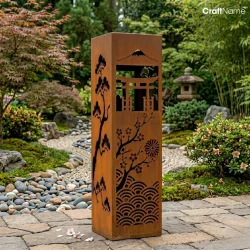
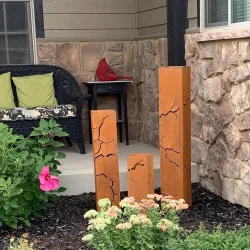
I found pictures of decorations for Japanese gardens. So I decided to make my own version of the decorative column. Influenced by the pictures, but clearly my own interpretation. I had some 4"x6"x4' wooden beams left over from a project.
I would attach two together to make one 8' long. Cut it down to about 6.5' so I can set it in the ground with it being approximately 5' above the ground. Near the top on each side I would attach 1/4" x3"x 18" board with a Japanese message. See picture below.
So far I have two 18" boards done, messages below.

I was going to put
1. If you war peace prepare for war.
戦争をすれば平和が訪れる。戦争に備えよ。

2. ‘Suffer in the dojo, triumph on the battlefield’
「道場で苦しみ、戦場で勝利する」
3. Uechi-ryu Karate do
4. Okinawa KouBuryu Karate do.

Two of the 4 are styles of Karate. I would like to replace them with more inspirational messages.
Many of the sayings I have come across are to long to fit on 18" board and still be readable.

I was using the "Block" style of kanji because that is all I have access to.
I much prefer the Gyoshō font you sent me,

Any suggestions would be appreciated. Thanks.
 

Attachments

  • 20260728_094255.webp
    20260728_094255.webp
    2.3 MB · Views: 20
  • Kobu-ryu   jpeg 1.webp
    Kobu-ryu jpeg 1.webp
    80.4 KB · Views: 17
  • 3847b5c0-828c-4a18-ad86-a81a493cb662.webp
    3847b5c0-828c-4a18-ad86-a81a493cb662.webp
    128.9 KB · Views: 19
  • column2.webp
    column2.webp
    387.5 KB · Views: 20
  • Column.webp
    Column.webp
    240 KB · Views: 14
I think your decision is very personal and thus you need to make the choice. For example you like ‘If you war peace prepare for war.’ whereas I really don’t like it!🤷🏾‍♂️

A garden is a place of peace, contemplation and relaxation so perhaps your choices should reflect that sentiment…be more reflective.

‘Think lightly of yourself and deeply of the world’ - Musashi

‘Honour may not win power, but it wins respect. And respect earns power.’ -

‘We don't rise to the level of our expectations, we fall to the level of our training.’

‘It does not matter how slowly you go as long as you do not stop.’ -Confucius

‘Better to be a warrior in a garden than a gardener in a war.’

‘Even in a quarrel, leave room for reconciliation.’

‘Respect others, even your enemies.’

‘Say only what you mean, and mean what you say.’
 
I have a small corner of my yard where my outdoor makiwara is located. The column will go close to the makiwara. There is no garden. There is only grass and flagstones in front of the makiwara. Actually, I have to replant the grass as most of it was trampled putting in the makiwara and flag stones. "Garden" column is just the name given to the item, not its location, in my case. I will post a picture later.

Rather than being a place of serenity and contemplation it will be a place to focus on martial arts.
 
Right, I understand now.

One aphorism I’ve seen in the dojo of a couple of high ranking and well-respected swordsmen is-

Hyakuren-jitoku (百錬自得)

It means ‘self-attainment through a hundred [countless] practices/repetitions.’

Hyaku (百): Hundred, representing a countless or infinite number.

Ren (錬): Refining, tempering, or forging (as with steel).

Ji (自): Self.

Toku (得): Acquisition or gain

I have this version in my hallway, brushed by a famous calligraphy artist, Fuh Mi…

20240901_094245.webp
 
Back
Top