Instead of learning technique from form/Kata, why don't you create it by common sense?

Combat soldiers in the past (and present) used drilling to instill their combat methods.
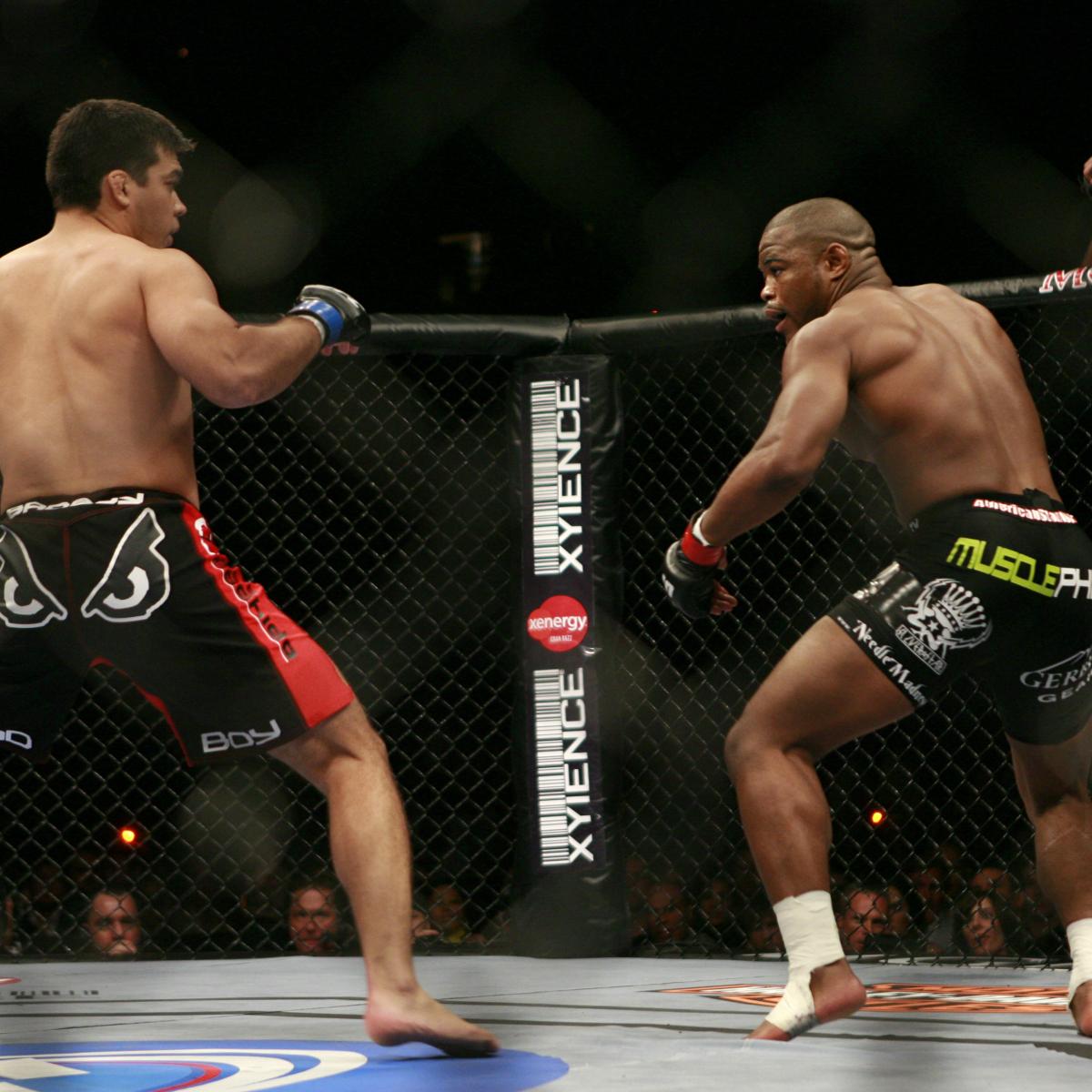
The definition of "sport" is your opponent won't let you do what you want to do. Partner drill is not sport.

When I say take your opponent down 1000 times, I don't mean to take him down when he lets you do it. I mean to take him down when he doesn't let you do it.

When you train

- partner drill, your partner let you do it.
- spar/wrestle, your opponent won't let you do it.

You can

- develop your MA skill from partner drill.
- only test your MA skill from spar/wrestle.

IMO, developing without testing is not enough.

I have seen people who had trained hip throw partner drill for 3 years. The 1st time he got on the map, he was either afraid to use it, or unable to use it when his opponent didn't allow him to do so.
 
Last edited:
It kind of depends on your interpretation.

Funakoshi introduced a new Kata: Taikyoku Shodan. This Kata starts with Gedan Barai and then a lunge punch. Funakoshi taught that Gedan Barai was a throw.... you step your knee behind your opponents leading leg and the "blocking" motion is used to throw the opponent backwards over your knee.


The idea of martial arts being "defensive" arts or "self defense" arts is a new concept.... a new marketing concept....
Yes ā€gedan baraiā€ meaning downward sweeping, but that doesn’t mean it isn’t a ā€œukeā€ which meaning ā€œreceiveā€ if one look at the whole sequence of the move……But there is more to it. As you note Taikyuko shodan we know it’s the first in a series of taikyuko katas, each starting with a different ā€œblockā€, but Taikyuko shodan is considered the ā€œcleanestā€(I couldn’t think up another word), the one by Funakoshis vision containing the essence of karate, which is not throws, kicks and punches for dueling clashes but rather heightening/sharpening of one’s senses of the greater picture.
The name Taikyuko is same as the more widely known Chinese word Tai-Chi(Taiji) indicating the greater thought behind this kata.
It’s the Kata the advanced practitioners will(should) come back to Funakoshi visioned.

He also mentioned-


ā€œThe secret principle of martial arts is not vanquishing the attacker, but resolving to avoid an encounter before its occurrence. To become an object of an attack is an indication that there was an opening in one's guard, and the important thing is to be on guard at all timesā€

- Gichin Funakoshi
 
What is "common sense"?

If your arms occupy your opponent's punching path, his punch cannot get in. This is common sense.

Yesterday when I walked on the beach, there was a young guy who trained MT on the beach. I asked him to throw 30 punches toward my head while I used "rhino guard". None of his punches could get in. I then showed him how to use "rhino guard". I then threw 30 punches at him. Also, none of my punches could hit him. Of course, we used only simple punch, no set up, no grab, no pull, no push.
 
Last edited:
What is "common sense"?

If your arms occupy your opponent's punching path, his punch cannot get in. This is common sense.

Yesterday when I walked on the beach, there was a young guy who trained MT on the beach. I asked him to throw 30 punches toward my head while I used "rhino guard". None of his punches could get in. I then showed him how to use "rhino guard". I then threw 30 punches at him. Also, none of my punches could hit him. Of course, we used only simple punch, no set up, no grab, no pull, no push.
You can't change the definition of a word to what you want it to mean and then argue that you are right and everyone else is wrong.

Definition of "common sense": Common sense is the basic, practical judgment and sound knowledge that most people possess naturally, allowing them to make reasonable decisions in everyday life without requiring specialized training.

What you are arguing for is the exact opposite of "common sense" as it is normally defined. Now, if you want to rephrase it and say "fighting experience" or as boxer's would say "ring savvy", people would agree with you. What you are putting forward is only accomplished by (as you even state) hours upon hours of direct training experience.

You are also keep conflating "sport" with "sparring" and/or "drilling". Sparring does not equal sport. The traditional martial arts had various types and degrees of sparring long before sports competitions came along. Just because sparring is also done in Combat Sports does not mean that they are the same thing.
 
As you note Taikyuko shodan we know it’s the first in a series of taikyuko katas, each starting with a different ā€œblockā€
My point was... that if you take Funakoshi's interpretation of the first move in Taikyoku Shodan.... it would be a throw and not a block.... it would be a turn and throw the guy next to you, on your left. Meaning, according to Funakoshi.... the first technique in the first kata taught.... would be a throw, not a block... an "offensive" move not a "defensive" move.

In fact, if you read Funakoshi's works.... uke te were many other things, before being used to knock aside an attacking hand or foot... in fact, he specifically says that they are strikes to the opponents vital points, before mentioning that they could also be used to knock aside an attacking hand or foot.... But he gives quite a few other uses for those movements, before even getting to the vital point strikes and then to the alternate definition of a "block." But, all we hear now is uke te is a "block" and is "defensive" in nature.... all of which did not come from the founder of the art...
 
You can learn a technique from a form/Kata. You can also create a technique from your common sense. Which way is better?

For example, a jab-jab-cross (or jab-jab-hook, jab-jab-uppercut, jab-jab-overhand, ...) can be a technique that you can create from your common sense. Those punching combos may not exist in your MA system. But you know it works very well in fighting.

Do you really need a teacher to teach you jab-jab-cross (or jab-jab-hook, jab-jab-uppercut, jab-jab-overhand, ...)?

If you ask your MA teacher, "Why jab-jab-cross combo doesn't exist in our MA system"? What do you think his answer will be?
There is a distinction between the kata that is broken down from actual tried and tested waza. And kata that is completely made up. We do henka waza. A variation of the original waza to be shown to the public. In this case a kata breakdown is useful. Then again its not made up
 
There is a distinction between the kata that is broken down from actual tried and tested waza. And kata that is completely made up. We do henka waza. A variation of the original waza to be shown to the public. In this case a kata breakdown is useful. Then again its not made up
If kata was not made up... where did it come from?
 
If kata was not made up... where did it come from?
1777919086437.webp
 
My point was... that if you take Funakoshi's interpretation of the first move in Taikyoku Shodan.... it would be a throw and not a block.... it would be a turn and throw the guy next to you, on your left. Meaning, according to Funakoshi.... the first technique in the first kata taught.... would be a throw, not a block... an "offensive" move not a "defensive" move.

In fact, if you read Funakoshi's works.... uke te were many other things, before being used to knock aside an attacking hand or foot... in fact, he specifically says that they are strikes to the opponents vital points, before mentioning that they could also be used to knock aside an attacking hand or foot.... But he gives quite a few other uses for those movements, before even getting to the vital point strikes and then to the alternate definition of a "block." But, all we hear now is uke te is a "block" and is "defensive" in nature.... all of which did not come from the founder of the art...
You're pretty much on point here. Taikyoku shodan is what I call a "kihon kata" designed for raw beginners to practice a few basics. It's not really designed for application other than the obvious. In this respect, the block is just a block.

However, the low "block" is not termed gedan uke (as opposed to the (high block) jodan uke or (outside block) chudan soto uke, etc, but rather gedan barai. This indicates that move is somewhat different than the others, barai referring to a broad sweeping motion.

This is a generalized motion that can have several applications such as an assist to a throw as you mention (an app that appears in several style's traditional kata):
you step your knee behind your opponents leading leg and the "blocking" motion is used to throw the opponent backwards over your knee.
... or a redirection, a low strike or low block (once the least common use), among a few others. This was the gedan barai of Funakoshi's time. As Shotokan became more regimented into "do" these other apps took a back seat to better fit into the Japanese mold and goals.
 
My point was... that if you take Funakoshi's interpretation of the first move in Taikyoku Shodan.... it would be a throw and not a block.... it would be a turn and throw the guy next to you, on your left. Meaning, according to Funakoshi.... the first technique in the first kata taught.... would be a throw, not a block... an "offensive" move not a "defensive" move.

In fact, if you read Funakoshi's works.... uke te were many other things, before being used to knock aside an attacking hand or foot... in fact, he specifically says that they are strikes to the opponents vital points, before mentioning that they could also be used to knock aside an attacking hand or foot.... But he gives quite a few other uses for those movements, before even getting to the vital point strikes and then to the alternate definition of a "block." But, all we hear now is uke te is a "block" and is "defensive" in nature.... all of which did not come from the founder of the art...
Well yes, all ā€blocksā€ at advanced interpretations doesn’t necessarily have to be blocks. But I don’t believe Funakoshi taught them as throws and pressure/vital point strikes to beginners.
As I wrote in previous post, Funakoshi had mentioned that the Taikyoku shodan kata is a kata advanced students would/(should) come back to. As a step by step learning/understanding process .
Funakoshi created three taikyoku katas - shodan, nidan and sandan, additional 2(or three (I’ve forgot, long time ago I was into Shotokan) ) was created by senior students of Funakoshi , one of those additional Taikyoku katas is all gedan barai but executed in kiba-dachi(horse stance).
Our teacher/school didn’t put great emphasis on the Taikyoku katas but had us go through them at some point, and I recall that the all gedan barai in kiba-dachi Taikyoku kata was taught as - first gedan barai was a block, next gedan-barai a throw, altering in that fashion throughout the kata.
These additional 2(or three?) Taikyoku katas are supposed to be taught and learned at intermediate(colored belt) levels
 
Funakoshi had mentioned that the Taikyoku shodan kata is a kata advanced students would/(should) come back to.
All advanced students must practice the fundamental basics. That's how one becomes and stays advanced. Of course, their basics will look and be executed much differently than a beginner's. They are executing the basics in an advanced way, layered in subtleties and nuance that are possible only after years or decades of practice.
 
Back
Top