3 moves to finish

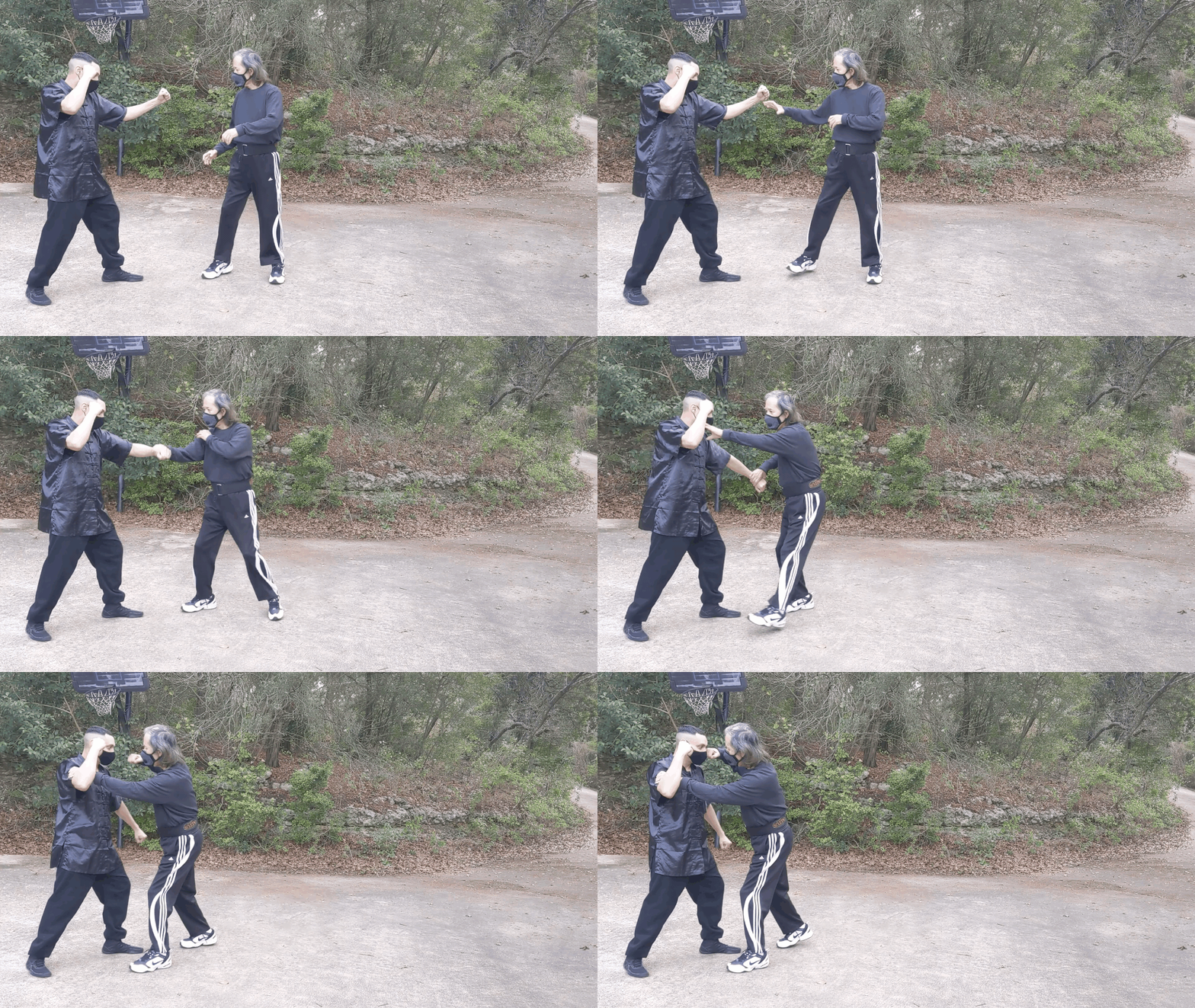
This is my favor "side door" entering strategy.

1. Throw a punch to force opponent to block (this video starts from arms contact).
2. Use another hand to remove opponent's blocking arm (use opponent's leading arm to jam his back arm).
3. Punch again (enter through the side door).

Bruce-Lee-switch-hand-1.gif
 
So hard to lock down a certain amount or type of moves to finish. We try to finish in as few seconds as possible, but that is against an opponent that is a classmate and is not really trying to kill you. Ya really have to be prepared to go the distance, whatever that means.
 
So hard to lock down a certain amount or type of moves to finish. We try to finish in as few seconds as possible, but that is against an opponent that is a classmate and is not really trying to kill you. Ya really have to be prepared to go the distance, whatever that means.
This was why people in the past spent so much training time to develop their punching power so they could finish a fight with just 1 punch. This is also why today's point system sparring is a bad idea that can only build up bad habit by holding back punching power.

99% of the time that your 1st punch will fail. But if you use your 1st punch to force your opponent to respond, if you can take advantage on your opponent's respond and clear your attacking path (your 2nd move), your next punch (your 3rd move) will have much better chance.

The key point is "how well that you can use your 2nd move to clear your attacking path".

In this clip, Bruce's 2nd move has disabled both of his opponent's arms. When Bruce throws his 2nd punch (3rd move), his attacking path is clear.

Bruce-trap-hand.gif


In this clip, his 1st move deal with his opponent's left arm. His 2nd move deal with his opponent's right arm. When he makes his 3rd move, his attacking path is clear.

 
Last edited:
This was why people in the past spent so much training time to develop their punching power so they could finish a fight with just 1 punch. This is also why today's point system sparring is a bad idea that can only build up bad habit by holding back punching power.

99% of the time that your 1st punch will fail. But if you use your 1st punch to force your opponent to respond, if you can take advantage on your opponent's respond and clear your attacking path (your 2nd move), your next punch (your 3rd move) will have much better chance.

The key point is "how well that you can use your 2nd move to clear your attacking path".

In this clip, Bruce's 2nd move has disabled both of his opponent's arms. When Bruce throws his 2nd punch (3rd move), his attacking path is clear.

View attachment 34537

In this clip, his 1st move deal with his opponent's left arm. His 2nd move deal with his opponent's right arm. When he makes his 3rd move, his attacking path is clear.

Doesn’t those gifs show point sparring, kind of ?
 
This was why people in the past spent so much training time to develop their punching power so they could finish a fight with just 1 punch. This is also why today's point system sparring is a bad idea that can only build up bad habit by holding back punching power.

99% of the time that your 1st punch will fail. But if you use your 1st punch to force your opponent to respond, if you can take advantage on your opponent's respond and clear your attacking path (your 2nd move), your next punch (your 3rd move) will have much better chance.

The key point is "how well that you can use your 2nd move to clear your attacking path".

In this clip, Bruce's 2nd move has disabled both of his opponent's arms. When Bruce throws his 2nd punch (3rd move), his attacking path is clear.

View attachment 34537

In this clip, his 1st move deal with his opponent's left arm. His 2nd move deal with his opponent's right arm. When he makes his 3rd move, his attacking path is clear.

We train in trapping with both open hand and weapons. Bruce’s favorite move was the stop kick. This would stop the opponents forward movement and throw off their balance. Follow that with boxing, leading to trapping when available. Obviously he was also a proficient kicker. I guess the import part was his being like water concept.

Have you watched real street fights on YouTube? Very often wild and barrage like attacks.
 
Doesn’t those gifs show point sparring, kind of ?
In training, you can

- punch next to your opponent's head with full power to avoid building bad habit. In other words, you intentional miss your target.
- ask your opponent to put chest protection on when you punch full force on his chest.
- ask your opponent to hold on a kicking shield when you punch full force on his chest.
- ...

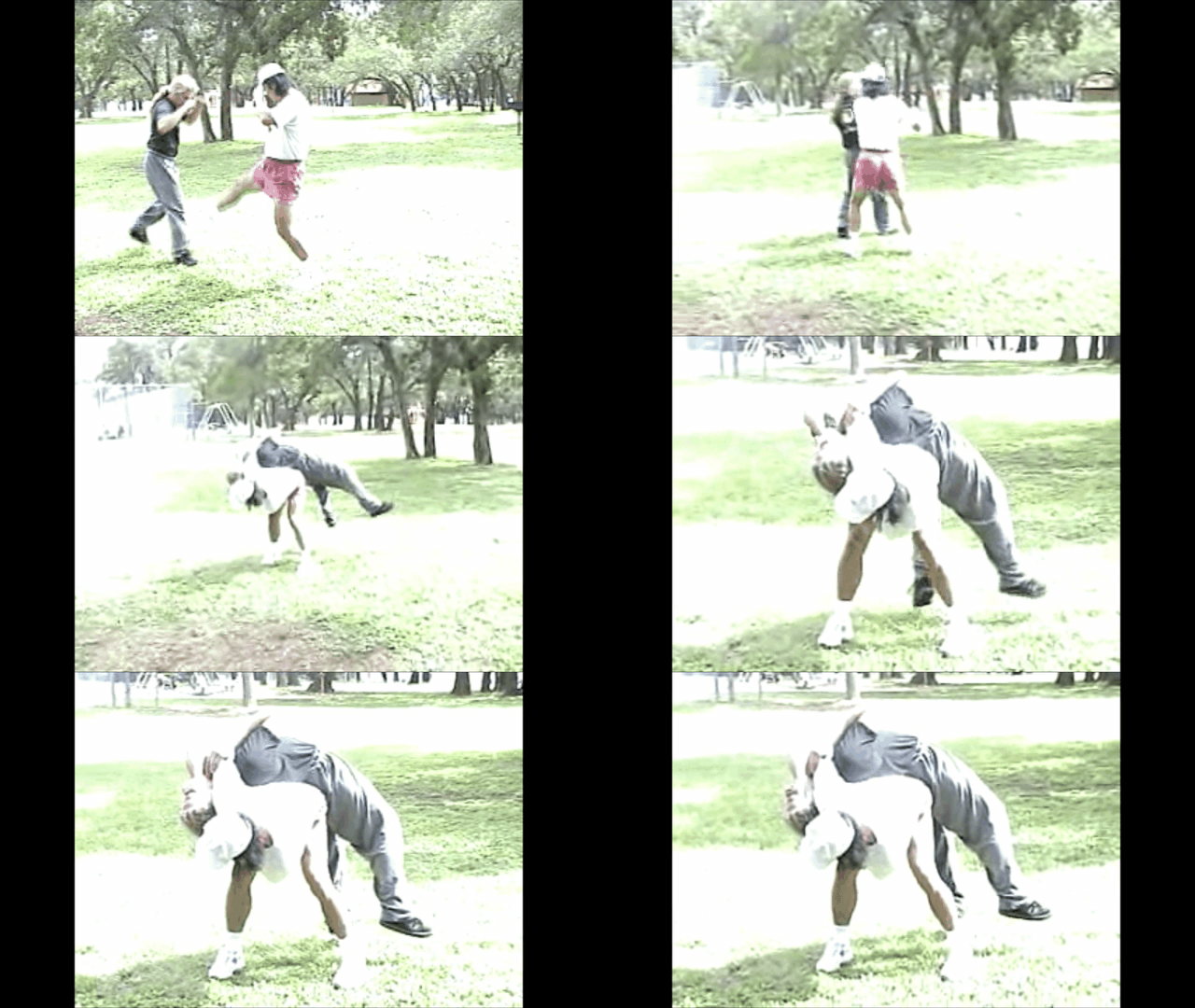
There are many ways to solve this problem. This is the beauty of the throwing art. When you take down your opponent, you don't have to hold back, and you can apply your full power.

In this gif, the old man is not holding back at all.

Chang-outer-bow.gif
 
We train in trapping with both open hand and weapons. Bruce’s favorite move was the stop kick. This would stop the opponents forward movement and throw off their balance. Follow that with boxing, leading to trapping when available. Obviously he was also a proficient kicker. I guess the import part was his being like water concept.

Have you watched real street fights on YouTube? Very often wild and barrage like attacks.
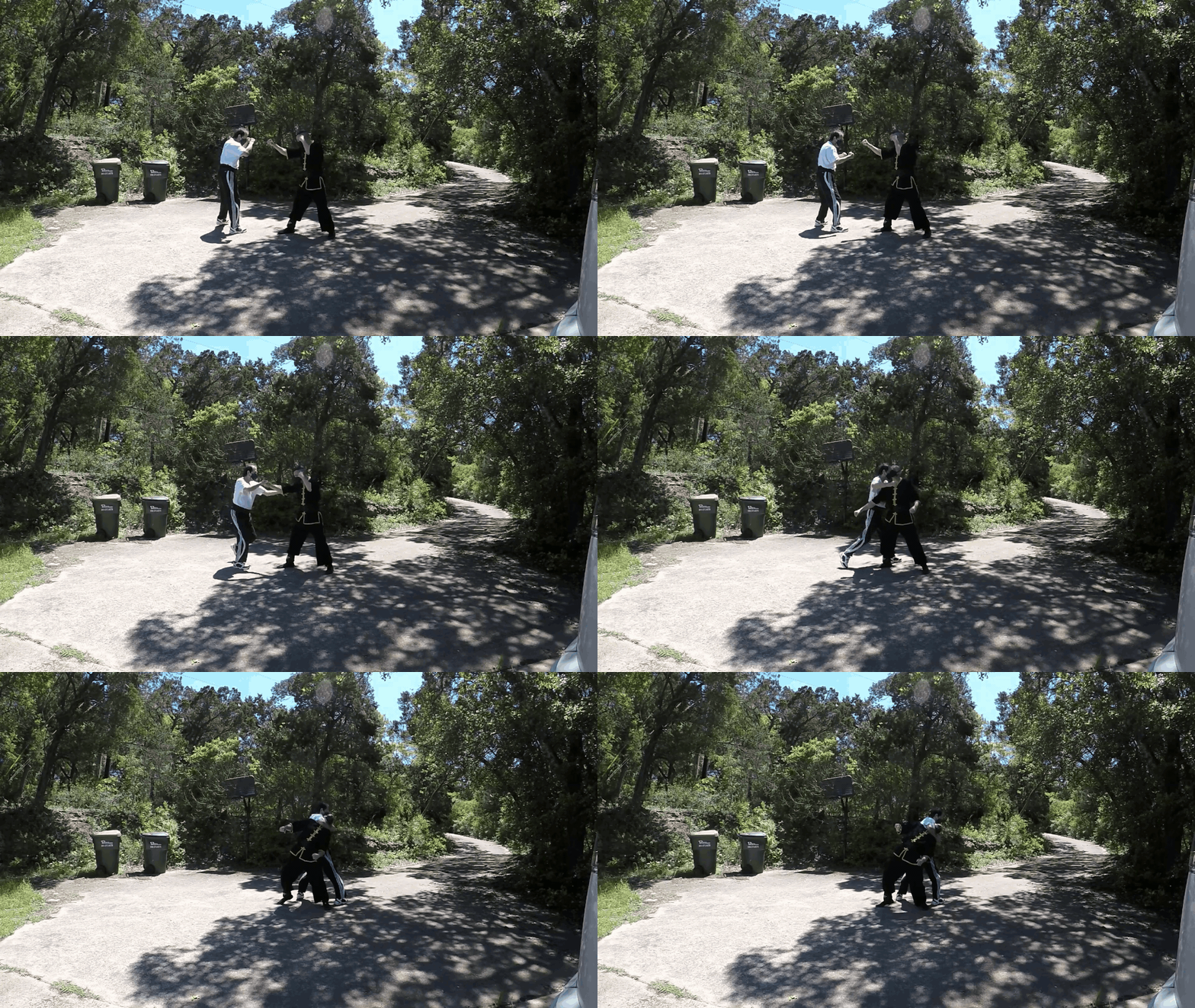
There are 2 basic strategies here:

1. Trapping - guide your opponent's one arm to jam his other arm and force him to open his side door.
2. Separate hands - separate your opponent's arms away from his head and force him to open his front door.

1 and 2 can be the most important part of the MA training. This subject has not been discussed much in this forum.
 
In training, you can

- punch next to your opponent's head with full power to avoid building bad habit. In other words, you intentional miss your target.
- ask your opponent to put chest protection on when you punch full force on his chest.
- ask your opponent to hold on a kicking shield when you punch full force on his chest.
- ...

There are many ways to solve this problem. This is the beauty of the throwing art. When you take down your opponent, you don't have to hold back, and you can apply your full power.

In this gif, the old man is not holding back at all.

View attachment 34538
Except his training parter knows the technique and is going with the flow. It’s a demo.
 
Except his training parter knows the technique and is going with the flow. It’s a demo.
Agree! In partner training, if you know your punch will be blocked by your opponent, it's very hard for you to throw 100% power. The more power that you put into your punch, the more that your opponent's block can affect your balance.

This is why to clear your attacking path so you can put 120% power into your punch to finish the fight is the most important MA strategy.
 
Last edited:
In training, you can

- punch next to your opponent's head with full power to avoid building bad habit. In other words, you intentional miss your target.
- ask your opponent to put chest protection on when you punch full force on his chest.
- ask your opponent to hold on a kicking shield when you punch full force on his chest.
- ...

There are many ways to solve this problem. This is the beauty of the throwing art. When you take down your opponent, you don't have to hold back, and you can apply your full power.

In this gif, the old man is not holding back at all.

View attachment 34538
I do not think it is a good idea training to miss a target.
 
I do not think it is a good idea training to miss a target.
This is the problem for the striking art. To punch into the thin air is always a bad idea no matter you may use full power or not.

There is always a better way to solve the same problem. To knock your opponent down may not be your only choice.


1. Sweep your opponent's leading leg so he won't kick you.
2. Push your opponent's leading arm to jam his own back arm.
3. Enter side door and attack.

 
In training, you can

- punch next to your opponent's head with full power to avoid building bad habit. In other words, you intentional miss your target.
Hmmm, could this build bad habit perhaps?
In this gif, the old man is not holding back at all.

View attachment 34538
The young man seem to hold back !

What i actually mean is that while criticizing point sparring as a bad habit same time as propagating for set situation that is as much point marking strikes seems not right
 
The young man seem to hold back !

What i actually mean is that while criticizing point sparring as a bad habit same time as propagating for set situation that is as much point marking strikes seems not right
Demo is 1/2 fake and 1/2 real. The 1/2 fake part is your opportunity give you that opportunity. The 1/2 real part is you have to "finish it".

The point sparring doesn't show that you have the ability to "finish it".
 
Demo is 1/2 fake and 1/2 real. The 1/2 fake part is your opportunity give you that opportunity. The 1/2 real part is you have to "finish it".

The point sparring doesn't show that you have the ability to "finish it".
The score of points show when it’s finished, there’s no need for prearranged attacks or stance for that.
 
The score of points show when it’s finished, there’s no need for prearranged attacks or stance for that.
Finish to me is either knock down, or take down (My opponent is on the ground while I'm still standing). Since knock down may cause legal issue, take down become the only option. This is why my strategy is always trying to turn a striking game into a wrestling game ASAP.
 
Finish to me is either knock down, or take down (My opponent is on the ground while I'm still standing). Since knock down may cause legal issue, take down become the only option. This is why my strategy is always trying to turn a striking game into a wrestling game ASAP.
Yes, so we can then also say, that’s why we have point sparring/fighting, it’s more civilized , you can foot sweep the opponent to the ground
 
You and your opponent have right side forward (uniform stance).

1. You throw a right uppercut. Your opponent blocks with his right leading arm.
2. You change your right uppercut into a grab/pull and pull down your opponent's right leading arm, step in your left leg, and use your left back palm to strike on his face (Xingyi Pi Quan).
3. Your opponent blocks your left palm strike with his left back hand from your right to your left (this will expose his left side of his head). You then throw a right hook at the left side of his head.

Any comment on this 3 moves combo?
Sounds like a cut out sequence from the taijiquan exercise(form) made into a non taijiquan drill, and it sounds as a drill within tongbeiquan(wuxing branch)
 
Sounds like a cut out sequence from the taijiquan exercise(form) made into a non taijiquan drill, and it sounds as a drill within tongbeiquan(wuxing branch)

Everyone practices through the lens they trained in—or eventually arrive at.
For me, what makes a drill relevant to Taiji isn't where its movements came from, but what the drill is training you to develop. The distinction is more fundamental than whether the movements come from a Taiji form or resemble another art.

One approach trains the body to carry a predetermined solution through the interaction.
The mind becomes locked into the solution through the body; the other frees the mind from the body, allowing it to adapt the body as needed.


My practice has moved in the direction of —freeing myself from a predetermined solution: ā€œFirst in the mind, afterward in the bodyā€ (å…ˆåœØåæƒļ¼ŒåŽåœØčŗ«). Not a fixed response held in the mind, but an intent open, allowing the freedom to change as needed.

If resistance appears, change. If you cannot connect and join, you cannot follow; if you cannot follow, there is nothing to release.

ęœ¬ę˜Æčˆå·±ä»Žäŗŗļ¼Œå¤ščÆÆčˆčæ‘ę±‚čæœć€‚
The principle is čˆå·±ä»Žäŗŗ; many mistakenly abandon what is near and seek what is far.
Wang Yongquan's 听、问、拿、放 — listen, ask, take, release — expresses much the same idea. If I've already decided how the other should react, I'm not following them; I'm trying to make them follow me.
 
Last edited:
Back
Top