Why "clinch pull head" is a bad idea

This post started with the idea that it was a bad idea to control the head, which assumes you already had it.
You had it because you take your opponent down this way. Ground game can the continuation of your take down.

When you use "head lock leg block" to take your opponent down, you are in the side mount position already (if you intend to go down to the ground with your opponent).
 
Last edited:
You had it because you take your opponent down this way. Ground game can the continuation of your take down.

When you use "head lock leg block" to take your opponent down, you are in the side mount position already (if you intend to go down to the ground with your opponent).

And when I take down with two hands on head, I have guillotine.

Again, I completely fail to understand your logic.
 
And when I take down with two hands on head, I have guillotine.

Again, I completely fail to understand your logic.
If you have "head lock" on your opponent before you take him down, after you have taken him down, why do you want to release it?

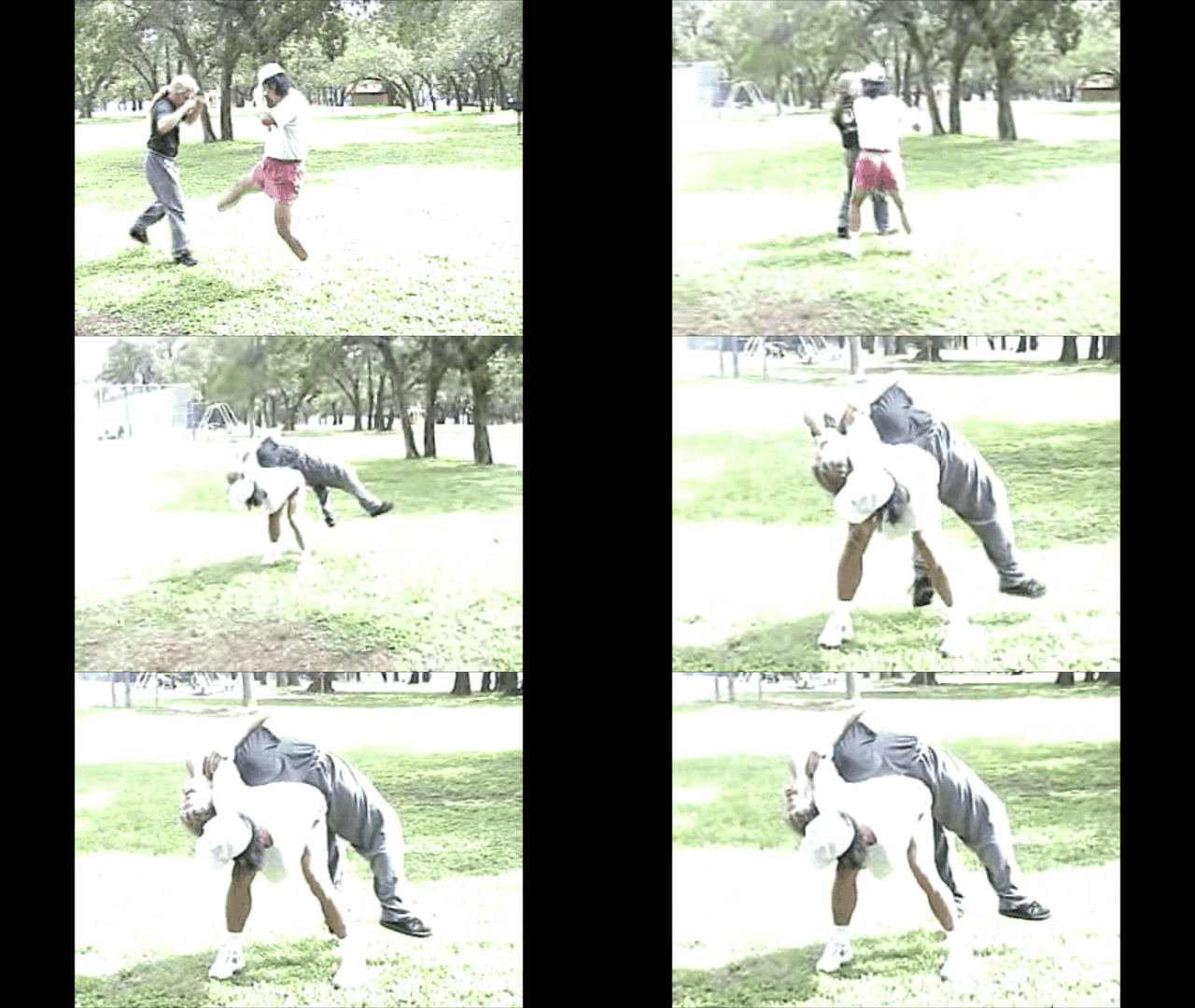
In this video, he uses "under hook leg spring" to take down his opponent. When his opponent is down, he still has his underhook and he can continue his ground game from there.


In this video, if he takes his opponent down, he doesn't have to release his choke.


Here is another example. It's used by police all the time.

Chang_police_demo.webp
 
Last edited:
And when I take down with two hands on head, I have guillotine.

Again, I completely fail to understand your logic.
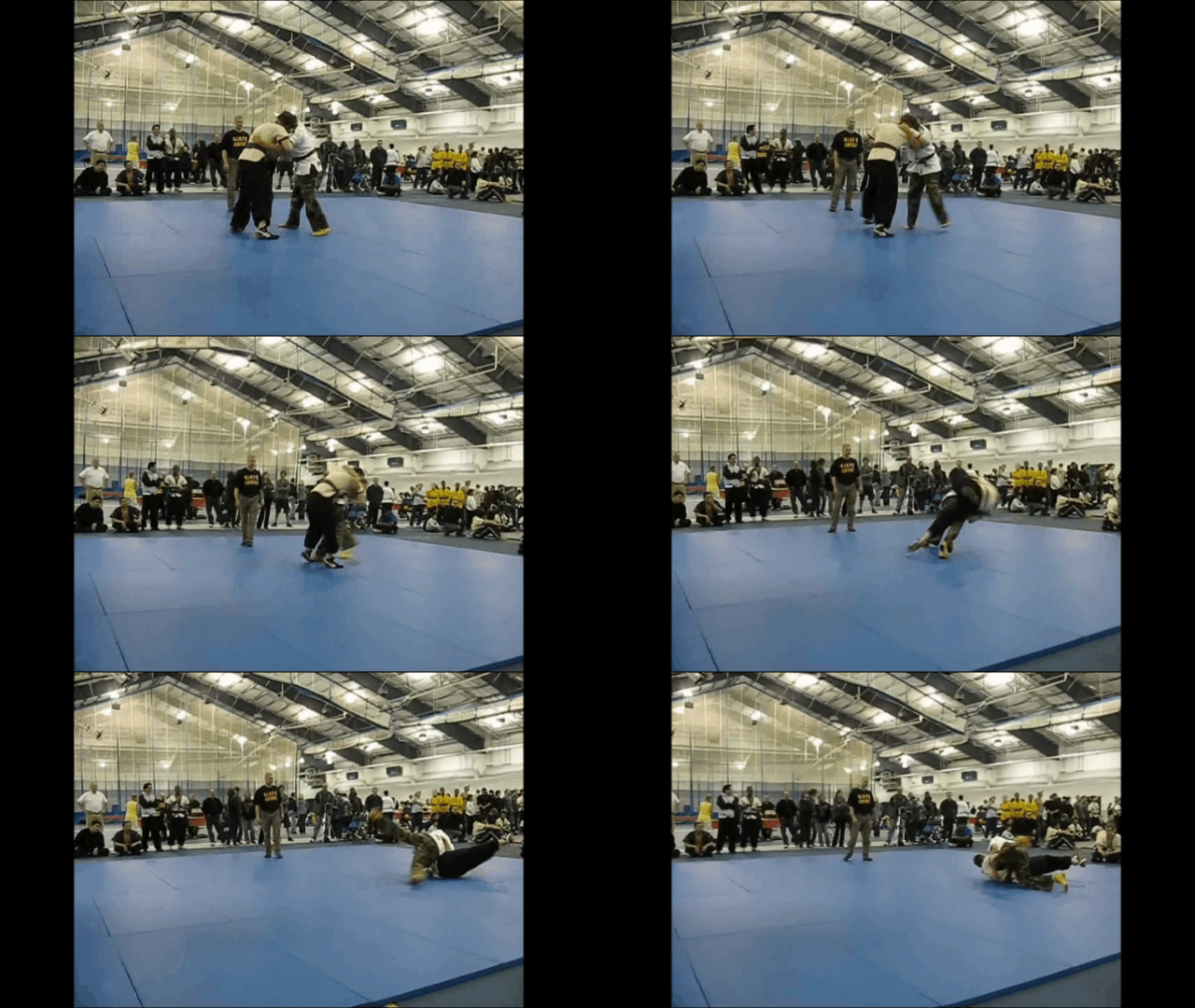
BJJ and throwing art can be integrated nicely. A throw with good body control can give you an early start in your ground game.


If you can do the sequence of kick -> punch -> throw -> ground control, you start to understand the MA integration.
 
If you have "head lock" on your opponent before you take him down, after you have taken him down, why do you want to release it?

In this video, he uses "under hook leg spring" to take down his opponent. When his opponent is down, he still has his underhook and he can continue his ground game from there.
I don't even know what point you're trying to make anymore. It's not a conversation. You make a point. I make a counterpoint. You argue with the counterpoint in a manner that contradicts your first point. I try to keep both consistent in my next reply, and then you make a different point.

I've completely lost what it is you're trying to say here.
 
Do you agree that when you use "head lock" to take your opponent down, you don't have to let go your head lock?
But you're replying to me saying I can take someone down with a choke, which is a more advantageous position than a headlock.

If I take someone down with the headlock and hold onto the headlock, I need additional steps to properly set the choke. If I take someone down with the choke, I already have the choke.

If your point is that there is a logically superior technique that you should use because it's the better option, then I would think that the technique that is already a choke would be better than one that's on the way to becoming one.
 
If I take someone down with the headlock and hold onto the headlock, I need additional steps to properly set the choke.
May be here is the confusion part. Head lock is not choke.

Head lock can be used to squeeze on the

1. jaw area.
2. forehead area.

1 < 2.

When you head lock on your opponent's neck, you do have to slide up a little bit for your squeeze. But you don't have to release your head lock at all.

head_squeeze.webp
 
Last edited:
The confusing part is where you start a thread about a "clinch pull head" move, a move used by a few different martial arts and used quite effectively in both combat and sport fights... there is plenty of evidence that this move is effective. You counter all this evidence by showing someone not actually apply the "clinch pull head" move on you, so that you can use a head lock to counter it. You are now arguing that head lock should be integrated into throwing art and into grappling art.... how does that relate to "clinch pull head" being a bad idea? It to can be integrated into throwing art and into grappling art....

Head lock from your "side mount" (which everyone else calls Kesa Gatame or scarf hold.... side mount has a totally different meaning) now seems to be the goal.... are you now arguing that it is better than choking?

 
Last edited:
May be here is the confusion part. Head lock is not choke.

Head lock can be used to squeeze on the

1. jaw area.
2. forehead area.

1 < 2.

When you head lock on your opponent's neck, you do have to slide up a little bit for your squeeze. But you don't have to release your head lock at all.
I know headlock is not a choke. I am saying that headlock < choke. Why focus so much on the headlock when the choke is there?

Squeezing the head is a move white belts use because it works on other white belts. It's because the white belt doing the squeeze doesn't know how to properly set up a technique or properly do a submission. They just know it hurts the other person and gets them stuck. And the white belt receiving the technique doesn't know how to get out of it or thinks they're in more danger than they are.

There are very, very few people in this world that are strong enough to apply a head squeeze that can cause actual harm. If a white belt does this technique on me, all they're going to do is anger me, and I'm going to punish them severely when I eventually and inevitably get out of it. (My favorite is the knee-on-belly that makes me feel like the weight of a thousand suns).

It takes me far less energy to tap a white belt with a guillotine choke than it would take to tap a white belt with a head squeeze. I can actually tap a blue belt or above with a guillotine choke, where they would suffer through and eventually escape the head squeeze.

I'm really not sure what the point you're trying to make is, but it seems like the kind of thing someone without any experience grappling would say. I say this because the technique and strategy resembles what white belts do (and the worst of the white belts at that).
 
- If your opponent's arms can bend your head down, your opponent is stronger than you.
Or.... your opponent has better position, better structure, better technique.... or he has set up his clinch....

- If it takes 1/2 second for your opponent to put both hands behind your neck, and you can't respond properly within that 1/2 second, your opponent is faster than you.
Or.... your opponent has better position, better structure, better technique.... or he has set up his clinch....

It's very common that your counter won't work because your opponentb is stronger and faster than you.
Or.... you could learn counters that actually work from the "clinch pull head" move actually being applied.....

It's not all about raw strength and speed.

 
Last edited:
The key to avoiding a counter to a head clinch (or other grab) is to get the opponent off balance by moving his weight or with a distracting/disabling strike first. Going right to a grappling move in a striking art is usually difficult to pull off without the above condition.
 
Back
Top