What's the most important MA skill that you should train?

Kung Fu Wang129 159

Sr. Grandmaster
MT Mentor
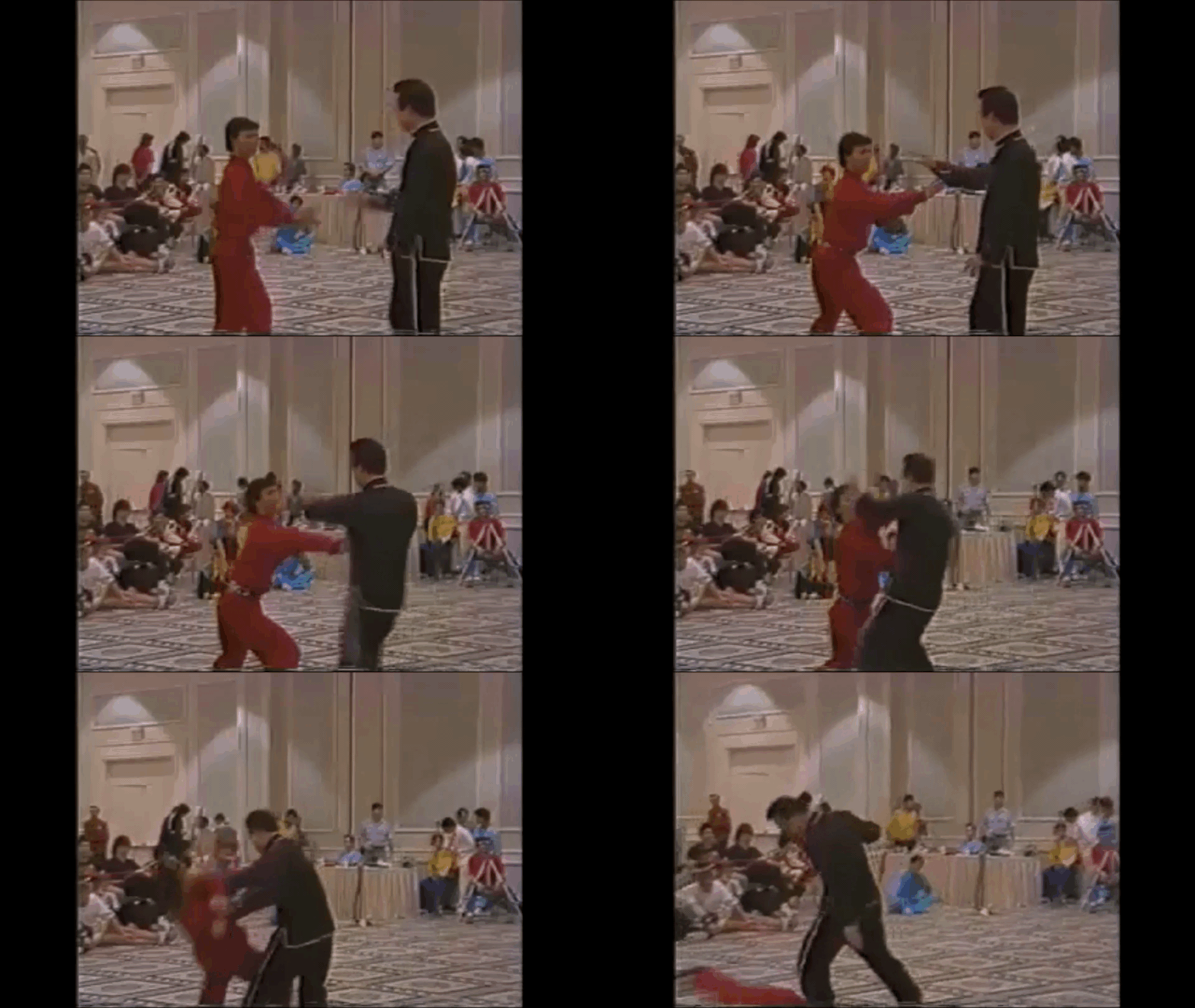
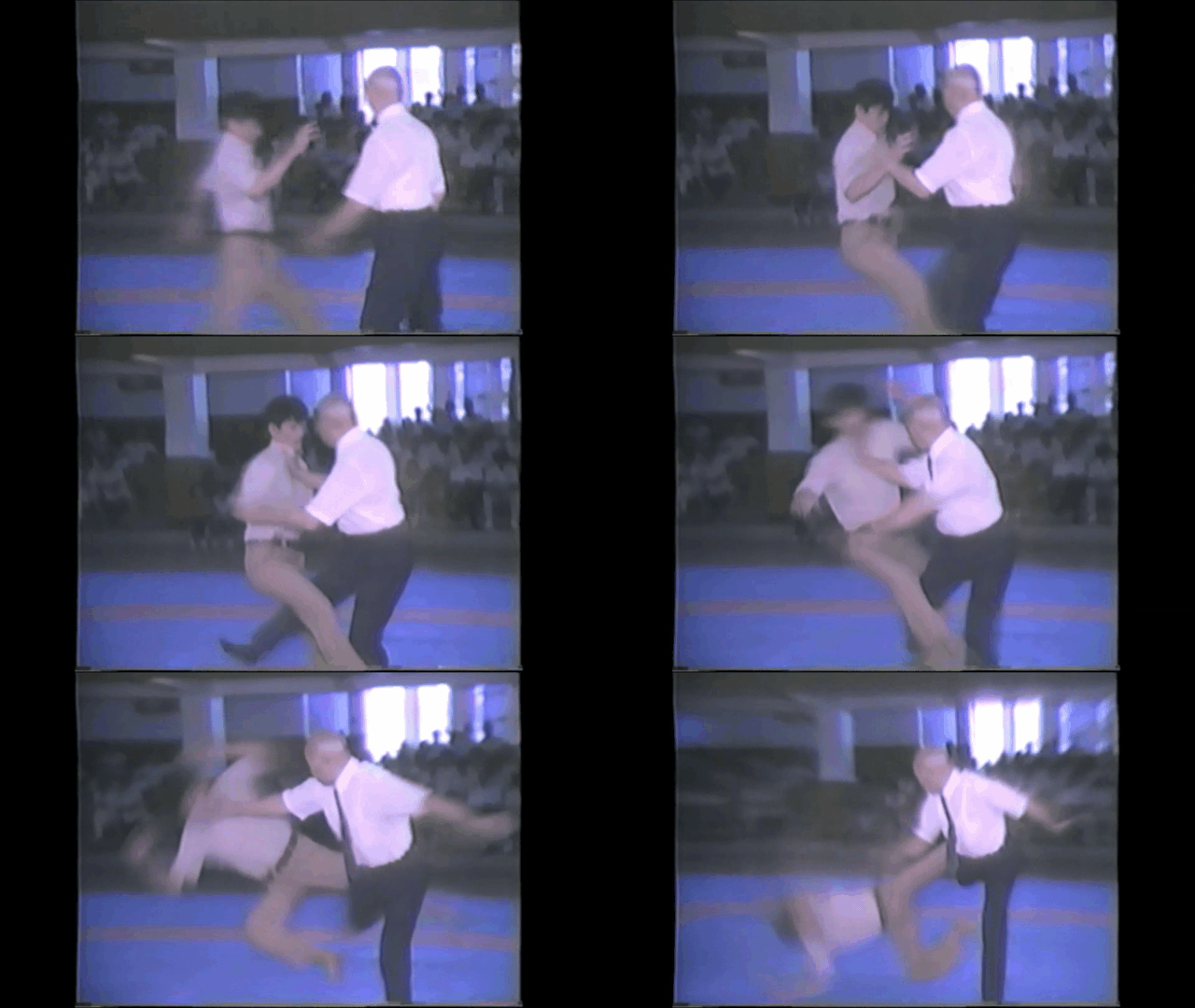
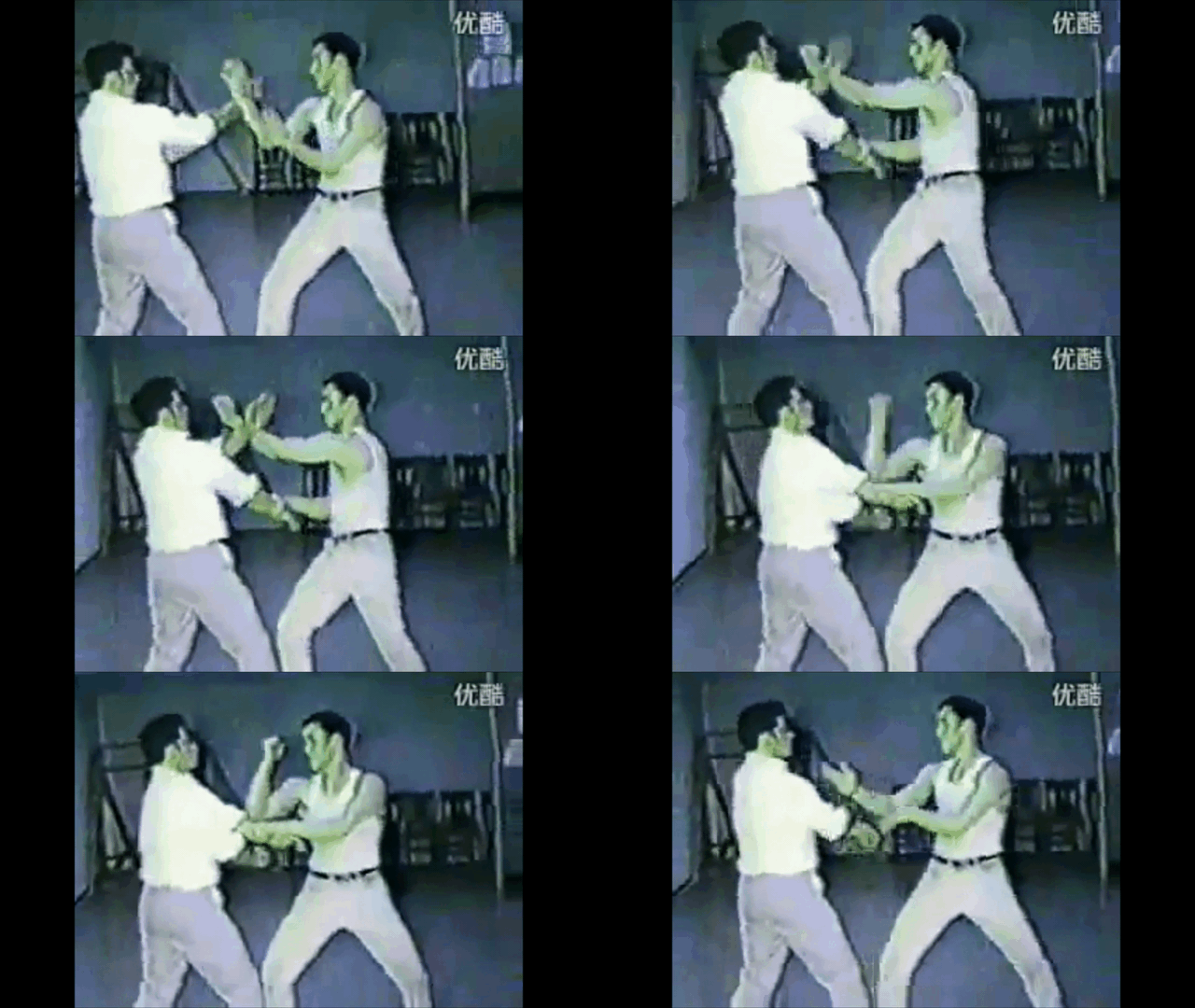
If you can control both of your opponent's wrists, you can push one of his arms to against his other arm. You can then free one of your hand and punch on his face while he has no arm to block you. If you pull one of his arms and sweep his opposite side leg, you can take him down effortless.

You may need to put some effort to achieve this (Your opponent has no arm to attack you). But when you have achieved this, you can knock/take your opponent down and end a fight right there.

Is this part of your game plan? What's your opinion on this?


Last edited:

What's the most important MA skill that you should train?​

That will be different for each art. However, the pattern is the same. The very first things they teach a brand new student, are the most important things to study for that art. The first techniques, the first form, the first drills. These are what teach the foundation for the art. The rest of the art is built upon this foundation. The better your foundation, the better your art will be.

As people, we always want to get to the fancy stuff at the end.... we think that is where the secrets are hidden. But, the important stuff is taught at the beginning, at the very beginning. The rest of it is to just polish and reinforce the foundation you were given on day 1. Its also the best place to hide the secrets.... just hand it out right away at the beginning... everyone just runs past that beginning stuff as fast as they can, so that they can get to the advanced, fancy stuff. Hopefully, they will eventually learn that to make the advanced fancy stuff work, you need to have a really good foundation.
 
I tell my students that the most important skill they will learn in jiujitsu is how to fall safely.

My reasoning is this: with some luck and good life decisions, they may never have to get into a real fight. But everyone will have to deal with taking a tumble at some point. Especially as they get older, being able to avoid a broken hip from a fall can be a literal life saver.
 
I tell my students that the most important skill they will learn in jiujitsu is how to fall safely.

My reasoning is this: with some luck and good life decisions, they may never have to get into a real fight. But everyone will have to deal with taking a tumble at some point. Especially as they get older, being able to avoid a broken hip from a fall can be a literal life saver.
When do you start teaching them to fall?
 
There is no one skill. IMO, these are my selections:

Mental - keeping calm under pressure and having offensive spirit. Allows for seeing opportunities, the opponent's intention and proper timing.

Tactical - controlling the opponent's elbow or above. Allows for controlling the entire upper body and moving to his back.

Foundational - structure and stance. Allows for quick movement in any direction.

Technique - the least important skill if the above three are present. With these, almost any somewhat competently executed technique can work.
 
Keep you intelligence and confidence, but leave you ego at the door.

After that, the basics lay a foundation. They are the soil where all else grows.
 
The tougher of the two to instill in students is effort. You have to lead by example, of course, but you have to excite them about their training and their personal improvement.


Maybe in Asia it's different šŸ¤”

There, the student has to show they are worthy of what the teacher offers. Many teachers have a period where they barely teach—they watch, test, and wait to see the student's character and sincerity before opening the door.

It's less about the teacher exciting the student, and more about the student proving they're ready to receive. And when teaching begins, it's adjusted to the student's intent and how they'll actually use it.
 
Tough one to answer. I agree wholeheartedly that learning to fall is pretty damn vital for a throwing art. And people have listed a lot of things (like courage) that I'd describe as something else. Whether that's concepts, principles, attributes, whatever.

The one I've always described as the most important SKILL though is footwork. Or--in my desperate bid to make this a bit more universal across martial arts--positioning. (I get that "footwork" may not do justice to something like BJJ.)

Controlling where you are in relation to an opponent.

Footwork took up most of our training time in my early days in eskrima and fencing. And we devoted a lot of time to it in my kickboxing and boxing practice. In a style more focused on stances than those are, flowing between stances and using each for its intended purpose could be read as a form of footwork/positioning as well.

In my first experience of BJJ, we spent the whole time shrimping, another form of controlling your positioning in relation to an opponent.

Without being in the right place at the right time, strikes don't land at their intended range, angles are off, blocks wind up taking the full brunt of a strike rather than dissipating it, etc. It's the medium through which timing, angling, etc. are realised. That wrist grab in Post 1 isn't happening without being at the proper range and angle first, for instance.

Again, you could make the argument that almost anything rises to the level of "without this, the whole thing goes sideways." And it would be hard to dispute it in many cases. Not much point in punching someone if you can't make a proper fist, for instance. But, for my money, the answer is footwork/positioning.
 
I've long said that learning to breakfall is the most universally useful physical skill martial arts will teach you. It can serve you outside the training hall far more often, one would hope, than any strike, throw, choke, lock or chi blast. I've had a few encounters with patches of ice in the Quebec winters that bear this out.

If we're talking purely martial applications, then I agree with ap Oweyn above. Positioning is where everything starts.

If we include mental skills, I'd say learning how your body moves, which will enable you to start explorimg the rechniques and make them make sense to you.
 
Maybe in Asia it's different šŸ¤”

There, the student has to show they are worthy of what the teacher offers. Many teachers have a period where they barely teach—they watch, test, and wait to see the student's character and sincerity before opening the door.

It's less about the teacher exciting the student, and more about the student proving they're ready to receive. And when teaching begins, it's adjusted to the student's intent and how they'll actually use it.
Definitely an approach guaranteed to keep the class size minimal, here in the West.

I’m not saying I disagree with it. It’s just reality.
 
For striking/weapons arts, I’d suggest correct distancing is something that really needs addressing. The first time I was taught two person sword kata, I was shocked at how close I had to be to my partner in order to engage and cut him effectively! The thought of being that close with a sharpened steel blade is horrifying 😳
 
Back
Top