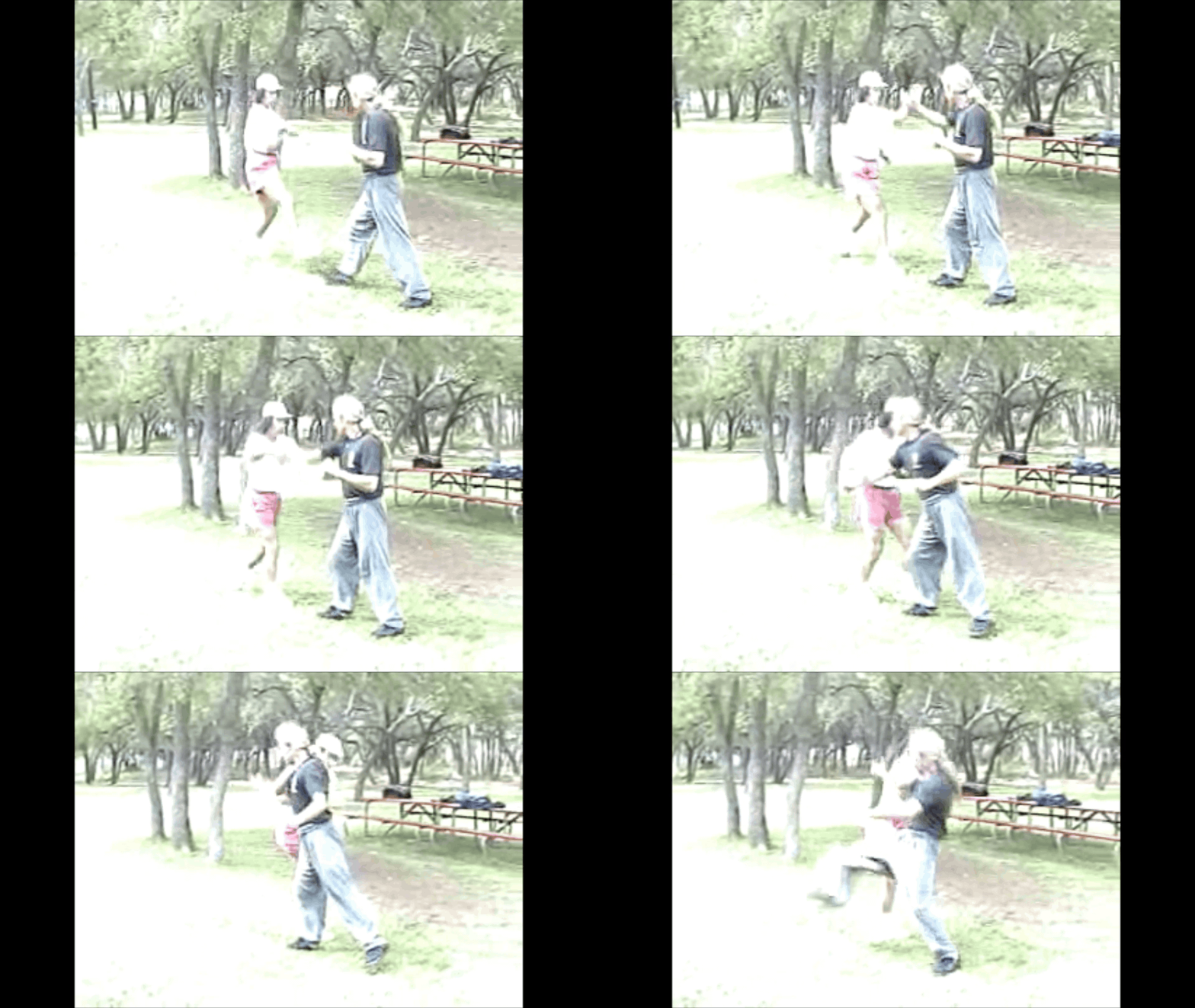
One move to open and enter

Kung Fu Wang160 190

Sr. Grandmaster
MT Mentor
You can use one hand to pull down your opponent's leading arm and strike his face with the other hand, you open the door and enter at the same time. I just can't find any other entering strategy that can be faster than this.

Quote from someone's comment, "It's been known to happen. Great strength, speed and power can be found in refined simplicity."

Your thought?

 
Last edited:
Kung fu wang said : You can use one hand to pull down your opponent's leading arm and strike his face with the other hand, you open the door and enter at the same time. I just can't find any other entering strategy that can be faster than this.


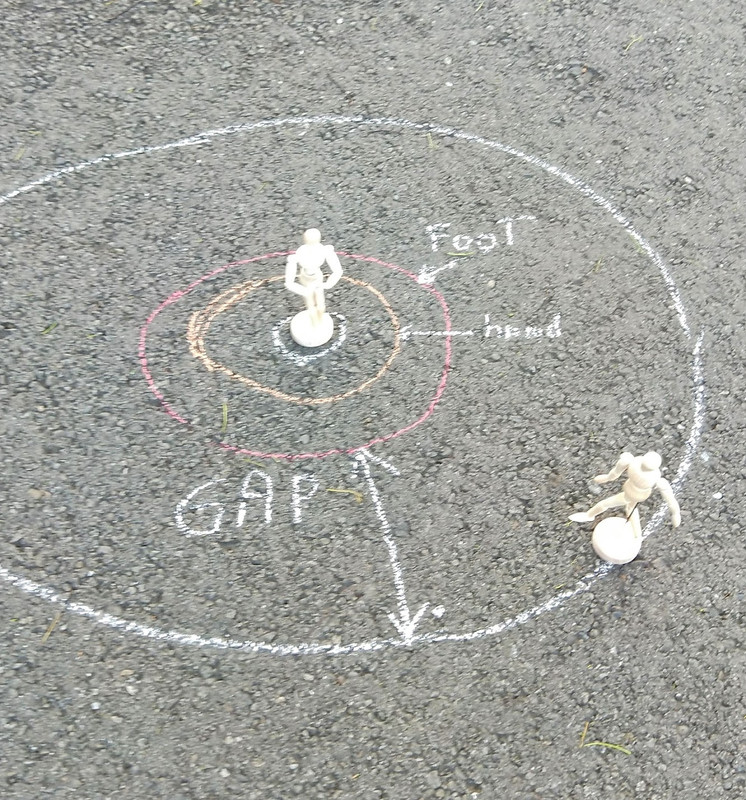
range.jpg

The assumption seems to be that the distance has already been covered, placing the person within range to jam, strike, or throw already past the kicking range.

This might be a useful exercise for developing the ability to enter from outside that range.

Begin with two people. One stands in the center while the other starts outside kicking range. The person in the center may turn or change direction but cannot advance or retreat.


For the person entering:

Begin with three movements to cover the distance and establish contact.

Reduce the entry to two movements.

Eventually, accomplish the entire entry in one continuous movement, without a separate preparatory or covering action.

For the person in the center:

The objective is to recognize and respond to the entry at the earliest possible moment, working through three stages:

1. Before movement: Recognize the developing intention to enter and respond before the physical advance begins.

2. During movement: Recognize and respond while the person is closing the distance, before contact is established.

3. After arrival: Recognize and respond once the person has reached the center and established contact.

The entering person varies the timing and direction, occasionally choosing not to enter. This helps the person in the center develop sensitivity to what is actually occurring rather than relying on anticipation or a predictable sequence.

Both people alternate roles.

The purpose is to develop awareness of timing, distance, and intention while progressively reducing the movements needed to enter. Eventually, closing the distance and establishing contact become one movement.


ZpIKo2WbbClUJf-H55uRLPZu2jcpkoXCMsSW3xYqMTa56E6b1Z-QJdGjbKJu7ZR70n9dnfgUFQs1wzv4-QxD9oJEx4IPpUltpVRl0V_tSjpq0tVzmQJHA8fV_tsx3phawHktWg-IsB3mR43dFO_2OfA-JGgS7rugBVsKGGI2uqv1iryynMeAZQwLsIQhPmPS

Fencing uses similar training methods..
 
Last edited:
Let's compare the following 4 situations.

1. You throw a jab at your opponent's face.
2. You use Xingyi Pao Quan to block up your opponent's leading arm and punch him at the same time.
3. You use Xingyi Pi Quan (or tiger claim mountain) to press down your opponent's leading arm and palm strike him at the same time.
4. You use Taiji Lu by using one hand to pull your opponent's wrist joint and another hand to pull his elbow joint.

IMO, 1 < 2 < 3 < 4

Your opponent's leading arm:

1. is completely free.
2. just been lifted up without any control.
3. has been pressed down with some control.
4. has been totally controlled.
You said you could not find a "faster" entry strategy. A single fast punch is as fast as it gets. It has also been proven effective in many fights... even though the other arm is completely free. Heck, even if they block, parry or evade the jab, you can still use it to enter.
 
You said you could not find a "faster" entry strategy. A single fast punch is as fast as it gets. It has also been proven effective in many fights... even though the other arm is completely free. Heck, even if they block, parry or evade the jab, you can still use it to enter.
If you use jab to set up grab/pull then I agree with you 100% there.

 
Why not just do Baijiquan or Xingyiquan, then? Why try to come up with your own forms?
If you modify Xingyi "Pi Quan" into double tiger claws strikes, you will get Baji "Fierce Tiger Ascends the Mountain".

Since both attacks don't control your opponent's leading arm completely (your opponent's leading arm elbow joint is free), your opponent can drop his leading arm and hook punch at the side of your head. So, when you use either method, your opponent may counter back with a hook punch. Your entering strategy is not safe.

If you can use jab to set up controlling on your opponent's leading arm wrist and elbow, since his back hand cannot reach you, you will have a safe entering strategy.

If your opponent controls your wrist/elbow and pull you, since your back hand cannot reach him, how will you counter him?

Your thought?

 
Last edited:
If you modify Xingyi "Pi Quan" into double tiger claws strikes, you will get Baji "Fierce Tiger Ascends the Mountain".

Since both attacks don't control your opponent's leading arm completely (your opponent's leading arm elbow joint is free), your opponent can drop his leading arm and hook punch at the side of your head. So, when you use either method, your opponent may counter back with a hook punch. Your entering strategy is not safe.

If you can use jab to set up controlling on your opponent's leading arm wrist and elbow, since his back hand cannot reach you, you will have a safe entering strategy.

If your opponent controls your wrist/elbow and pull you, since your back hand cannot reach him, how will you counter him?

Your thought?

You've posted this video around 10 times in the last week or two. You must really think this combo is important. But what you have shown here is like the leg of a table. A strong table needs four legs.

It is a typical malady of the Zhou problem. It looks good and your explanation seems to make sense, but the whole enchilada is deeply flawed. The first thing that draws suspicion is that you are able to step in and enter like this without any response from the student. So I would say it has some value, but it is incomplete as a training method.

The biggest reason why we need to respect tradition and follow a good lineage is because we're not fighters.
 
I just asked AI this question and got answer.

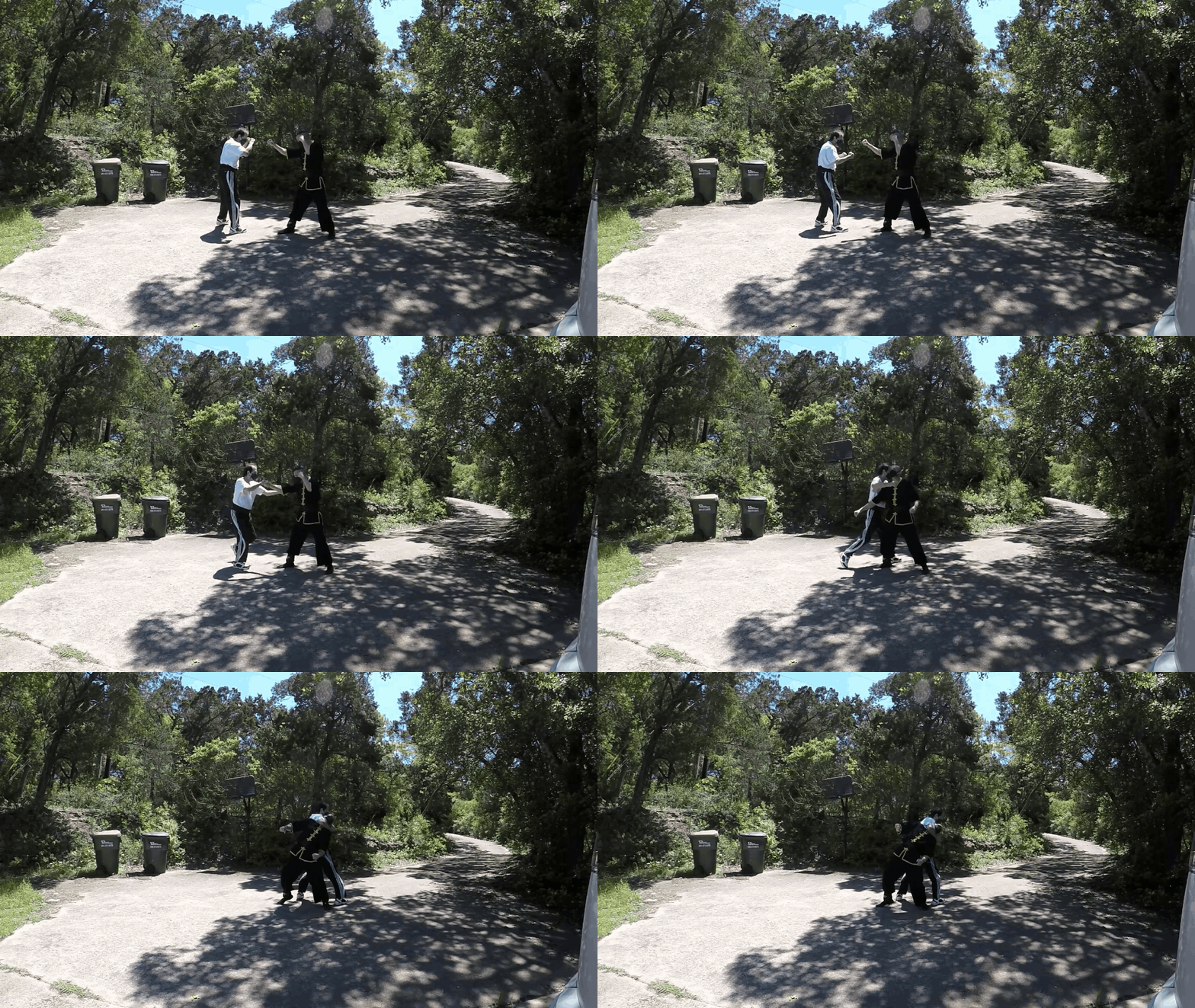
If your opponent's right hand controls your right wrist joint, his left hand controls your right elbow joint, when he pulls you and move in through your right side, his right arm can choke your neck. Since your back left hand cannot reach him, how will you counter him?

------------------------------------------------------------------------------
The position you described is a classic Shuai Jiao / wrestling two‑on‑one control on your right arm, combined with a right‑arm cross‑face / neck choke entry.
Your opponent has:

His right hand on your right wrist
His left hand on your right elbow
He pulls you forward and steps in on your right side
His right forearm begins to wrap your neck
Your left hand is too far back to reach him

This is a bad position — but not hopeless.
The key is understanding what you still control: your base, your shoulder rotation, and your left side hip line.

Below are the three highest‑percentage counters, depending on timing.

1. The fastest counter: Rotate your right shoulder forward and down (inside turn)
This is the biomechanical escape used in Shuai Jiao, Judo, and wrestling.

Why it works:
His choke depends on your neck being upright and your right shoulder being ā€œopen.ā€
If you rotate your right shoulder forward and down, you:

Break his elbow control
Slip your neck out of his right forearm
Force his grip to collapse inward
Turn your body toward him, not away
How to do it (conceptually):
Step your right foot back half a step
Drop your right shoulder forward like you’re trying to touch your right elbow to your left knee
Let your right arm ā€œswimā€ inward toward your own centerline
This turns his choke attempt into a failed arm drag.
Once you face him, your left hand becomes free to strike, push, or grab.

2. The structural counter: Left hip bump + left forearm frame
If he is already deep on your right side and the choke is forming, you use your left hip — not your left hand — to break his angle.

Why it works:
His choke requires his chest to be close to your right shoulder.
Your left hip is the closest weapon.

Conceptual steps:

Step your left foot forward toward his left foot
Drive your left hip into his left hip
At the same time, raise your left forearm across your own chest to create a frame
This bumps him off the line he needs for the choke.
It also forces his right arm to lose the neck angle.
Once his chest is displaced, his grip weakens and you can turn toward him.

3. The late-stage counter: Drop level + right arm limp escape
If his choke is almost locked and your left hand truly cannot reach:

You must drop your height immediately.

Why it works:
Chokes rely on height alignment.
If you suddenly drop your center of gravity:

His forearm slides upward
His elbow angle breaks
His wrist control becomes ineffective
Your right arm becomes ā€œlongerā€ relative to his grip

Conceptual steps:

Bend your knees sharply
Let your right arm go completely ā€œdeadā€ (no tension)
Pull your right elbow backward toward your ribs
Turn your head toward your right shoulder
This is the same principle as escaping a standing guillotine:
Lowering your height destroys his leverage.

The deeper principle
Your opponent’s attack depends on three things:

Your right shoulder staying upright
Your neck staying exposed
Your left side staying far away
Every effective counter breaks at least one of these.

The most reliable is turning toward him, not away.
Beginners try to pull back — which makes the choke worse.
Experienced fighters rotate into the attacker to collapse the angle.

If you want, I can break down:
Which counter works best for Shuai Jiao vs. Judo vs. wrestling

How to prevent this two‑on‑one control from happening in the first place
How to counter after he fully locks the choke
How to use this same position offensively yourself

Just tell me the direction you want to explore next.
 
Back
Top