The Difference between Longfist Kicks and Taiji Kicks

What's the purpose of your "Taiji exercise"?

Just for the sake of discussion, how do you develop/test your Taiji skill?

This is one way to test Taiji "ward off"

View attachment 34588

As I previously wrote- ā€the ability to favorably read an unpredictable situationā€ - is how Taijiquan practice is applied, and that doesn’t at all have to mean specifically a combat situation .
To ward off something is a quite natural action, the martial arts have just made the action more intricate so it may have greater physical effect on the object that is warded off.
The amazing thing with taijiquan exercise(complete with mind methods) all the finer point of natural instinctive actions are harnessed, not just in one’s own actions but in relation to others action specifically.
 
The difference is, a Tai Chi kick takes 10 years to master. A longfist kick takes 3 years to master.
A longfist kick takes longer than 3 years to master. The better one's initial kicking skill and ability is the faster a person can be really affective with it. But to truly master a kick will take longer than 3 years to maters. The mastery doesn't come from being able to do a kick. The mastery comes from being able to apply the kick.

I personally do not think it will take 10 years to be able to master a TaiChi kick., but I do think it will take longer than 3 years to master it. At 3 years there should be some decent foundational use. If you don't have that by three years then you aren't sparring.

All of this 10-year training to master something seems to be related to how someone trains and not actually reprentative in the reality of what is actual possible.
 
It will be nice if we can have a pure Taiji person (who has no other MA training) to share his knowledge in Taiji kick.
if they use Taiji application then their view of the kick will be more in line with how you view kicks.
if they use Tai Chi for health and not application then their view will be more in link that the "kicks" are used for something other than kicking.

My approach is simple and based on the focus of the training.
When you are kicking are you training to kick. If the focus of the training is on the output of the kick then you are training the kick. If your focus isn't on the out put of the kick then you are not training the kick. Instead you are using a kick like motion to train something else.


What type of training is he doing? Is he training the kick or is he training balance.

What is he training here? His he is training the kick or is he training the balance. If he's only training the balance then the kick will become less applicable. Because the focus of the training is balance, The Kick will never be a bi -product benefit through this path. If the focus is training the kick, then he will be able to apply the kick and the balance will be the Bi-Product while the kick is the Main product. He he uses the kick in sparring, then it will lead him to mastery. This is the same that's true for the video above with the hurdle exercise. Sparring for him would be running the hurdles. If his training doesn't include running the hurdles then the kick skill will not be applicable and it would not lead mastery.
 
Last edited:
No matter how well a Chef can boil water or how neatly he can keep his kitchen or the form in which he uses to place food in the oven or stove. His mastery is determined by the quality of the output of his skills.

Master Chef
Master Carpenter
Chest Master
Ship's Master


These and other terms of Mater are based on the application of one's skill. But for some reason. Martial Arts Master does not follow that logic. Unfortunately this logic trickles down and someone will speak of a Mastery of Martial arts without actually having the skill of applying the technique. This means they are the least capable of having a personal understanding of how a technique should be applied and the nuances that occur that allow a technique to be successful.

At a minimum traditional martial artists should state if they come from an application focus or a scholar focus so that people can better understand what context the word mastery is used.

Keep in mind that if you do not personally apply martial arts skills in sparring, then do not be rigid in your thinking when others who do apply the technique speak of it. Instead of standing overly firm on what the books say or what your teacher's says. Try to understand what the application of your understanding would required in order to make your technique work as you have learned it.
 
A longfist kick takes longer than 3 years to master.
The following 2 kicking skills take more than 3 years to develop:

- When your opponent punches at your face, your front kick will automatically kick at his chest "without thinking".
- Your front kick always includes a perfect "'downward curve".

It also depends on when did you start to develop your kick. If you start to develop your kick when you are 60, you will never be able to achieve the result that you want for the rest of your life. After age 60, your balance, flexibility, power generation will go down year by year which is a sad thing. This is why most of the old people only talk about punch and don't like to talk about kick. An 80-year-old experienced MA person may kick worse than a 20-year-old beginner.
 
Last edited:
if you do not personally apply martial arts skills in sparring, then do not be rigid in your thinking when others who do apply the technique speak of it.
Also, if you don't train your kick on heavy bag, tree, PVC pipe, ... , your kick will have no combat value. So, instead of comparing "long fist kick vs. Taiji kick", we should really compare "kick on target vs. only kick into the thin air".
 
Last edited:
Your body structure during the kick making contact is important. Your body should be united as one. To lean your body weight against a tree trunk (or just a wall) is part of the training. Make sure that power (with your weight behind) will go through your foot and enter the target.

tree_kick.webp


What type of training is he doing? Is he training the kick or is he training balance.
The outside crescent kick can be used to escape foot sweep, front cut, outer hook, ... It makes sense to train some kick into the thin air for "defense only" purpose.

What is he training here? His he is training the kick or is he training the balance.
If he doesn't kick on heavy bag, tree, PVC pipe, ... , his kick will have no "attacking" value.
 
Last edited:
Although the authentic Taijiquan exercise count a whole lot of moves, often up to 108, but at the very core it’s just 13 ā€posturesā€, and those are actually no actual specific postures, but rather deep ideas always held in a unison [within] whatever physical posture or action one may hold or take.
So if one’s eventual kicks come from exercising the 13 ā€posturesā€ method(taijiquan), then they may be called Taiji- kicks.


These are the Taijiquan 13 ā€posturesā€ :-

Ward-off, Roll-back, Press, Push, Pluck, Splitt, Elbow, Shoulder, Look left, Look right, Advance, Retreat, Central equilibrium.
 
Also, if you don't train your kick on heavy bag, tree, PVC pipe, ... , your kick will have no combat value. So, instead of comparing "long fist kick vs. Taiji kick", we should really compare "kick on target vs. only kick into the thin air".
Kick on target is better because of the impact that the body gets from the kick landing. That impact also conditions the joints and ligaments. The inpact itself also happens is good for balance. Kicking in the air means there is nothing beyond the weight of the leg and it's position affecting balance. kicking against a heavy bag means that the balance must deal with the impact as well. I think of kicking like swinging a baseball bat. You can swing the bat in the air or you can swing it against a target, be it a bag or a ball.

Kicking is the air isn't all bad. Something is better than nothing, but having impact feedback would be optimal training.
 
The outside crescent kick can be used to escape foot sweep, front cut, outer hook, ... It makes sense to train some kick into the thin air for "defense only" purpose.
I've done both and used both.
Escape foot sweep requires timing. You won't learn timing without sparring. same with front cut , outer hook. If you don't plan on using it then training it in the Air is all that you need. If you want to use it for application, then you'll would want to at least get a live drill. I prefer sparring because then I can use them with my footwork and it takes time to learn how to integrate kicking into one's footwork.


Practicing with a target actually makes your air kicks more productive because now you have a good mental understanding of how your Air kicks should land.
 
Although the authentic Taijiquan exercise count a whole lot of moves, often up to 108, but at the very core it’s just 13 ā€posturesā€, and those are actually no actual specific postures, but rather deep ideas always held in a unison [within] whatever physical posture or action one may hold or take.
So if one’s eventual kicks come from exercising the 13 ā€posturesā€ method(taijiquan), then they may be called Taiji- kicks.


These are the Taijiquan 13 ā€posturesā€ :-

Ward-off, Roll-back, Press, Push, Pluck, Splitt, Elbow, Shoulder, Look left, Look right, Advance, Retreat, Central equilibrium.
Ideas you can build off from. Specifics make that process more difficult. It's the same thing that I do when writing Ai instructions. General instructions gives AI more options to explore possibilities. Specific instructions narrow those possibilities. both have it's place.

For example, Ward off concept can probably be applied to kicking
 
Ward off concept can probably be applied to kicking
Are you talking about "leg skill" instead?

Not sure "leg skill" such as foot sweep, leg scroop, leg spring, leg lift, inner hook, outer hook, sickle hook, front cut, ... can be considered as "kick".
 
Ideas you can build off from. Specifics make that process more difficult. It's the same thing that I do when writing Ai instructions. General instructions gives AI more options to explore possibilities. Specific instructions narrow those possibilities. both have it's place.

For example, Ward off concept can probably be applied to kicking
What style/linage is the Taijiquan you practice ?
 

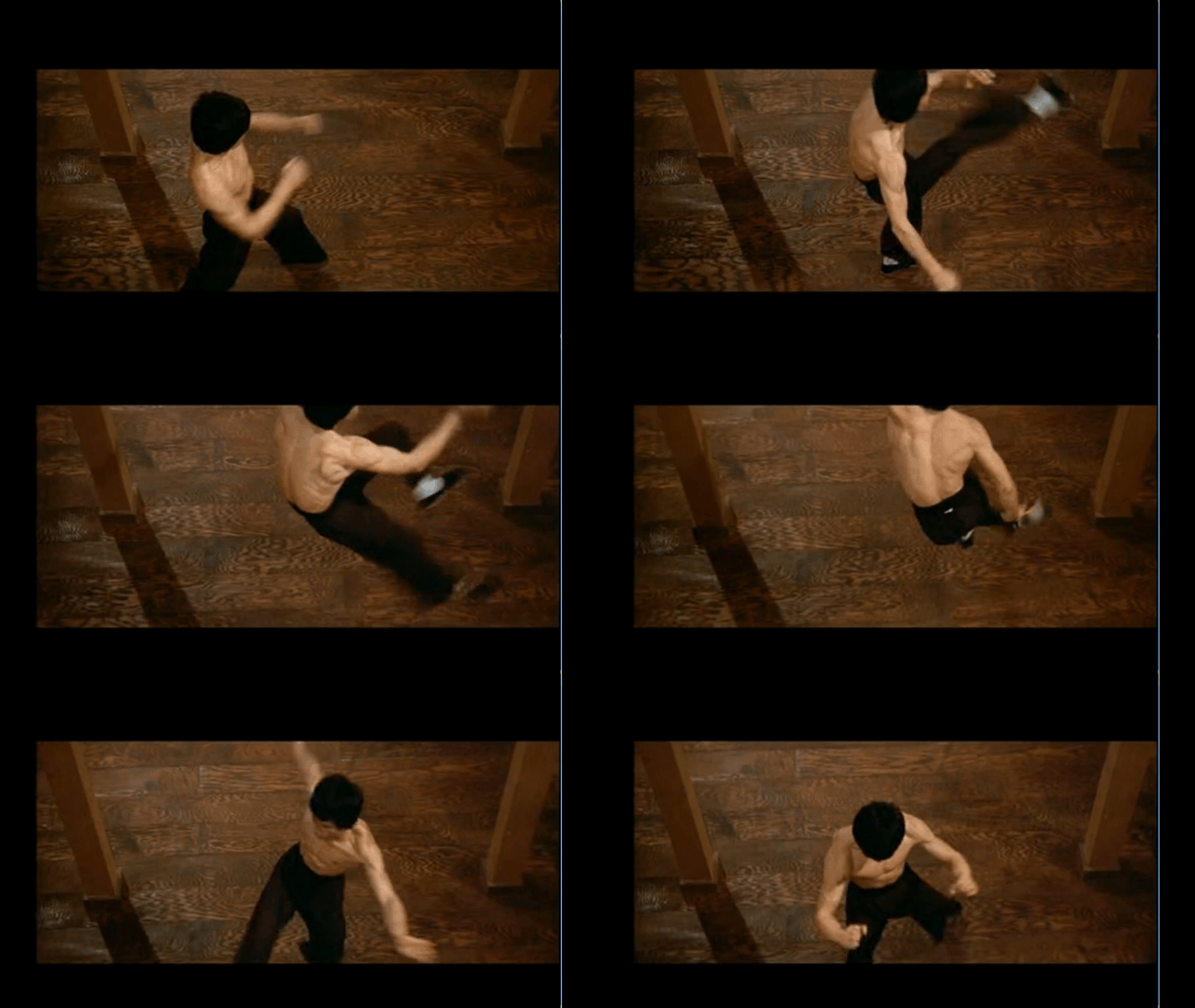
"Swimming Dragon Taiji kicking set"

who knew šŸ¤”

​

Not bad, not very unusual either, very similar to kick sets in my beginner gung fu warm up set. Not sure what makes it a Tai Chi kick set. He lacks structure and will fall if he makes contact. Put him on a slippery waxed concrete floor for a few years and watch his bollocks grow…
 

"Swimming Dragon Taiji kicking set"

who knew šŸ¤”

​

Very good training indeed. One may have difficulty to do this when her is 70. We always used the "3 non landing kicksäø‰äøč½åœ° " to test our kicking ability. If you can still do this, you are still young. If you have difficulty to do this, you are old. 😢

 
Are you talking about "leg skill" instead?

Not sure "leg skill" such as foot sweep, leg scroop, leg spring, leg lift, inner hook, outer hook, sickle hook, front cut, ... can be considered as "kick".
Yes. Leg Skill. I only mentioned it as "kick" because leg skill is very general. Leg skill would also include stance transition and footwork. But overall. yes leg skill
 
What style/linage is the Taijiquan you practice ?
I trained Yang but not from a lineage that I know of. Jow Ga Students are encouraged to learn and practice it as a way to balance us out and to prevent muscle tension. Some students only go that far but the option to learn function is available if the student wants to follow that path.
 
Not bad, not very unusual either, very similar to kick sets in my beginner gung fu warm up set. Not sure what makes it a Tai Chi kick set. He lacks structure and will fall if he makes contact. Put him on a slippery waxed concrete floor for a few years and watch his bollocks grow…
My first Jow Ga school had slippery floors and I used to wonder. "Why are all these floor so freaking slippery.?" They were always slippery. It definitely forces how energy moves. My garage has a slippery floor as well. It's definitely a good to experience it at least a couple of times in one's training.
 
Back
Top