The Difference between Longfist Kicks and Taiji Kicks

Appledog38

Purple Belt
Last login streak
7 day(s)
Max login streak
23 day(s)
Longfist kicks are direct; they pull the body into the correct posiion to execute the kick directly.

Taiji kicks have a precondition. They are first indirect, then later once training is complete they are also direct. As a result, in the beginning they look different. For example some people are taught to keep the leg bent. Longfist actually has the exact same requirement but the condition for it (the marker the sifu will check) is different. Keeping the leg bent or (the other requirement) is a macguffin for something else.

Once the Taiji training is complete the kicks are also direct. But there is always the precondition from the taiji training. So the main difference then is the precondition used to teach beginners how to do the kick properly.

So ultimately, they look different because the training mehod is different but they should look the same because the applicaion is the same.
 
So ultimately, they look different because the training mehod is different but they should look the same because the applicaion is the same.
I think you may want to say, "So ultimately, they "should" look different because the training method is different but ...".

Can a Taiji person do

- "typing on keyboard" different from a long fist guy?
- "front kick" different from a Karate guy?
- "wrist lock" different from an Aikido guy?
- "hip throw" different from a Judo guy?

IMO, keyboard-typing/kick/lock/throw should all be above "style boundary".

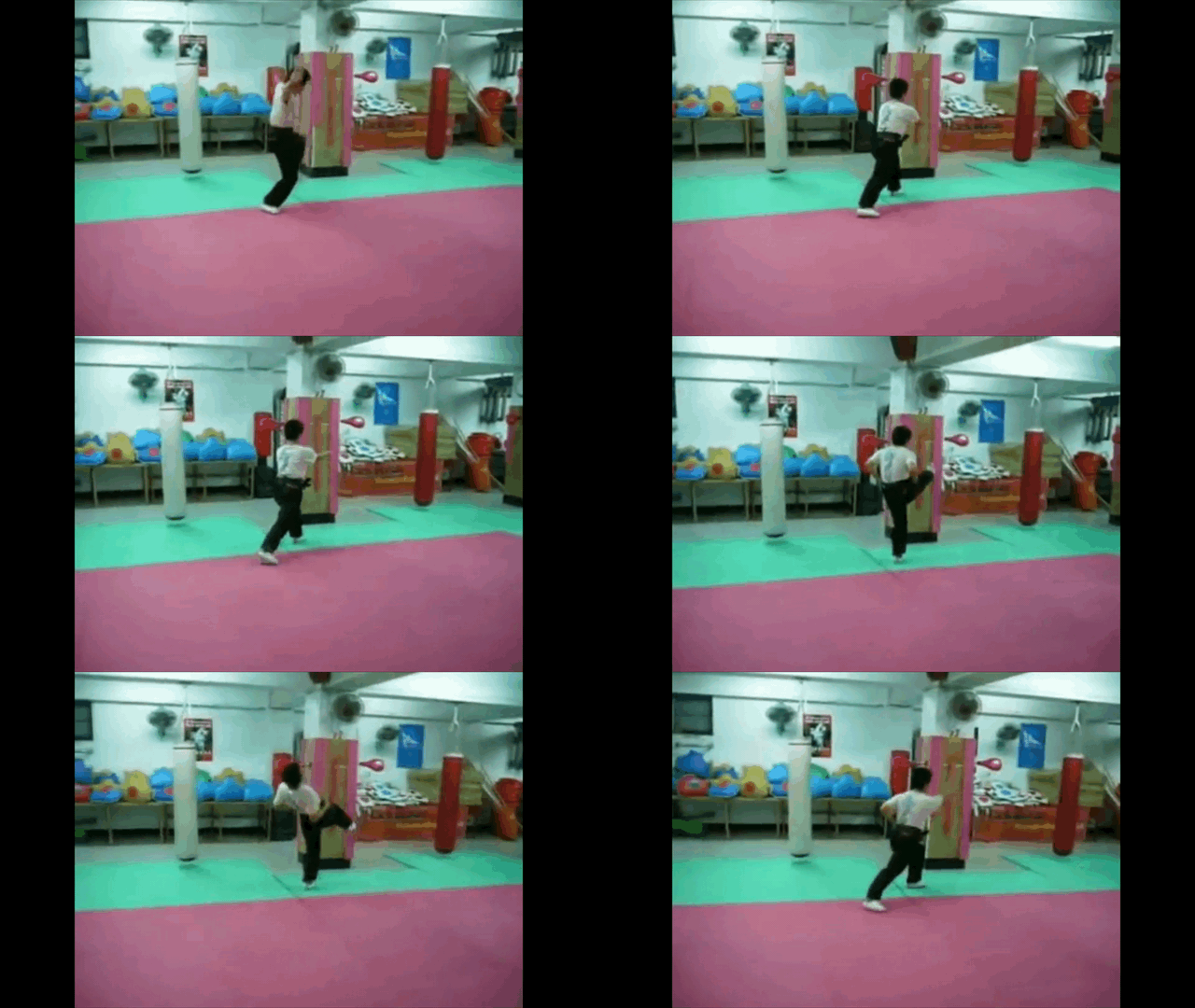
As far as I know, most CMA teachers (such as Taiji teachers) never teach front kick in any great detail (compare to TKD teachers). Even in the long fist system, the detail of "front kick" is taught only until the meddle level training (during Pao Quan training). The "front kick downward curve" was not taught during the beginner Tan Tui training stage.

Pao-Quan-kick.gif
Should a Taiji practitioner type on a keyboard any differently from a Karate practitioner?
 
Last edited:
"Should a Taiji practitioner type on a keyboard any differently from a Karate practitioner?"

No, but while training they wear different kinds of uniforms.
 
Wang Yen-nien tells an interesting story about Hu Yaozhen's training with Zhang Qinlin, from whom Wang later learned Yangjia Michuan Taijiquan.

Hu was already a highly accomplished Xingyi master when he became Zhang's student. Zhang told him to practice only Taijiquan, but Hu couldn't let go of his Xingyi. Zhang repeatedly told him that his jin was wrong—it was still Xingyi jin, not Taiji jin. Hu said he had practiced that way for so long there was little he could do about it. Because of this, Zhang kept him with the 81-Step rather than teaching him the Yangjia Michuan material.

Wang had also previously studied Shaolin, Xingyi, Taijiquan and other arts. Before accepting him, Zhang told Wang he would have to “throw them all away.”

There is something important here when people say a kick is just a kick or a punch is just a punch. Different training establishes different conditions, with enough time those conditions become ingrained in how we move. External movements may be relatively easy to correct; changing an internal condition can be much more difficult and, for some impossible.

Learning another method isn't simply adding techniques. It may require giving up the condition through which movement is already produced.


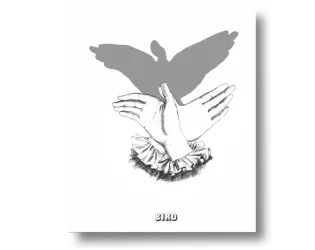
1788358651241.webp
Two movements can look the same while being produced under very different conditions. Don't mistake the shadow for the condition producing it. What looks like a bird may only be a hand.
 
Last edited:
Wang Yen-nien tells an interesting story about Hu Yaozhen's training with Zhang Qinlin, from whom Wang later learned Yangjia Michuan Taijiquan.

Hu was already a highly accomplished Xingyi master when he became Zhang's student. Zhang told him to practice only Taijiquan, but Hu couldn't let go of his Xingyi. Zhang repeatedly told him that his jin was wrong—it was still Xingyi jin, not Taiji jin. Hu said he had practiced that way for so long there was little he could do about it. Because of this, Zhang kept him with the 81-Step rather than teaching him the Yangjia Michuan material.

Wang had also previously studied Shaolin, Xingyi, Taijiquan and other arts. Before accepting him, Zhang told Wang he would have to “throw them all away.”

There is something important here when people say a kick is just a kick or a punch is just a punch. Different training establishes different conditions, with enough time those conditions become ingrained in how we move. External movements may be relatively easy to correct; changing an internal condition can be much more difficult and, for some impossible.

Learning another method isn't simply adding techniques. It may require giving up the condition through which movement is already produced.


View attachment 34519
Two movements can look the same while being produced under very different conditions. Don't mistake the shadow for the condition producing it. What looks like a bird may only be a hand.
Up goes down to go up again.
 
It will be nice if we can have a pure Taiji person (who has no other MA training) to share his knowledge in Taiji kick.
 
It will be nice if we can have a pure Taiji person (who has no other MA training) to share his knowledge in Taiji kick.
Im not that person since I’ve done(and still do, sort of) a small little bunch of MA’s.

Anyways, Taiji kicks are not really there(in the form, the form as I consider the core instrument of TJQ practice ) for the kicks.
The TJQ exercise absolute concern is developing awareness in all directions at all time. So the kicks in the TJQ exercise is not for kicks but instead a sort of a variable within the Taiji form to check one’s awareness focus.

If it would come down to combat the skilled taijiquanist would not need to be throwing kicks
 
Im not that person since I’ve done(and still do, sort of) a small little bunch of MA’s.

Anyways, Taiji kicks are not really there(in the form, the form as I consider the core instrument of TJQ practice ) for the kicks.
The TJQ exercise absolute concern is developing awareness in all directions at all time. So the kicks in the TJQ exercise is not for kicks but instead a sort of a variable within the Taiji form to check one’s awareness focus.

If it would come down to combat the skilled taijiquanist would not need to be throwing kicks
We have several kicks in Yang long form that I practice. They are literally kicks, not some performative dance steps.
 
Last edited:
Someone comments this subject in another forum.

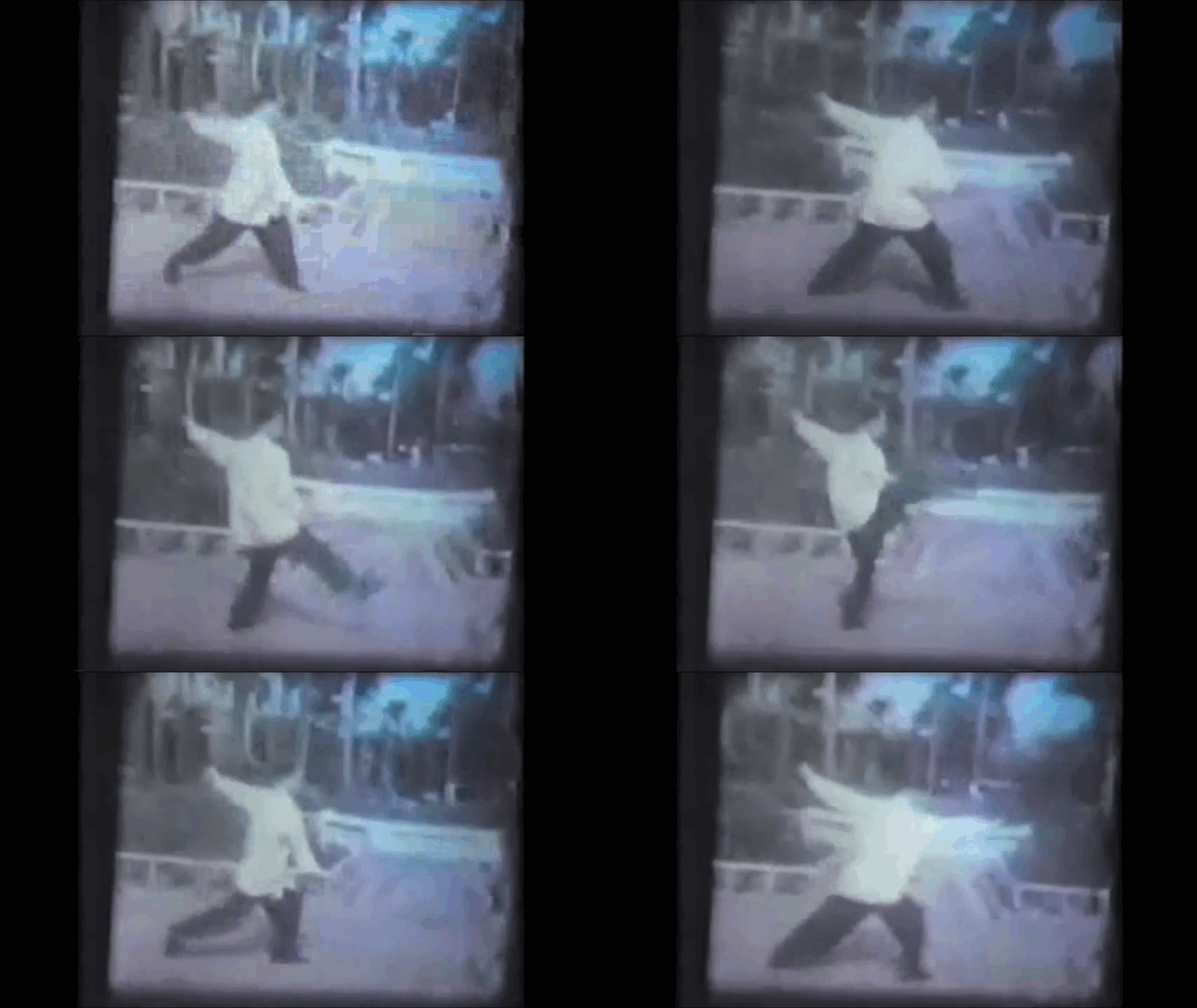
"looking at the long fist double kicks the leg and ankle are changing first. a taijiquan sequence would change the dantien/mingmen and waist first."

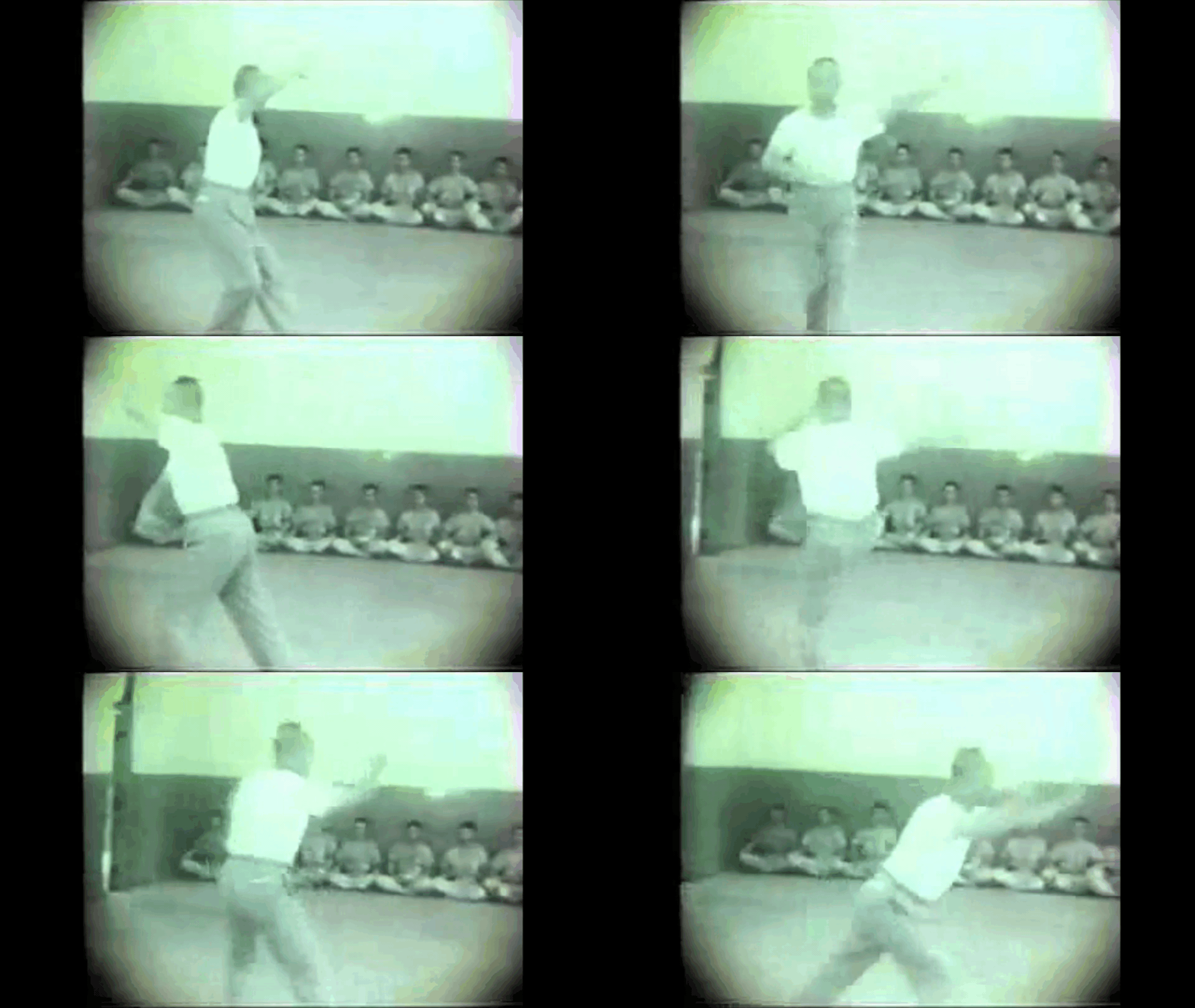
But if we look at these long fist kick, the long fist kick clearly starts from the rooting leg -> waist -> kicking leg -> kicking foot.

To use the body to push/pull the leg is the basic foundation for all MA systems.


Last edited:
But if we look at these long fist kick, the long fist kick clearly starts from the rooting leg -> waist -> kicking leg -> kicking foot.

To use the body to push/pull the leg is the basic foundation for all MA systems.

If one assumes the kinetic-chain model is the foundation of all martial arts, then naturally all kicks will appear fundamentally the same.

Taiji, however, tells us 用意不用力 — “use intention, not force.” That describes something quite different from rooting leg → waist → kicking leg → foot being used to push/pull the leg.

This also follows the traditional distinction between internal and external methods. If one doesn't feel there is any meaningful distinction between them, then naturally an art based upon that distinction will be interpreted through the physical model one already knows.
 
Taiji, however, tells us 用意不用力 — “use intention, not force.” That describes something quite different from rooting leg → waist → kicking leg → foot being used to push/pull the leg.
"Intention" is a very abstract term.

Do these videos use "intention" or "force"?

Chang_body_squeeze.gif

body_squeeze.gif
 
The difference is that the Longfist kick is just not a kick, no matter how much you call it a longfist.
 
We have several kicks in Yang long form that I practice. They are literally kicks, not some performative dance steps.
Yes the traditional long Yang taijiquan form is central for my daily practice, I know about the kicks within it.
And sure one can single them out and practice combat applications with partner or kick on heavy bags or mitts, and so becomes basically just as any other martial arts kicks, but that’s not the same function they have within the core practice of TJQ, which is the - traditional long taijiquan form.
 
Last edited:
Yes the traditional long Yang taijiquan form is central for my daily practice, I know about the kicks within it.
And sure one can single them out and practice combat applications with partner or kick on heavy bags or mitts, and so becomes basically just as any other martial arts kicks, but that’s not the same function they have within the core practice of TJQ, which is the - traditional long taijiquan form.
I agree, but someone said there were no kicks in Tai Chi.
 
And sure one can single them out and practice combat applications with partner or kick on heavy bags or mitts, and so becomes basically just as any other martial arts kicks, but that’s not the same function they have within the core practice of TJQ, which is the - traditional long taijiquan form.
Do you assume that Taiji people don't train drills by taking single move out of the form and repeat it left and right?

 
Did they say that or did they say there is no “taiji kick” 🤔
Perhaps I misinterpreted. In any case, I believe I’m on every side, rather than one side of this discussion. I am of the opinion that all these perspectives hold both truth and value to a point. It is an interesting topic of discussion regardless. It gives me pause to consider how I may execute a given motion. What I may normalize in my individual execution might be very different from others experiences. I admit to multiple biases in that regard. I don’t think training in other arts precludes training in Tai Chi. I do think the “execution” of Tai Chi kick is “different” than wushu gung fu kick. I am of the opinion that each informs the other to potentially become a third thing. That is at the very core essence of my training, my work, as it were.
 
I don’t think training in other arts precludes training in Tai Chi.
Depends 🤔

Training in Taiji as an adjunct to another art can certainly help someone understand aspects of movement that their own art may not cover or emphasize.

Conversely, IME—and historically—training in other arts does not necessarily help deepen one's understanding or level of Taiji. In most cases, it may actually interfere with it.

The problem, as shown here, comes when someone begins calling what they do "Taiji," then asks why other Taiji practitioners don't do X or Y—or suggests that what they themselves are doing represents Taiji while what others are doing somehow lacks something.

At that point the question becomes: are you using Taiji to supplement what you already do, or have you actually changed the method through which you move to make it "taiji" ?

Something ultimately they have to answer for themselves....

A short story 🙂

meeting my second Taiji teacher long ago :

Locally known as Professor Chi, he was a teacher I was introduced to by Taiwanese soldiers attending training on the U.S. Army MIM-23 Hawk Missile System in Huntsville, Alabama—home of Redstone Arsenal, one of the U.S. Army's many training centers.

He told me he had studied directly with Cheng Man-ch'ing in Taiwan. As a high school teacher of Cheng's daughters, he had asked them to introduce him to their father. Cheng agreed to teach him, though not as a formal disciple.

At our first meeting, he asked to see my Taiji...

He was old, maybe in his 70s at the time..
After observing my movements, he remarked, "This is not Taiji, it's slow Shaolin." 😳

I simply responded, "Okay." And so, my real training with him began.

He had me repeat only the opening movement. Each time I finished, he softly said, "Again."

For an hour, I repeated the same movement. I didn't know what he was looking for, but when he finally saw it, he gave a small nod. At the time, I didn't understand what had changed.

Each week, the process continued. If my movement was correct, he would add more. If it was not, he simply said "again"—over and over, always with a slight smile.

At one point, out of frustration, I asked, "How do I know if it's right or not?" 🤔

He replied in his soft, Taiwanese-accented English:

"After many years of practice, you will know."

He smiled. I laughed. And I went back to practice.

In time, I realized he was right.
 
Last edited:
Back
Top