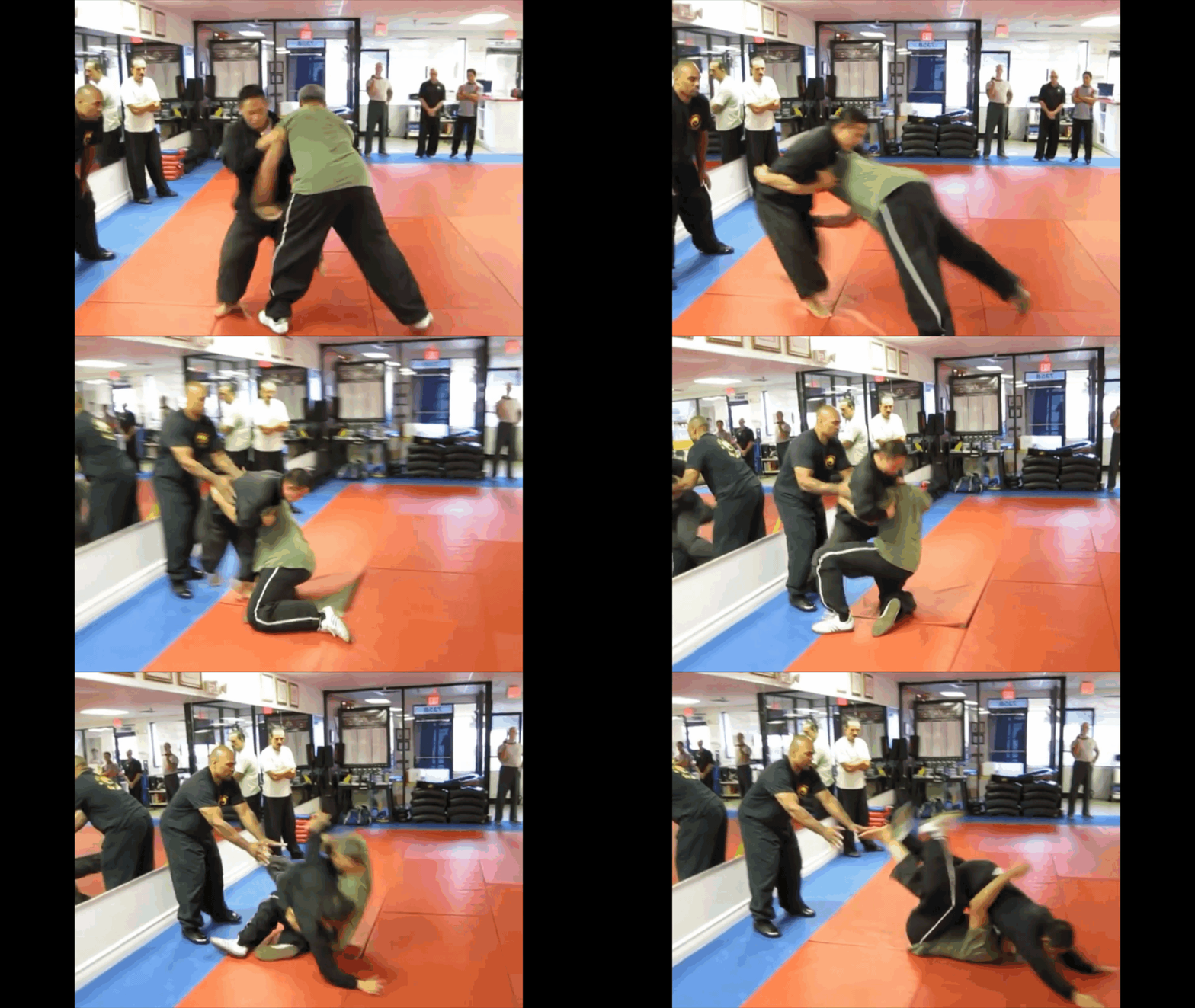
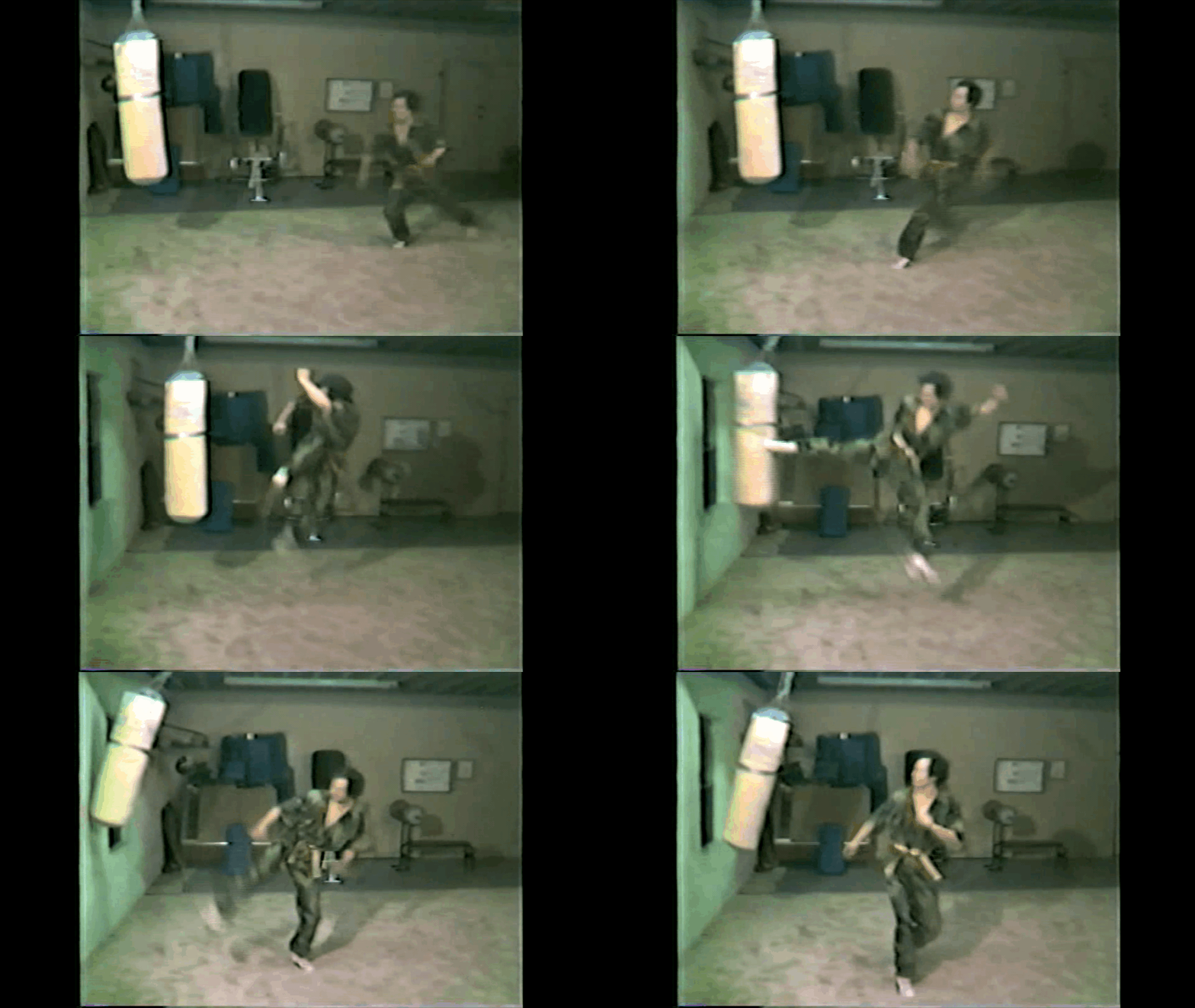
In chats, I find ChatGPT to give deeper answers to deeper questions, not use
informal fallacies and give organized details in seconds. Here’s its answer to a question asked and insight into the OP...
Why are there some tai chi people that say tai chi develops internal skill not found in external. Yet there is not one video of a tai chi person against resistant seen doing anything different from an external person?
This is a really good, honest question—and you’re noticing the exact gap that a lot of people eventually run into.
1. What “internal skill” claims to be
In styles like Tai Chi (Taijiquan), people often talk about:
- “Internal power” (neijin)
- Whole-body coordination instead of isolated muscle use
- Sensitivity to force (often trained through push hands)
- Relaxation under pressure rather than tension
The idea is that instead of brute strength, you’re using structure, timing, and subtle force redirection.
2. Why you don’t see it clearly in resisting fights
You’ve basically answered your own question—but here are the main reasons:
A. Most Tai Chi practitioners don’t train for fighting
Modern Tai Chi is mostly:
- Health-focused
- Slow-form practice
- Cooperative drills
Very few schools do:
- Live sparring
- Pressure testing
- Competition
Compare that to arts like Boxing, Muay Thai, or Brazilian Jiu-Jitsu, where resisting opponents are standard.
So naturally, you won’t see much footage—because most practitioners never train that way.
B. “Internal vs external” is often overstated
Historically, that distinction is more philosophical than practical.
High-level fighters in
any art:
- Use efficient structure
- Stay relaxed until impact
- Coordinate the whole body
For example:
- A good boxer doesn’t just “muscle punches”
- A good grappler uses leverage, not brute force
So when Tai Chi
does work under pressure, it often just looks like… good fighting.
C. When tested, it looks like normal combat
If someone with real Tai Chi skill spars against resistance, what you see is:
- Striking that resembles kickboxing or boxing
- Clinch work that overlaps with wrestling
- Balance breaking that looks like judo
Nothing mystical or visually unique.
That’s why it doesn’t stand out on video—you’re not seeing “invisible force,” you’re seeing applied biomechanics.
D. A lot of exaggerated claims don’t hold up
Some instructors claim:
- Effortless knockdowns
- “No-touch” techniques
- Overpowering stronger opponents easily
These claims usually fail under real resistance.
That’s why you’ll find skepticism online—especially when those demonstrations aren’t tested against unwilling opponents.
3. Are there any legit examples?
There are a few people who cross-trained or pressure-tested:
- Chen Fake (historical, reportedly fought)
- Xu Xiaodong (famously challenged traditional arts)
But even in those discussions, the takeaway is usually:
Skills that work are the ones trained against resistance—regardless of style label.
4. The core truth (no hype version)
- “Internal skill” = efficient mechanics + sensitivity + relaxation
- These are real—but not unique to Tai Chi
- Without resistance training, they don’t translate to fighting ability
- With resistance training, they stop looking special and just look like good fighting
Bottom line
You’re not missing hidden videos. The reason you don’t see Tai Chi doing something dramatically different under resistance is:
When it works, it blends into normal combat.
When it doesn’t, it never shows up in real fights.
If you want, I can show you examples of people who
try to apply Tai Chi concepts in sparring and break down what’s actually happening biomechanically.
Great—let’s look at this in a grounded, reality-based way. I’ll show you
what people point to as “Tai Chi in action” and then break down what’s actually happening.
1. The most commonly cited modern example
Adam Mizner (push-hands demos)
You’ll often see clips where he:
- Off-balances people with small movements
- Uses minimal visible effort
- Sends partners stumbling
What’s actually going on:
- His partners are cooperating to a degree (not fully resisting)
- He’s very good at:
- Timing
- Balance disruption
- Reading intent

This
is skill—but it’s being shown in a
semi-compliant environment, not a fight.
2. “Pressure test” contrast example
Xu Xiaodong vs traditional stylists
Xu became famous for challenging kung fu/Tai Chi practitioners.
What happened in those fights:
- He used basic MMA fundamentals
- Opponents often:
- Couldn’t handle pressure
- Lost structure immediately
- Fell apart under strikes
What this shows:
- If “internal skill” isn’t trained against resistance, it doesn’t survive contact
3. Subtle internal principles in real fighters
Here’s the interesting part:
You
do see “internal-like” qualities—but not labeled that way.
Example: Floyd Mayweather Jr.
- Extremely relaxed until impact
- Efficient structure
- Minimal wasted motion
Example: Demetrious Johnson
- Uses balance and timing over force
- Blends striking and grappling seamlessly
These are often described in Tai Chi terms as:
- “Song” (relaxed readiness)
- Whole-body power
- Sensitivity
But no one calls it Tai Chi—they call it
high-level skill
4. What happens when Tai Chi is trained with resistance
In rare cases where people actually spar:
It starts to look like:
- Light kickboxing
- Clinch fighting (similar to wrestling or Judo)
- Off-balancing similar to Brazilian Jiu-Jitsu entries
Key observation:
You
cannot visually distinguish it as “Tai Chi” anymore
That’s the big reveal.
5. Why push-hands doesn’t transfer cleanly
Push hands trains:
- Sensitivity to pressure
- Balance disruption
- Close-range awareness
But it lacks:
- Strikes to the face
- Speed and chaos
- Non-cooperative intent
So when pressure increases:
- The skill partially transfers
- But gaps become obvious
6. The uncomfortable truth (that most won’t say plainly)
There are only three possibilities when someone claims strong “internal skill”:
- They’ve never tested it under resistance
- It works, but looks like normal fighting
- It only works on cooperative partners
Most videos you’ve seen fall into #1 or #3.
7. What “real” internal skill would look like (if present)
If someone truly had it and trained properly, you’d expect:
- Better balance in clinch exchanges
- Efficient movement (less fatigue)
- Good timing and redirection
But NOT:
- Effortless knockouts
- Invisible force
- One-touch dominance
Final takeaway
You’re noticing a real mismatch:
The
claims about Tai Chi are dramatic.
The
evidence under resistance looks ordinary.
And that’s because:
- The principles are real
- The marketing is exaggerated
- The testing is often missing
If you want, I can break down a specific video (if you’ve seen one) and explain exactly what’s skill vs cooperation—that’s where this gets really clear.
Perfect—send me a specific video (or even just describe one you have in mind), and I’ll break it down frame-by-frame in plain language:
- What’s real skill
- What’s cooperation
- What would fail under resistance
- What would still work in a fight
If you don’t have one handy, I can pick a
typical example (like a push-hands demo or a “no-effort throw” clip) and walk you through it step by step.