Kung Fu Wang :
Can a Taiji guy move a 200 lb rock without using force? No Taiji guys can do that.
So its getting harder to figure out what is real.
What is “real”?
This question was asked in another setting long ago…
Yang Luchan (1799–1872) is often credited with responding to doubts about his “soft” method by saying he could not defeat men made of wood, iron, or
stone — pointing to the idea that his method depends on interaction, not force.
Whether the wording is exact or not, the meaning is clear: what is being expressed is not technique in isolation, but how one works with what is there.
That’s where the question of “real” becomes less straightforward.
Push hands, as a training method, seems to have taken on a more fixed and limited form in many places. Historically, it was also used to test skill across individuals and groups — not just practiced within a closed format.
There are accounts of such exchanges.
One story describes Ma Gui (马贵), a noted Bagua practitioner, who, when invited to try against Yang Banhou, sent him flying upon contact — a reminder that skill was often revealed through direct interaction rather than controlled patterns.
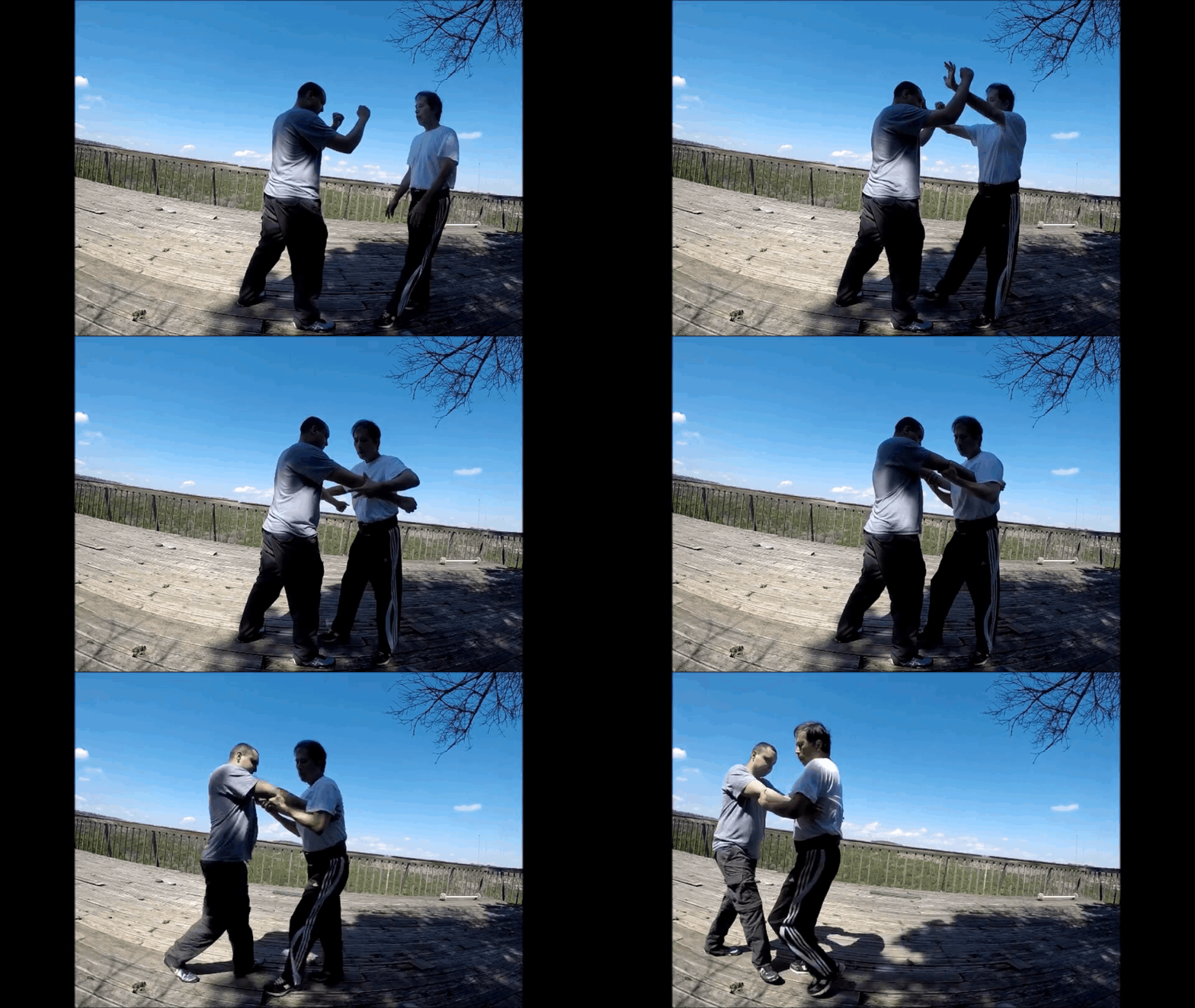
The question is often raised — what if there is nothing to borrow? In practice, there is always something there. Even a seemingly “dead” or unresponsive opponent still has structure, weight, and intent. By becoming more negative — releasing, settling, and not opposing — it often draws out a corresponding positive response. This is counterintuitive for many, but it’s part of what makes the method distinct.
So when we ask what is “real,” it may be less about choosing between methods, and more about whether what is trained can actually function when the conditions are no longer controlled.