NHK Doc - Jujutsu: The Art of Flexibility

I wouldn't go quite this far. If the opponent is in motion and there is opportunity to enter and take control, I think it's an easier path than I described above. Harmony takes less work than actively applying your own force. IMO there is a time and situation for both ways to be effective. It depends.
That's why I have changed "not necessary" to "not absolutely necessary" before your post.

Aikido seems to only address the harmony part. I try to point out that there is the un-harmony part as well.
 
Here is an example that you don't need harmony and you have no intention to borrow your opponent's force. Your front face your opponent's front. It's a "head on collision".

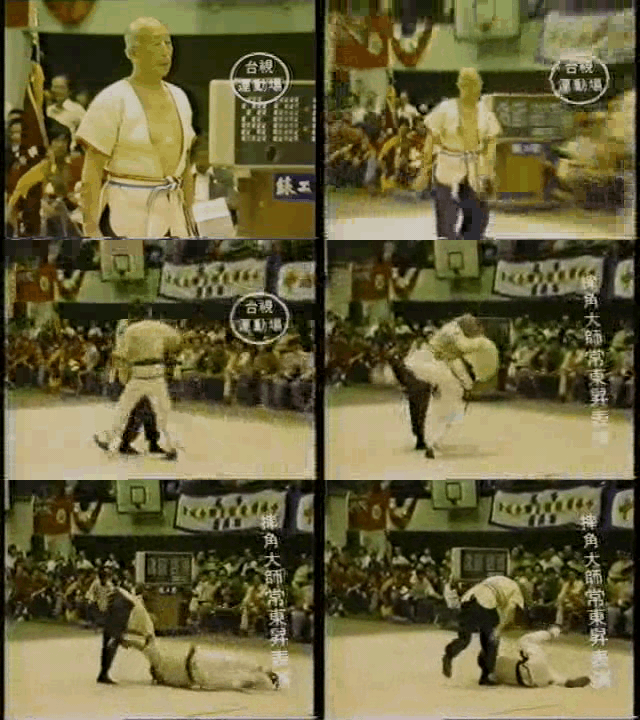
Interesting that you do not see the "harmony" that was used in that throw. He cannot sweep that leg, if the other guy has all his weight on it. Notice that he breaks the other guys structure first, tipping his body away from the leg he intends to sweep... before sweeping that leg. The leg gets swept in harmony with the movement of his weight off the leg....

As I see it, this is absolutely true. To borrow the opponent's force there must be some force to borrow. If he is not in motion there is no momentum for you to take control of, nothing to harmonize with. In such a case you must actively break his balance using your force (sweep, leg wrap and twist, strike, etc....).
You still need harmony. You may be causing the weight shift and or movement.... but you must still move in harmony with the other guy. I grew up on a walnut orchard and stacked a lot of "firewood".... (4 to 5 feet long sections of walnut tree, over a foot in diameter) The walnut wood gives you no force to borrow. You initiate all movement.... you still need to move in harmony with the wood... especially as its weight approaches your own (or exceeds it).
 
Interesting that you do not see the "harmony" that was used in that throw. He cannot sweep that leg, if the other guy has all his weight on it
If your opponent doesn't have 100% weight on one leg, when you sweep that leg, he can easily pick up that leg and escape your sweep. Only when your opponent has 100% weight on one leg, when you sweep it, he cannot escape.

In this video,

- His opponent's right leg kicks his leg (his opponent has 100% weight on his left leg).
- He hooks his opponent's left rooting leg off the ground.

You may have just redefined the term "harmony" that is used in Aikido. I won't call this "harmony". I'll call this "good timing".

 
Last edited:
You may have just redefined the term "harmony" that is used in Aikido.
I don't think so.... The Aikido Sensei's that I have been cross training with for 12 years, use exactly that definition. They train with and are friends with both Saotome Sensei and Ikeda Sensei... (both come to our dojo to teach a few times each year...) They may have some ideas about Aikido....


In this video,

- His opponent's right leg kicks his leg (his opponent has 100% weight on his left leg).
- He hooks his opponent's left rooting leg off the ground.
No, he is intending to set his weight on the right leg, but he is pushed back, his center of weight is behind his leg, his frame is broken allowing the leg to be lifted.

If there was no harmony, then the older guy gets kicked. The part that allowed him to step in at the right time, to prevent the kick from developing was that he moved in harmony with the attack.... since he move in at the right time, not too soon and not too late, he is able to prevent the full weight landing on the leg and able to prevent the guy having any structure at all... his attacking the attack at the time and place where attack is most vulnerable.... to get there, you must move at the right time, at the right speed, to the right place.... like you are moving in harmony with the opening created by the other guy....
 
I dislike quoting my previous posts as it seems to be a bit egotistical, but in this case had several points that following posters repeated in various forms that did not reference them, pro or con, and left me wondering if my points did not deserve to be noted or if my post was not read. Perhaps I'm being too academically critical expecting some sort of direct reference/response agreeing or disagreeing or just becoming too sensitive in my old age. If so, I apologize.
Chen Yuan'yun (Chin Gen'in or Chin Genpin in Japan) arrived in Nagasaki and later settled in Edo. His 'teaching' - if it took place at all - the 'three samurai'.. occurred around 1630-1640.
McCarthy calls him Chen Yuan-bin (aka Chin Gempei in Japan)...arriving in Japan in 1638.

IF we accept that the three Ronins are the origin of Japanese martial arts
I think this is an overly broad statement as you hinted by your "IF." Of course, there were indigenous MA that developed more or less exclusively in Japan. It's likely though some were not well organized into a system or even had a widely recognized name going back in time as occurred in Okinawa. More on this in the next quote.

BTW, the 3 guys, likely Samurai but not necessarily ronin, were named Fukuno Shichiroemon, Miura Yojiemon, and Isogai Jirozaemon. I didn't include them in my OP as their names are too long. Absent any info to the contrary, I'd believe there were such guys. The question is how much influence they exerted on the art.

was there no Japanese influence that altered the philosophy or techniques, did it remain a purely Chinese art?
It may be that the basics of jiu-jitsu already existed, but Chen made substantial contributions to it, including qin'na and the use of pressure points which became a major component of the art back in the day. It could be Chen's art (shuai-chiao, dim mak and qin'na) and pre-existing Japanese art combined to become jiu-jitsu just as kung fu and Okinawan te combined to become karate.

It's an old fable, that's all.
Could be, but many fables are rooted in truth and then embellished. Are Chen and his three students real, given more credit than deserved or just fantasy? Perhaps elements of all of these?
 
Jujutsu was probably up to quite recently just some simple few rudimentary methods of getting away from a wrist hold so to draw a sword or a dagger or some kind of weapon tool.

So to look for a specific ancient MA that stood solely as an unarmed combat methods one probably have to settle with wrestling, but even that was not really something with an aim of getting skilled in combat, but rather something originally having to do with ceremonial and religious aspects and eventually morphing into sport for spectators enjoyment .

The whole ā€œancientā€ jujutsu thing is probably a quite recent construction.
 
Of course, there were indigenous MA that developed more or less exclusively in Japan. It's likely though some were not well organized into a system or even had a widely recognized name going back in time as occurred in Okinawa.

Japanese MA such as Tenshinshoden Katori Shinto ryu, Kashima Shinto/Shinryu, Nen ryu, Aisu Kage ryu etc were organised and widely recognised in the 1400s, centuries before anything approaching that in Okinawa.

I didn't include them in my OP as their names are too long. Absent any info to the contrary, I'd believe there were such guys. The question is how much influence they exerted on the art.

As I noted in my post above, there wasn't 'the art'. There were many arts. Supposedly Chin had some influence on the (Akiyama) Yoshin ryu arts. There were many - MANY - 'jujutsu' arts both before and after Chin which never encountered him or his teachings.
This correlates with the general story as related by noted TMA historian Patrick McCarthy in his Bubishi, with minor differences: McCarthy calls him Chen Yuan-bin (aka Chin Gempei in Japan) and places him in Owari rather than Musashi province, arriving in Japan in 1638 during Ming's decline, but such details are irrelevant.
As you note, not really important, but 'Gempei' is not how the Chinese characters for Chin's name are pronounced in Japanese. The third kanji is 'bin' or 'pin'.
It may be that the basics of jiu-jitsu already existed, but Chen made substantial contributions to it, including qin'na and the use of pressure points which became a major component of the art back in the day. It could be Chen's art (shuai-chiao, dim mak and qin'na) and pre-existing Japanese art combined to become jiu-jitsu just as kung fu and Okinawan te combined to become karate.
Where do you find reference to Chin knowing shuai chiao, dim mak and qin'na? In the one reference I'm aware of, Chin expressly stated to the three that - although he did not know them - he had seen some of the 'methods to subdue people' extant in China.

Rather than re-write it here, I'll point to this article which aligns with my understanding of the historical record.
 
Jujutsu was probably up to quite recently just some simple few rudimentary methods of getting away from a wrist hold so to draw a sword or a dagger or some kind of weapon tool.

So to look for a specific ancient MA that stood solely as an unarmed combat methods one probably have to settle with wrestling, but even that was not really something with an aim of getting skilled in combat, but rather something originally having to do with ceremonial and religious aspects and eventually morphing into sport for spectators enjoyment .

The whole ā€œancientā€ jujutsu thing is probably a quite recent construction.

No, as I mentioned earlier, there were many 'jujutsu' style arts documented in Japan going back to the 1300s. Some from the 1400s and 1500s still exist - still lead by the same families - today.

The term 'jujutsu' is a relatively new one. More older styles used terms such as 'Yawara', 'Koshi-no-Mawari', 'Kumiuchi' etc.

They did incorporate weapon use and retention in their training of grappling, but were FAR more than 'rudimentary methods of getting away from a wrist hold'. They include much, much more, including grappling both armoured and unarmoured, with a variety of weapons and without.

I'm a member of the Sosuishi ryu Kumiuchi Koshi no Mawari. It was created around 1630, and has been led by the Shitama family for many generations.
 
Just a short interruption in the back and forth going on here.

First this is reminding me of a thread on MT many years ago where the OP was claiming all Chinese martial arts come from Pankration, and everything else come from Shaolin…which owes its knowledge of martial arts to pankration, since it existed before any other martial art. Sadly he knew nothing of the history of Shuaijiao. Or for that matter shuaijiao even existed

Second, if Newton and Leibniz can come up with calculus, at the same time, independently from each other. How hard is it to imagine that 2 or 3 or a dozen guys can figure out how to best hit, throw, kick, and hurt other, independently, without needing input from someone else.

To be honest, although it is a fact, i find it much harder to believe the independent calculus discovery, than i do that 2 guys miles apart, from vastly different cultures, figured out how to best punch someone else in the face.

Just my two cents…. Xue is out… please excuse the interruption and carry on
 
Last edited:
Just a short interruption in the back and forth going on here.

First thus is reminding me of a thread on MT many years ago where the OP was claiming all Chinese martial arts come from Pankration, and everything else come from Shaolin…which owes its knowledge of martial arts to pankration, since it existed before any other martial art. Sadly he knew nothing of the history of Shaijiao.

Second, if Newton and Leibniz can come up with calculus, at the same time, independently from each other. How hard is it to imagine that 2 or 3 or a dozen guys can figure out how to best hit, throw, kick, and hurt other, independently, without needing input from someone else.

To be honest, although it is a fact, i find it much harder to believe the independent calculus discovery, than i do that 2 guys miles apart, from vastly different cultures, figured out how to best punch someone else in the face.

Just my two cents…. Xue is out… please excuse the interruption and carry on
I have zero knowledge about Chinese martial arts origins/history, but Fully, agree with the idea that learning or IMHO more aptly Knowing how to punch/strike someone is/was almost as natural as walking. Who and when this was refined and defined? Anybody's guess.

Let the pissing contest continue.
 
Every culture throughout the history of the human species developed methods for fighting and combat. The world was a dangerous place and people needed these skills. This idea that it can be all traced back to this or that person or era is, I think, nonsense.
 
Just a short interruption in the back and forth going on here.

First this is reminding me of a thread on MT many years ago where the OP was claiming all Chinese martial arts come from Pankration, and everything else come from Shaolin…which owes its knowledge of martial arts to pankration, since it existed before any other martial art. Sadly he knew nothing of the history of Shuaijiao. Or for that matter shuaijiao even existed

Second, if Newton and Leibniz can come up with calculus, at the same time, independently from each other. How hard is it to imagine that 2 or 3 or a dozen guys can figure out how to best hit, throw, kick, and hurt other, independently, without needing input from someone else.

To be honest, although it is a fact, i find it much harder to believe the independent calculus discovery, than i do that 2 guys miles apart, from vastly different cultures, figured out how to best punch someone else in the face.

Just my two cents…. Xue is out… please excuse the interruption and carry on
I have often said that there are three basic needs that can be explained by the 3 Fs, food, fight.....and procreate. If I told you a country had to wait for some mysterious stranger from another country to teach them how to eat, you would laugh at me, likewise for procreation. But somehow no one knew how to fight until Bodiharma came to China, or some Chinese guy went to Japan, etc. is accepted as a given. Could the knowledge of cooking, harvesting or raising stock be improved by knowledge from another country? Undoubtedly. The Kama Sutra shows some pretty advanced moves that folks may not have figured out themselves. Same goes for formalized systems of fighting.
 
Rather than re-write it here, I'll point to this article which aligns with my understanding of the historical record.
That was a good article. I think based on our posts (and article) we can agree on the following:

1. There was certainly native Japanese MA akin to jiu-jitsu prior to Chen (1600) that were not coalesced into a single organized system.

2. The Chinese view is skewed to them inventing the art; the Japanese downplay such a view of Chinese influence. (A completely natural human chauvinistic thing. Japan even changed the kanji for karate to remove Chinese reference for example.)

3. While there were native Japanese arts (and Okinawan) they were open to blending in Chinese skills and concepts. (McCarthy notes that vital point striking was not found in jiu-jitsu prior to Chen's time.)

TMA evolved as a necessity and good ideas from elsewhere were not discounted. They were often incorporated, modified and adapted to fit the region's need and outlook according to the times. There is no one person that should be given credit to inventing a TMA, all were gradually forged over time with many contributors, some recognized by history with varying degrees of accuracy in deeds and dates. There is a lot of minutiae (some interesting) that can be noted and debated, but what's really important, IMO, is the general evolutionary flow and foundational concepts of the art.
 
Last edited:
I have often said that there are three basic needs that can be explained by the 3 Fs, food, fight.....and procreate. If I told you a country had to wait for some mysterious stranger from another country to teach them how to eat, you would laugh at me, likewise for procreation. But somehow no one knew how to fight until Bodiharma came to China, or some Chinese guy went to Japan, etc. is accepted as a given. Could the knowledge of cooking, harvesting or raising stock be improved by knowledge from another country? Undoubtedly. The Kama Sutra shows some pretty advanced moves that folks may not have figured out themselves. Same goes for formalized systems of fighting.
I've read the Kama Sutra... I'm not sure anyone can physically DO all those moves...at least not without injury ;)
 
I've read the Kama Sutra... I'm not sure anyone can physically DO all those moves...at least not without injury ;)
Like a TMA book, it's hard to learn from since illustrations only show the position. The key is the movement between the positions. Constant 'drilling' is required to master the moves. A video version would be much more illuminating.
But somehow no one knew how to fight until Bodiharma came to China
India not only invented TMA, but sex as well. An amazing culture!
 
Just a short interruption in the back and forth going on here.

First this is reminding me of a thread on MT many years ago where the OP was claiming all Chinese martial arts come from Pankration, and everything else come from Shaolin…which owes its knowledge of martial arts to pankration, since it existed before any other martial art. Sadly he knew nothing of the history of Shuaijiao. Or for that matter shuaijiao even existed

Second, if Newton and Leibniz can come up with calculus, at the same time, independently from each other. How hard is it to imagine that 2 or 3 or a dozen guys can figure out how to best hit, throw, kick, and hurt other, independently, without needing input from someone else.

To be honest, although it is a fact, i find it much harder to believe the independent calculus discovery, than i do that 2 guys miles apart, from vastly different cultures, figured out how to best punch someone else in the face.

Just my two cents…. Xue is out… please excuse the interruption and carry on
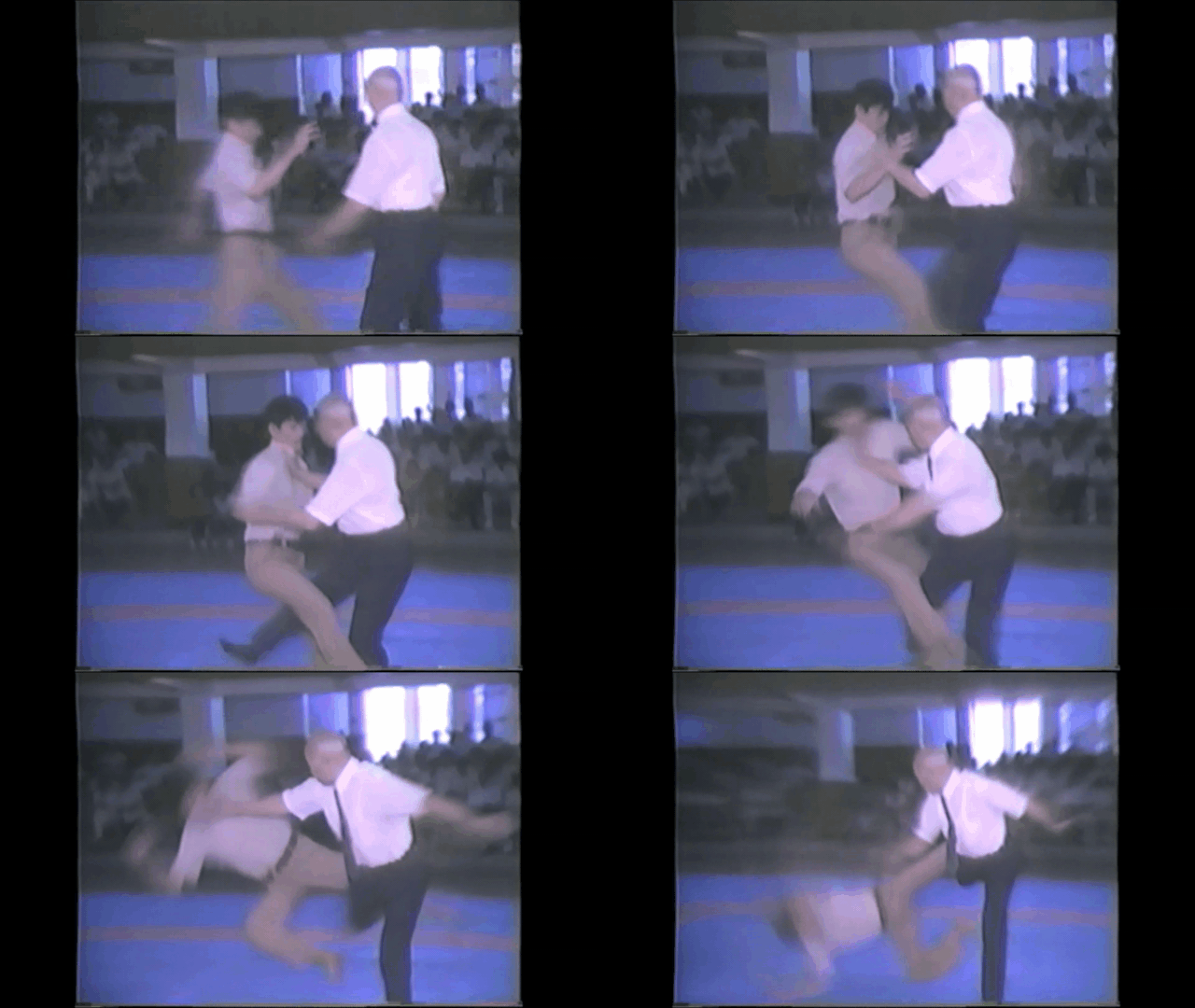
The ā€œHundredth Monkey Phenomenonā€
 
That was a good article. I think based on our posts (and article) we can agree on the following:

1. There was certainly native Japanese MA akin to jiu-jitsu prior to Chen (1600) that were not coalesced into a single organized system.

2. The Chinese view is skewed to them inventing the art; the Japanese downplay such a view of Chinese influence. (A completely natural human chauvinistic thing. Japan even changed the kanji for karate to remove Chinese reference for example.)

3. While there were native Japanese arts (and Okinawan) they were open to blending in Chinese skills and concepts. (McCarthy notes that vital point striking was not found in jiu-jitsu prior to Chen's time.)

TMA evolved as a necessity and good ideas from elsewhere were not discounted. They were often incorporated, modified and adapted to fit the region's need and outlook according to the times. There is no one person that should be given credit to inventing a TMA, all were gradually forged over time with many contributors, some recognized by history with varying degrees of accuracy in deeds and dates. There is a lot of minutiae (some interesting) that can be noted and debated, but what's really important, IMO, is the general evolutionary flow and foundational concepts of the art.
1. Correct - they were coalesced into many organised systems. Thinking that 'jujutsu' is, or ever was, a single organised system is like thinking Chinese TMA is a single 'kung-fu' art.

2. I don't know that there's a singular 'Chinese' view, however it is sometimes claimed by CMA practitioners - with no real knowledge of JMA or JMA history - that Chin Genpin 'invented' jujutsu. The reality is that the only records indicate that he may have had some influence on a single 'line' of arts.

3. The influence of Chinese (and Korean.. and Western) culture on Japan is indisputable. The cross-pollination occurred in these cultures generally is similarly indisputable. The Chinese took an Aisu Kage ryu mokuroku from wako and returned it to China, where it influenced miao dao methods. To claim that all Chinese sword arts originated in Japan would be asinine.
 
Back
Top