NHK Doc - Jujutsu: The Art of Flexibility

J MacDonald

Yellow Belt
I just saw short this documentary on NHK called "Jujutsu: The Art of Flexibility." I thought it was fantastic.
Basically a Judo guy is exploring the meaning of "Ju" (or "Yawara") and goes to a Tenjin Shinyo Ryu dojo to experience their method of practice and "Ju."

To me, the atmosphere of the dojo and his experience there was very familiar. It reinforces my belief that one can do Aikido with out practicing the martial art of Aikido.
Anyway, please enjoy:
 
In fact this resonated so much with me that I wrote an article about it: "Aikido by Another Name"

What struck me was how familiar it all felt. Relaxation, moving without force, using gravity instead of muscle, kata geiko, careful attention to detail, even the smiling faces — it could easily have been an aikidō dōjō. It reminded me of my own practice in aikidō, Daitō-ryū, and kenjutsu in Japan.

For aikidō practitioners it’s natural to see the principles of Daitō-ryū reflected in aikidō. But I’ve also experienced Asayama Ichiden-ryū taijutsu, and again, the core principles are the same. Across many jūjutsu schools, the principles of aiki appear again and again; what differs is the kata and the training methods that build toward it.

If we take those principles and apply a modern mindset — not to injure or destroy, but to harmonize — I think we arrive at aikidō.

you can read my fuller reflection on this idea here if anyone is interested:
👉 Aikido by Another Name | Calgary Rakushinkan
 
My first martial art was japanese jujutsu, but that was over 50 years ago, when
was a kid. Would have stuck with it, but the school closed.

What I remember from that was blending with the opponent made the throw easier, as did using the opponent force/energy/power against him. We were supposed to be careful with our training partners, although kids did get hurt on occasion, there was absolutely no talk of not hurting the other guy in an actual fight. Actually hurting them was part of the plan.

But I do like aikido, my youngest trained it for years, and as soon as my shoulder is recovered I am seriously considering going to a friends aikido dojo, that he just opened.

Nice article and thanks for the link to the NHK jujutsu video
 
Thanks for reading and commenting!

As for your shoulder I do hope it gets better soon. Have you looked into PRP at all? (that's platelet rich plasma) I've been looking into is at is seems promising in speeding healing of joints.
 
not to injure or destroy, but to harmonize — I think we arrive at aikidō.
Not to injury, not to destroy, and harmony are the opposite of to injury, to kill, and combat. Are we talking about combat MA, or are we talking about something else?

IMO, if your throw cannot injury your opponent, that mean your throw has no combat value. So, why do you want to have harmony in your throw?

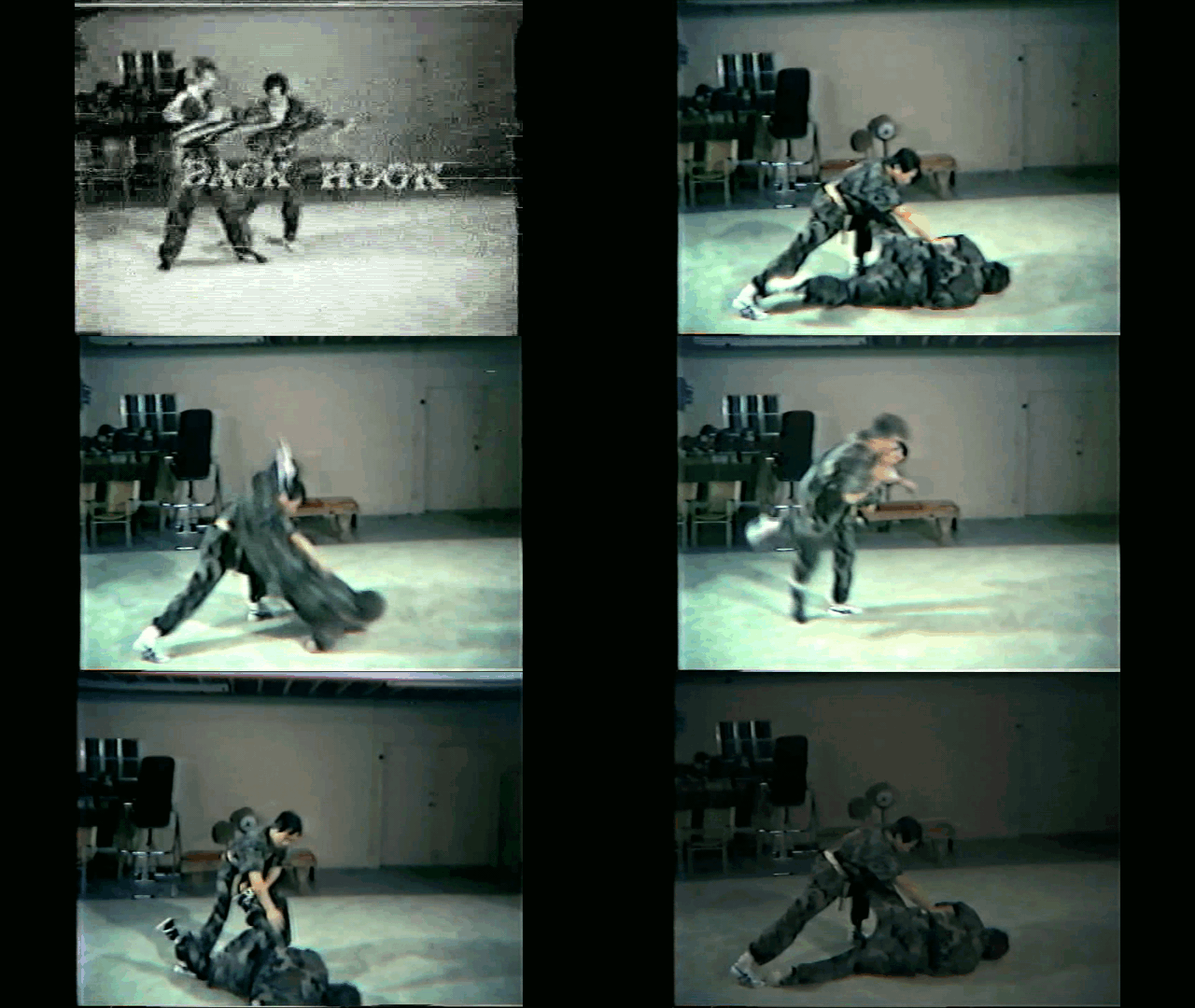
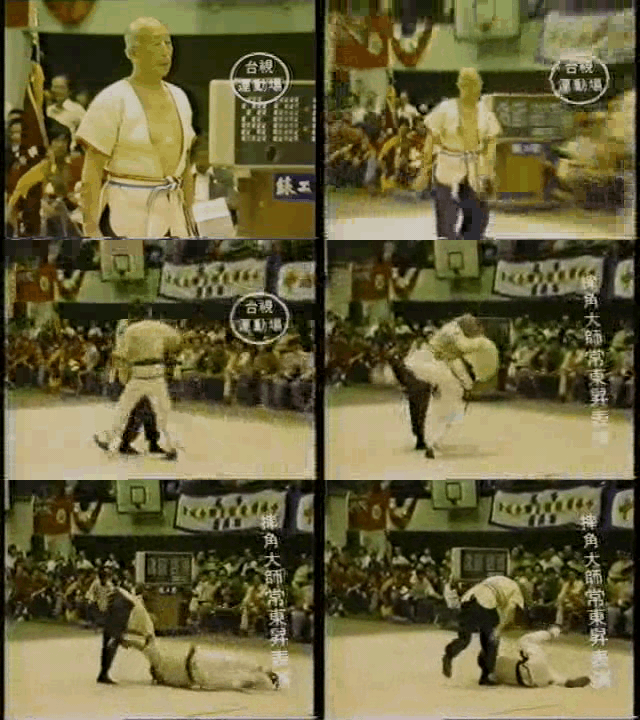
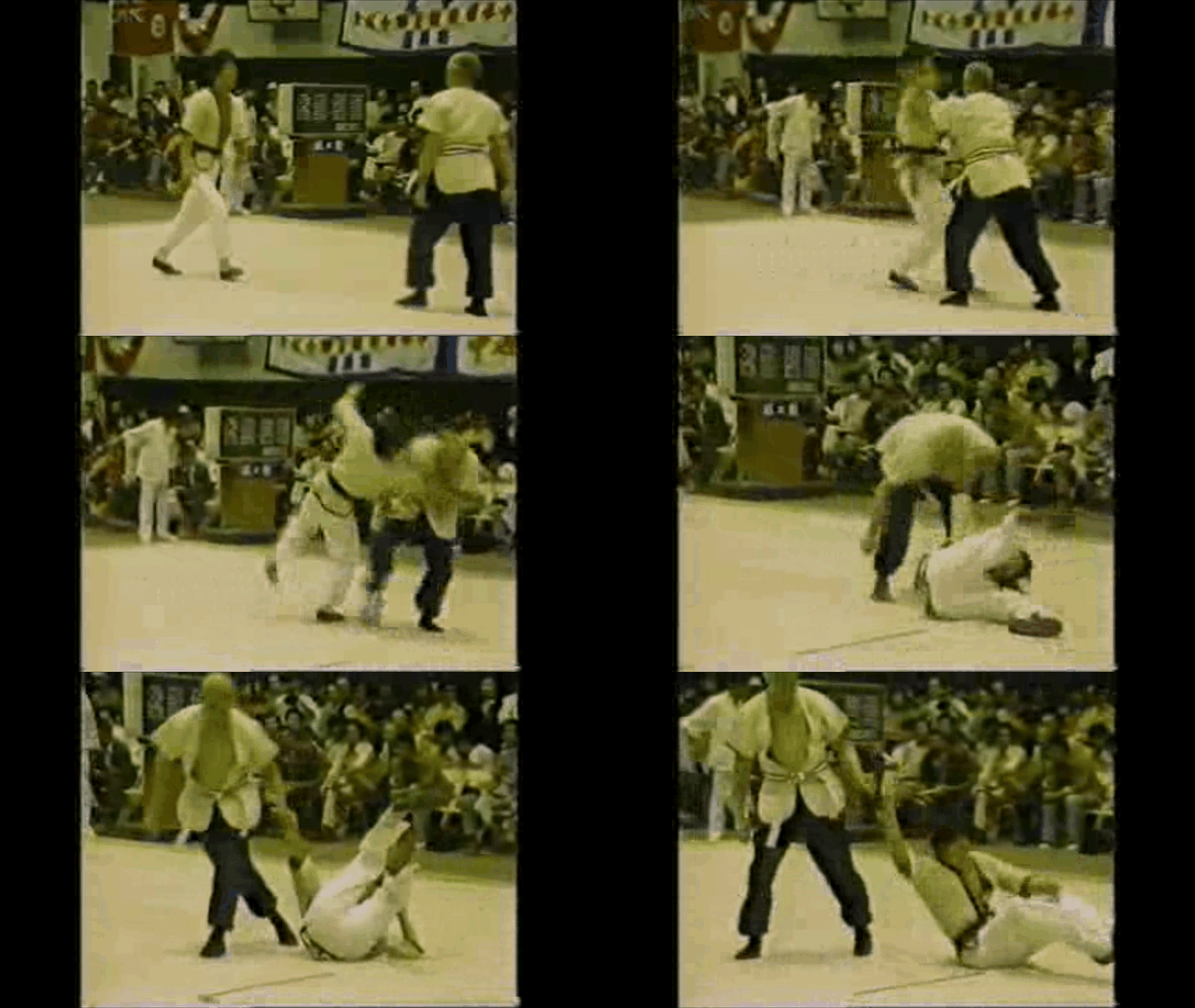
Can we see any harmonize in this video?

 
Last edited:
Ueshiba(founder of aikido)) supposedly said that aikido is 90% atemi(striking), I believe this to be true and one should truly believe it(understand it) in order to get ones overall positioning and timing martially realistic and correct within the scope of the regular throwing style of aikido practice thus making that actually functional

Viewing it through taijiquan push hands practice spectacles, that specific exercise method would martially be faulty if the awareness of strikes, kicks and throws is disregarded and missing.
 
Last edited:
Not to injury, not to destroy, and harmony are the opposite of to injury, to kill, and combat. Are we talking about combat MA, or are we talking about something else?

IMO, if your throw cannot injury your opponent, that mean your throw has no combat value. So, why do you want to have harmony in your throw?

Can we see any harmonize in this video?

For the value of pinning your opponent.
 
Thanks for reading and commenting!

As for your shoulder I do hope it gets better soon. Have you looked into PRP at all? (that's platelet rich plasma) I've been looking into is at is seems promising in speeding healing of joints.
Never looked into it, but i will look into it now, thanks
 
You want harmony in your throw so that you can blend with the energy he is giving you...


The best way to borrow his force, is to be in harmony with it.
You are absolute correct on this. In order to borrow your opponent's force, you need harmony.
 
Not to injury, not to destroy, and harmony are the opposite of to injury, to kill, and combat. Are we talking about combat MA, or are we talking about something else?

IMO, if your throw cannot injury your opponent, that mean your throw has no combat value. So, why do you want to have harmony in your throw?

Can we see any harmonize in this video?

Aah yes, when discussing jiu jutsu and Aikido techniques, it is always best to refer to how the Chinese arts do the technique, because it's irrelevant.
 
Aah yes, when discussing jiu jutsu and Aikido techniques, it is always best to refer to how the Chinese arts do the technique, because it's irrelevant.
Isn’t the concept of Aiki similar if not the same as the yin and yang in the Taiji-tu, for Ueshiba seemingly referred to the concept of yin and yang while explaining, so how can it be different from CMA’s.
The article linked in OP make a reference to the “anecdote” of the willow tree - Yo. Yoshin-ryu trace strong origin connection to China
 
Aah yes, when discussing jiu jutsu and Aikido techniques, it is always best to refer to how the Chinese arts do the technique, because it's irrelevant.
Ming Dynasty (1277 ~ 1367)

The Ming Dynasty was the re-establishment of Chinese Sovereignty, following the Mongol conquest. During this time, some of China’s martial arts began to flourish abroad, and Shuai-Chiao also made its presence felt overseas.

Shuai-Chiao Artwork – See the resemblance modern Sumo with this old Shuai-Chiao Artwork Chen Yuan-Ping is credited for bringing Shuai-Chiao to Japan. His intimate knowledge of Shuai-Chiao’s joint locks, controls, takedowns, and throws formed the basis of what became Jiu-Jitsu, which later evolved into Judo and Aikido.

Chen Yuan-Ping was a Monk who escaped China during the fall of the Ming Dynasty and the formation of the Ching Dynasty by the Manchu’s. Chen Yuan-Ping settled at the Kokushoji temple at Edo where he taught 3 Ronin (master less Samurai) the arts of Chinese Wrestling and Kung Fu. History tells that these three Ronin then formed the art of Ju Jitsu. Judo later developed out of Ju Jitsu in the late 1800’s.

In the Ch’in Dynasty the art was also known as “Hsian Pu.” The Chinese characters pronounced “Hsian Pu” are the same characters the Japanese used to denote “sumo,” which is traditional Japanese wrestiing. It has also been proven that Judo, although invented by the Japanese, actually was influenced very much by the Chinese martial artist Ch’en Yuan-pin. During the Ming Dynasty Ch’en fled China to Japan and later taught there ata temple in Tokyo. The Japanese honor Ch’en Yuan- pin with a monument citing his contributions to the teaching of the martial arts.

Does these ancient Chinese pictures look like Japanese Sumo? Both even used the same word "“相扑 Xian Pu.”".

ancient_SC.webp


ancient_sc_1.webp
 
Last edited:
Yes, the old Chinese art looks much like sumo wrestlers. Perhaps it evolved from Mongolian bokh which more resembles Korean ssireum in that the match begins with the combatants having hold of each other's belt. Still, there seems to be enough evidence to think Mongolian, Korean, Chinese and Japanese sumo wrestling are very closely related.
Ming Dynasty (1277 ~ 1367)
Is this only the formative years of the Ming? Several sources I've checked put the actual dynasty 1368-1644.
Chen Yuan-Ping is credited for bringing Shuai-Chiao to Japan. His intimate knowledge of Shuai-Chiao’s joint locks, controls, takedowns, and throws formed the basis of what became Jiu-Jitsu
This correlates with the general story as related by noted TMA historian Patrick McCarthy in his Bubishi, with minor differences: McCarthy calls him Chen Yuan-bin (aka Chin Gempei in Japan) and places him in Owari rather than Musashi province, arriving in Japan in 1638 during Ming's decline, but such details are irrelevant.

he taught 3 Ronin (master less Samurai) the arts of Chinese Wrestling and Kung Fu. History tells that these three Ronin then formed the art of Ju Jitsu.
It may be that the basics of jiu-jitsu already existed, but Chen made substantial contributions to it, including qin'na and the use of pressure points which became a major component of the art back in the day. It could be Chen's art (shuai-chiao, dim mak and qin'na) and pre-existing Japanese art combined to become jiu-jitsu just as kung fu and Okinawan te combined to become karate.

There is no doubt that the roots of several TMAs lie in China. I'm not a historian but over the centuries China has been a remarkable civilization in many respects; militarily, socially, scientifically and artistically. They have good food, too. :)
 
Chen Yuan'yun (Chin Gen'in or Chin Genpin in Japan) arrived in Nagasaki and later settled in Edo. His 'teaching' - if it took place at all - the 'three samurai'.. occurred around 1630-1640.

Those three samurai did not 'form the art of jujutsu', as some Chinese folks would like to think. There is/was no 'art of jujutsu'. There were many - MANY different 'jujutsu' type arts, of which several remain.

'Jujutsu' arts such as Tsutsumi Hozan ryu and Takenouchi ryu had existed for more than a century, and prototypical arts for many centuries prior to Chen/Chin's time. The majority of 'jujutsu' arts both before and after, had zero influence from Chen/Chin's teachings.

It's an old fable, that's all.
 
Ming Dynasty (1277 ~ 1367)

The Ming Dynasty was the re-establishment of Chinese Sovereignty, following the Mongol conquest. During this time, some of China’s martial arts began to flourish abroad, and Shuai-Chiao also made its presence felt overseas.

Shuai-Chiao Artwork – See the resemblance modern Sumo with this old Shuai-Chiao Artwork Chen Yuan-Ping is credited for bringing Shuai-Chiao to Japan. His intimate knowledge of Shuai-Chiao’s joint locks, controls, takedowns, and throws formed the basis of what became Jiu-Jitsu, which later evolved into Judo and Aikido.

Chen Yuan-Ping was a Monk who escaped China during the fall of the Ming Dynasty and the formation of the Ching Dynasty by the Manchu’s. Chen Yuan-Ping settled at the Kokushoji temple at Edo where he taught 3 Ronin (master less Samurai) the arts of Chinese Wrestling and Kung Fu. History tells that these three Ronin then formed the art of Ju Jitsu. Judo later developed out of Ju Jitsu in the late 1800’s.

In the Ch’in Dynasty the art was also known as “Hsian Pu.” The Chinese characters pronounced “Hsian Pu” are the same characters the Japanese used to denote “sumo,” which is traditional Japanese wrestiing. It has also been proven that Judo, although invented by the Japanese, actually was influenced very much by the Chinese martial artist Ch’en Yuan-pin. During the Ming Dynasty Ch’en fled China to Japan and later taught there ata temple in Tokyo. The Japanese honor Ch’en Yuan- pin with a monument citing his contributions to the teaching of the martial arts.

Does these ancient Chinese pictures look like Japanese Sumo? Both even used the same word "“相扑 Xian Pu.”".

View attachment 33379

View attachment 33380
Sigh. So, thank you for the combination history/ fable of the origin of Japanese martial arts..as Brendan F pointed out, there were Jiu Jutsu schools prior to the "three Ronins" story. IF we accept that the three Ronins are the origin of Japanese martial arts, in the roughly 250 years between the fable time and the creation of Judo, was there no Japanese influence that altered the philosophy or techniques, did it remain a purely Chinese art? The discussion started as a comparison between Judo/ ju jutsu and Aikido. You interjected that the concept of harmony was wrong, why would you want that, and showed an example of Chinese martial art throw. That is irrelevant to the discussion. Justifying a historical connection is irrelevant. You also go from saying this " So, why do you want to have harmony in your throw?" to this "You are absolute correct on this. In order to borrow your opponent's force, you need harmony." Which one is it, you do or do not want harmony?
 
Isn’t the concept of Aiki similar if not the same as the yin and yang in the Taiji-tu, for Ueshiba seemingly referred to the concept of yin and yang while explaining, so how can it be different from CMA’s.
The article linked in OP make a reference to the “anecdote” of the willow tree - Yo. Yoshin-ryu trace strong origin connection to China
While you will no doubt find similar concepts between some Chinese and Japanese martial arts, Kung fu Wayne stated that you do not want harmony when throwing ( and then contradicted himself). No harmony , no blending, no yin yang. If another art does something in a different fashion, it can be interesting to compare.Whwn the discussion is commonality between judo and aikido, introducing a third art that does things differently is irrelevant to the conversation.
 
You also go from saying this " So, why do you want to have harmony in your throw?" to this "You are absolute correct on this. In order to borrow your opponent's force, you need harmony." Which one is it, you do or do not want harmony?
You can apply your throw

- without harmony if you don't intend to borrow your opponent's force.
- with harmony if you intend to borrow your opponent's force.

In other words, harmony is not absolutely necessary in the throwing art.

Here is an example that you don't need harmony and you have no intention to borrow your opponent's force. Your front face your opponent's front. It's a "head on collision".


This video shows harmony and borrows force. Your body spin with your opponent's body. Your back face your opponent's front. It's a "rear end collision".

 
Last edited:
You can apply your throw without harmony if you don't intend to borrow your opponent's force.
As I see it, this is absolutely true. To borrow the opponent's force there must be some force to borrow. If he is not in motion there is no momentum for you to take control of, nothing to harmonize with. In such a case you must actively break his balance using your force (sweep, leg wrap and twist, strike, etc....).
In other words, harmony is not necessary in the throwing art.
I wouldn't go quite this far. If the opponent is in motion and there is opportunity to enter and take control, I think it's an easier path than I described above. Harmony takes less work than actively applying your own force. IMO there is a time and situation for both ways to be effective. It depends.
 
Back
Top