
OP
OP

windwalker099107
Master of Arts
- Last login streak
- 137 day(s)
- Max login streak
- 137 day(s)
- Thread starter
- #201
It's much more fun to train Yi as in this video.
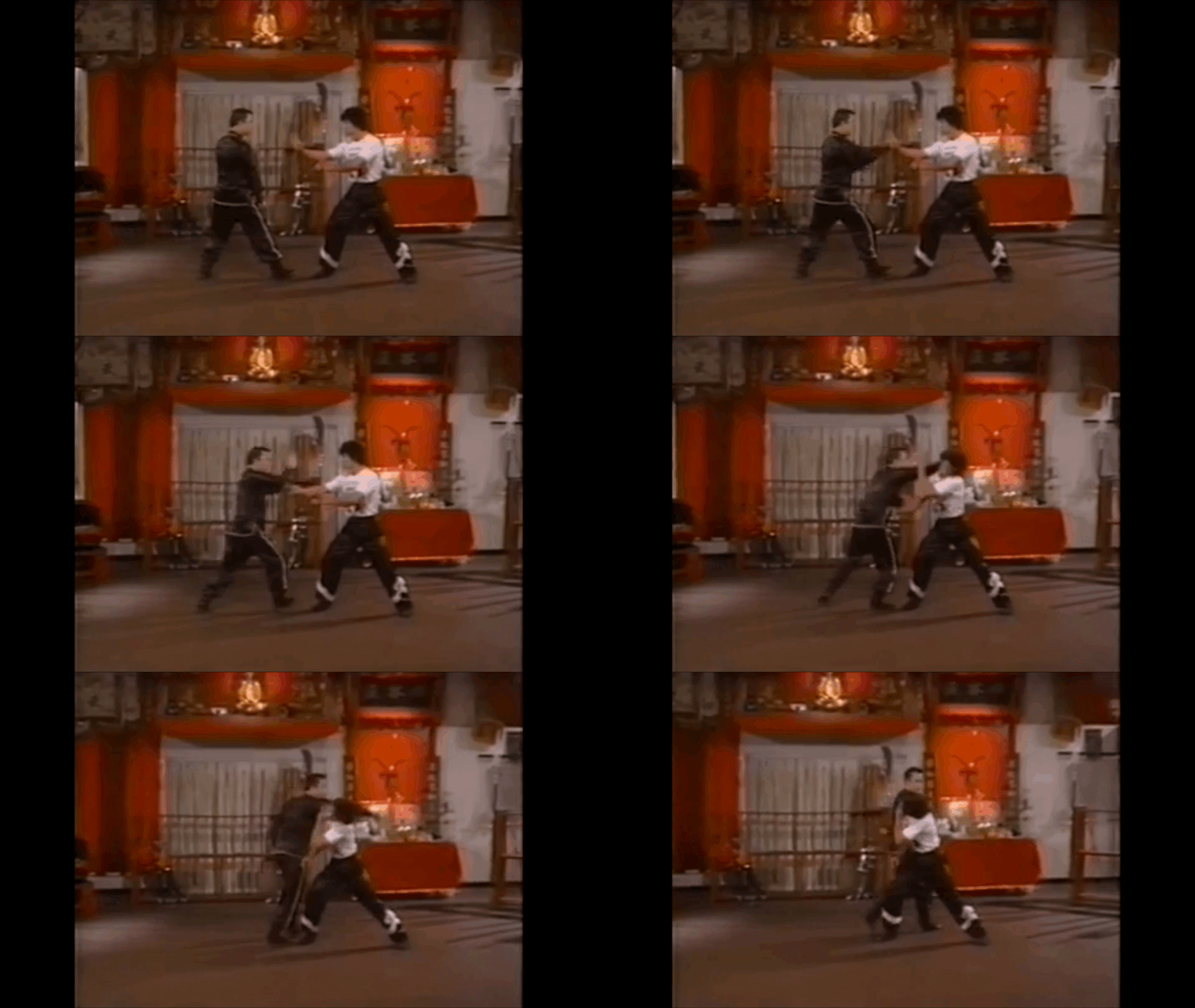
A small story: I trained with Brenden Lai’s group in GG Park many, many years ago. Interestingly enough, we were practicing the exact movement shown in your video. Due to my Taiji training, at the time I could feel the intention of my training partner's movements as he initiated his punch.
Not redirecting it, but simply going with it caused them to lose their balance, forcing them to recover—which was different from the technique we were working on.
Mr. Lai came over and said, 'No, that’s not how we do it,' and asked me to throw a punch at him. His hand movements were very light and very quick.
I didn’t attempt to disrupt his movement. His movements very light, and quick..
For the rest of the training I continued to practice as he instructed …
On intention vs. attention:
Adam Mizner frames "intent" as future-related and "attention" as present-moment. At first, this seems like a stretch from the Chinese term 意 (Yì)—which classically means the instantaneous, directive mind ("Yi leads Qi"), not future goal-setting.
It helps to know why he frames it this way. Mizner is not just a Taiji teacher; he is also a senior disciple in the Thai Forest Buddhist tradition. His language comes from that practice—letting go of attachment, willfulness, and the ego's grasping. When he says "don't apply intention," he is using Buddhist-informed pedagogy to help students drop muscular tension and mental forcing.
It's not a linguistic translation of 意 (Yì)— an experiential teaching tool. The classical meaning still stands, it helps to know the context of his framing.
Last edited:


