Unlock Your Kua : Why Bone Structure Limits Your Range of Motion

windwalker099102

Master of Arts
Last login streak
133 day(s)
Max login streak
133 day(s)

An interesting video on unlocking the hips,,,
The teacher talks about alignment, does not mention much about understanding the limits of one's range of motion...


""Ever wonder why you can't achieve deep stretches or struggle with hip flexibility despite your best efforts? In this video, we dive into the biomechanics of the hip joint, revealing how your bone structure—like the depth and orientation of your hip socket—dictates your range of motion. We’ll explore how the shape of your pelvis and femur influences your ability to bend, stretch, and move, and why no amount of practice can overcome these anatomical limits. "


This clip helps in understanding the underlying structures that may limit one's range of motion..

what looks good on the outside, not always good on the inside

 
Last edited:
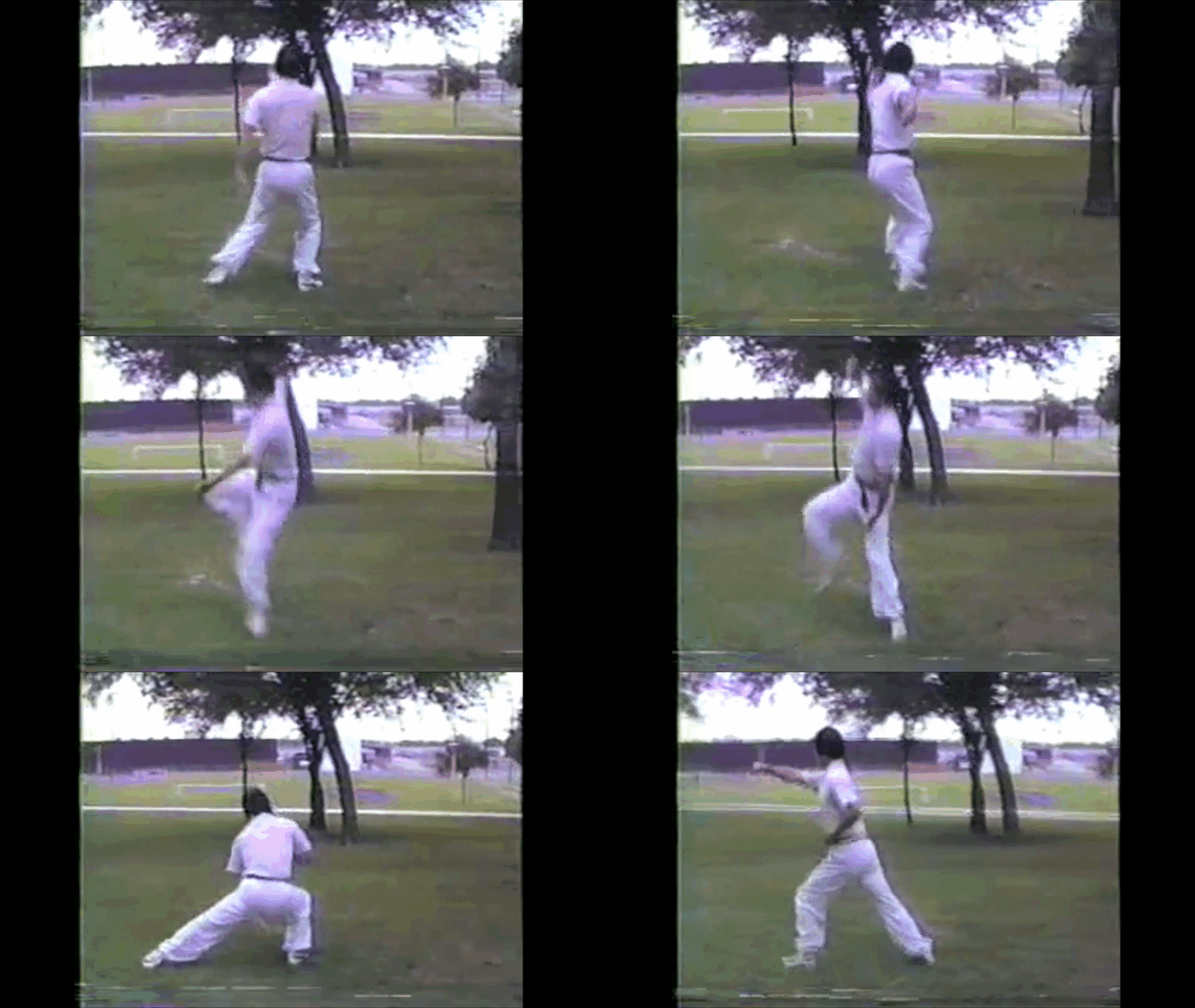
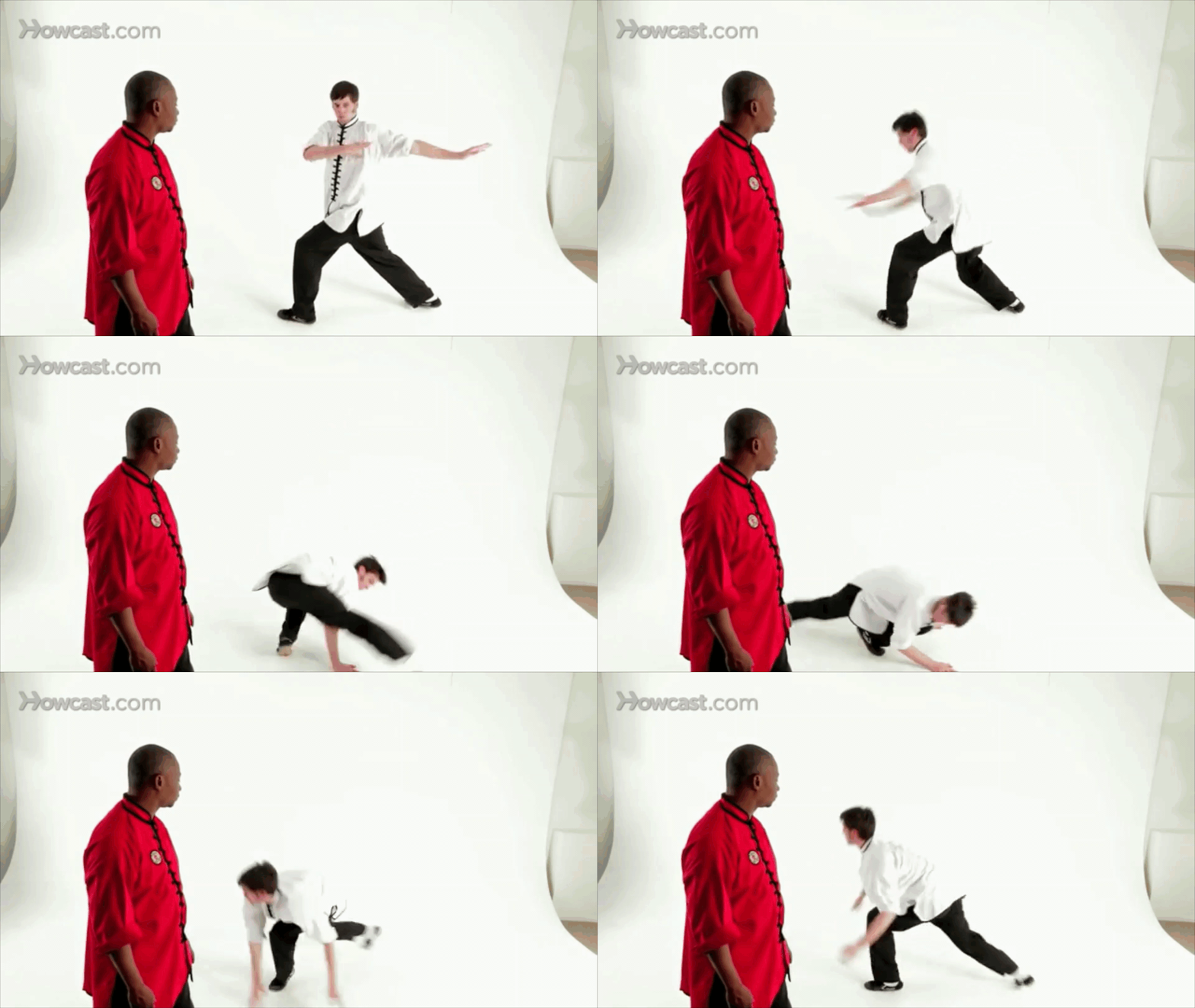
The striking tiger stance is a good way to open your Kua (groin area). Many MA systems (such as boxing) don't train this stance. If you train this stance daily, your mobility at your old age will maintain much longer than average.

This stance is a simple test. The day that you can't do this, the day that you are too old.


Chang_lift_sky.webp
 
The striking tiger stance is a good way to open your Kua (groin area). Many MA systems (such as boxing) don't train this stance. If you train this stance daily, your mobility at your old age will maintain much longer than average.

This stance is a simple test. The day that you can't do this, the day that you are too old.


View attachment 33519
This is what we in karate would describe as an extreme back stance (kokutsu dachi). It's very similar to side lunges we did for warm-ups. I used to be able to get my butt to the ground. I still do 15, alternating sides back and forth although I can only get down about a foot further than the guy in the picture. This is just for exercise as in Okinawan karate we would never fight from this stance.
 
The striking tiger stance is a good way to open your Kua (groin area). Many MA systems (such as boxing) don't train this stance. If you train this stance daily, your mobility at your old age will maintain much longer than average.

This stance is a simple test. The day that you can't do this, the day that you are too old.


View attachment 33519

👍

Looks very strong and balanced — settled. sitting into the posture rather than holding or supporting it.


Wang Ziping's version of this;

Looks like they already have good ability in the hips — the kua naturally open, gives them a big advantage in settling into the stance.
 
Last edited:
Stable is strong and strong is smooth. Both of my teachers stressed that axiom in the development of functional kua as it pertains to range of motion and movement.

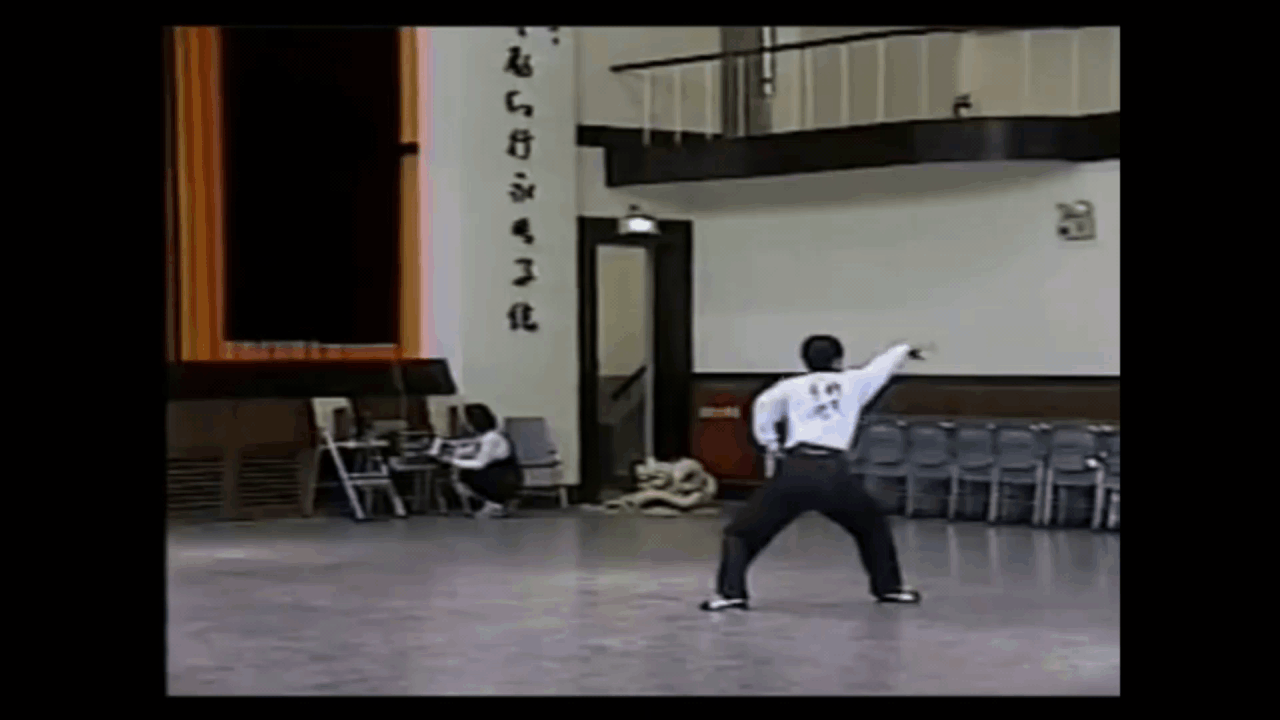
The splay of the feet in the first video of the op is fine for developing range of motion and flexibility of the hips, but it isn't going to be very stable in any direction (especially front-to-back/linear) when resistance or pressure is applied to the upper body. She will have to push with her toes to move/throw her body across her centerline.

The Striking Tiger stance in Kung Fu Wang's first reply shows the 'proper' foot placement for stable, strong and smooth. The second clip in Kung Fu Wang's second post shows it in motion as both transitional movement and preparatory to movement. Both examples show the push from the edge and/or heel of the weighted foot in moving the body forward and back across the centerline.

Regardless of flexibility or range of motion, one should be able to lift the toes before pushing the weight/body across the centerline as a test of whether or not the kua is stable, strong and smooth.
 
Looks like they already have good ability in the hips — the kua naturally open, gives them a big advantage in settling into the stance.
I don't know, maybe. But if you look carefully you can see that they are standing facing the wrong direction compared to their feet. I notice these things immediately :)

In other words, you can immediately tell they are unpracticed.

1. 松開 - Song Kai (Sōng Kāi) – Releasing to Open

When the body is closed, constrained, and filled with Crude Force (力 - Lì), Song cannot occur. To achieve the first level of Song, it is essential first to open the body.
In traditional Taijiquan (太極拳 - Tàijíquán) training, there are various exercises designed to stretch, separate, and release the body’s connective tissues. The expansion and unobstructed flow within these tissues allow the practitioner to begin experiencing the first quality of Song, which is Opening (Kāi). Thus, opening the body is the condition for perceiving Song; and in turn, Song—the relaxation of the tissues—further helps the body to open. We open in order to be Song, and we use Song to open.

When observing the Da Lü (大履 - Dà Lǚ) exercise performed by a skilled practitioner, it is clear that all the joints in the body are open and uncompressed. The tissues have been released and have become free. (Note--the da lu being a similar stance to what is shown).

This initial stage—Song Kai—begins the process of allowing Qi (氣 - Qì) to circulate throughout the body, which had previously been blocked by stiffness and tension. The tradition refers to this as Kai Men (開門 - Kāi Mén), “Opening the Gates,” meaning the energetic gates within the body. Once these gates are open, Qi and Jin (勁 - Jìn) can move freely, integrating the entire body from the tips of the toes to the fingertips.
 
In other words, you can immediately tell they are unpracticed.

Interesting, if I’m understanding correctly, these are your students, you’re presenting their stance as an example of 南山伏虎.

Wouldn’t it be better to use a more developed example — or even demonstrate it yourself — so the connection between the theory and the posture is clearer?
 
Last edited:
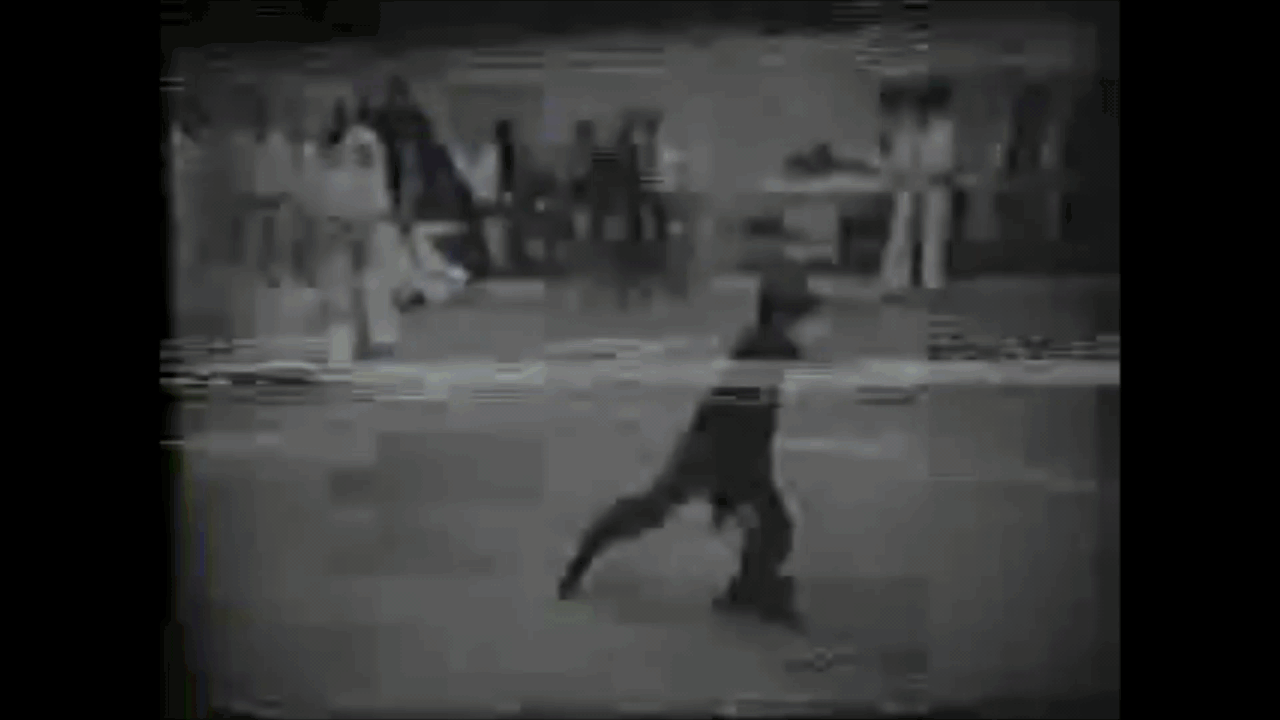
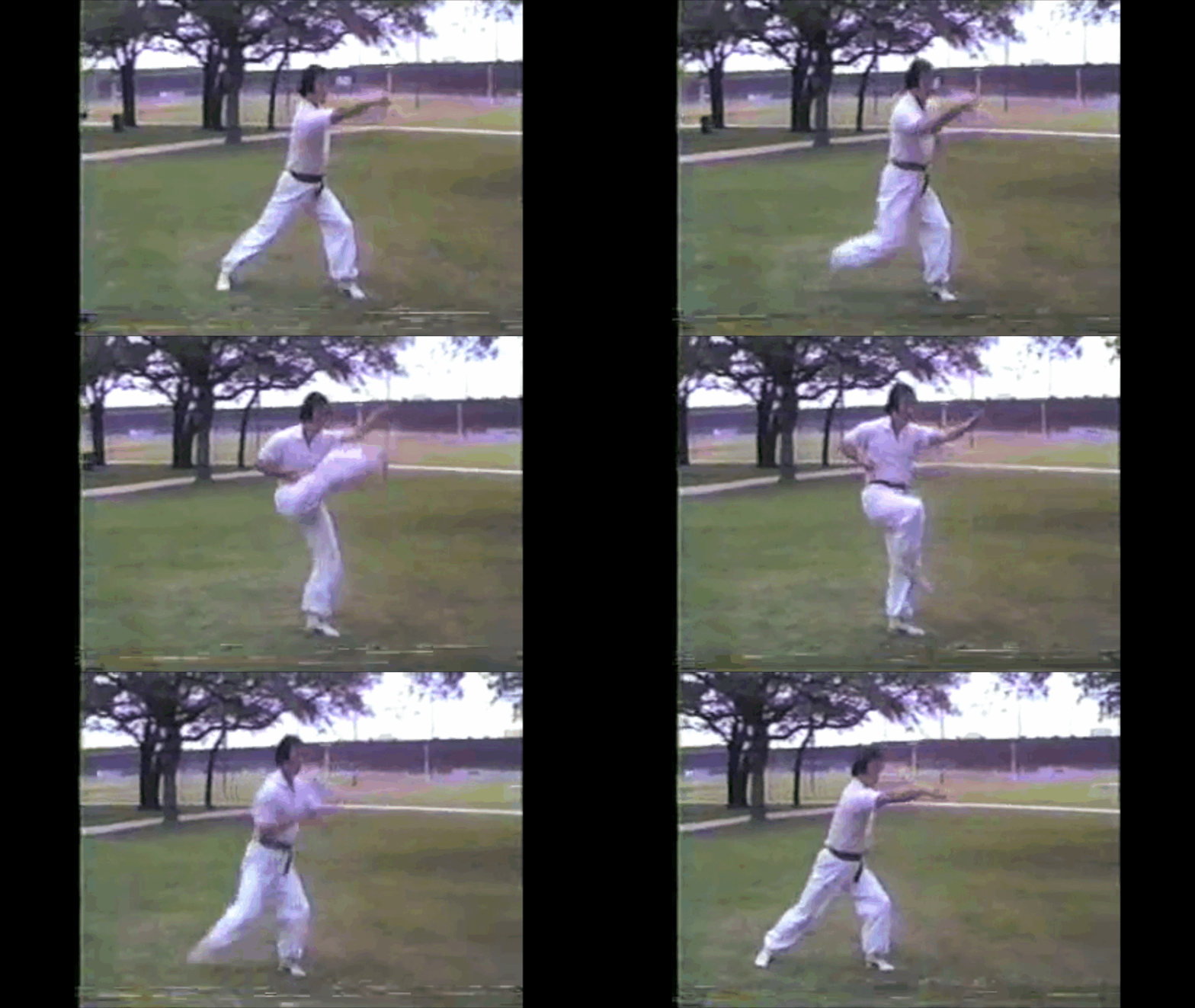
In this video, between 0.20 - 0.30, you can see the 伏虎式 striking tiger stance used for the military training. You will never see this training in US military and that's for sure. Why? Because some people may think this training has no combat value.

IMO, if you train as you fight, you may not develop your body to the maximum.

 
Last edited:
demonstrate it yourself — so the connection between the theory and the posture is clearer?
Every time you put up a personal video, you will take the risk to let someone says, "I'm not impressed". When someone says that, there is nothing that you can do. You may just wonder why you are so stupid to put yourself into that spot.
 
The splay of the feet in the first video of the op is fine for developing range of motion and flexibility of the hips, but it isn't going to be very stable in any direction (especially front-to-back/linear) when resistance or pressure is applied to the upper body. She will have to push with her toes to move/throw her body across her centerline.

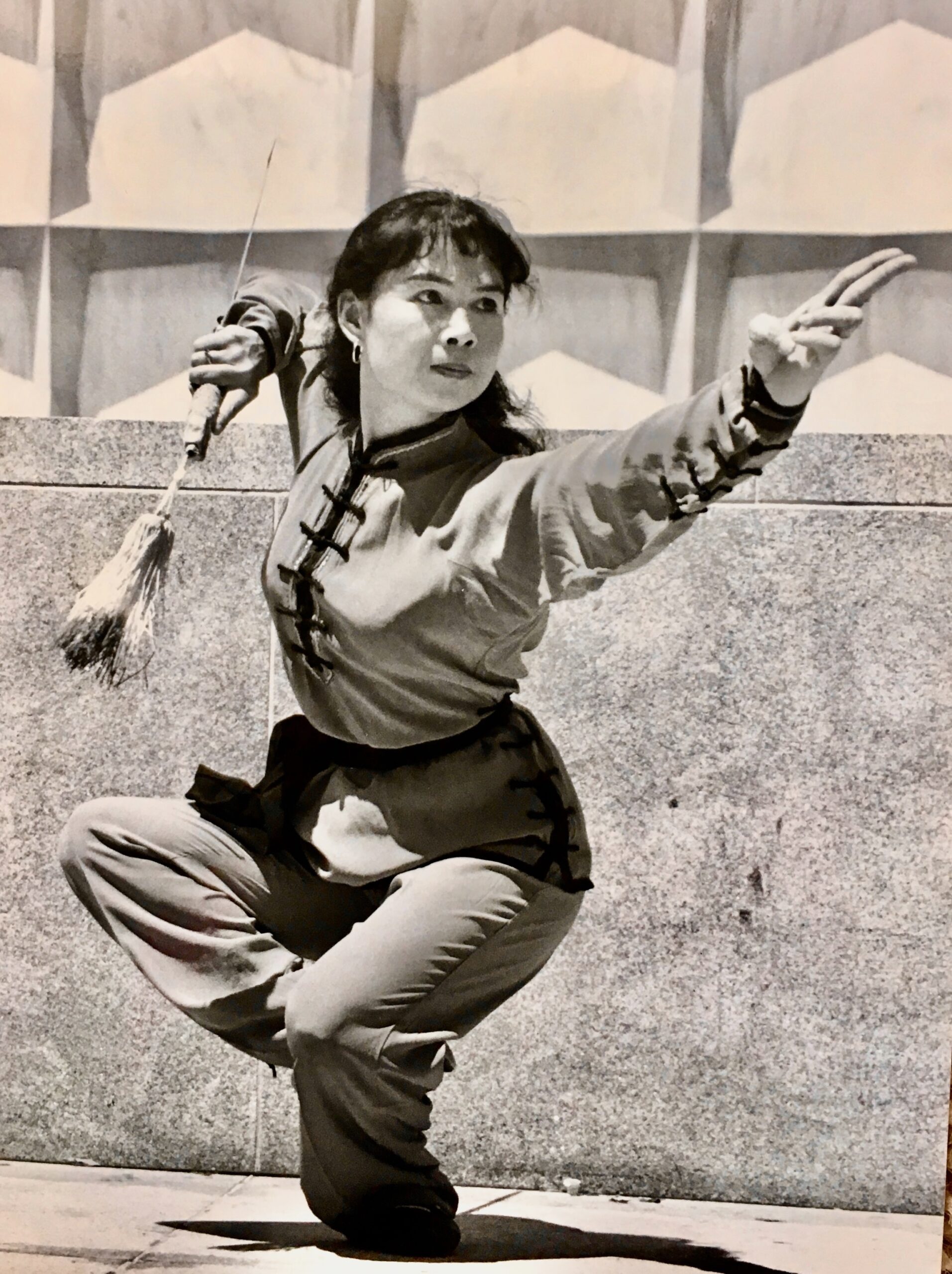
Her teacher Master Aiping Cheng, very interesting

Sparper-image-scaled.jpg


"1974 – Selected to the FIRST Chinese National Wushu Team to perform outside China. One of 32 outstanding athletes selected out of 164 from every Chinese province."


She mentions she's torn her ACL 3 times.... had surgeries done. 2 on the right one on the left...

Wonder how or what caused the injuries ?
 
Last edited:
Every time you put up a personal video, you will take the risk to let someone says, "I'm not impressed". When someone says that, there is nothing that you can do. You may just wonder why you are so stupid to put yourself into that spot.
😂 btdt

Yep, 👍 confusing at times...one would expect for those writing about what they do, or feel they can do...
might show a little of what they do to help understand the words....
It's much more interesting to see theory in action, then reading about it.

The fact that you post videos helps to see from where your view points comes from. Whether one agrees or not...
Much appreciated 👍
 
Last edited:
It's much more interesting to see theory in action, then reading about it.
Here is my question.

- A (from long fist) trains 伏虎式 striking tiger stance.
- B (from WC or boxing) doesn't train 伏虎式 striking tiger stance.

When A asks B how does B open his Kua since he doesn't train 伏虎式 striking tiger stance, does this consider as "style biasing"? Can we even discuss MA without any "style boundary"?
 
The striking tiger stance is a good way to open your Kua (groin area). Many MA systems (such as boxing) don't train this stance. If you train this stance daily, your mobility at your old age will maintain much longer than average.

This stance is a simple test. The day that you can't do this, the day that you are too old.


View attachment 33519
Back stance and yes we have it in our kata. I think I will practice this more on my own. Thanks for the great info!
 
Interesting, if I’m understanding correctly, these are your students, you’re presenting their stance as an example of 南山伏虎.

Wouldn’t it be better to use a more developed example — or even demonstrate it yourself — so the connection between the theory and the posture is clearer?
I liked what JohnWang said, which enticed my comment. If you'd like my analysis I will tell you. Until what JohnWang said, no one knew what the theory was of the posture. If I had demonstrated it, it may have been equally criticized by those people who did not know. As made obvious now, the knowledge of the theory has nothing to do with how well it is demonstrated in the video. The truth is, you have to do the qigong in order to learn what it is for; all that matters is that you know, and try to do it in your practice, then you will succeed. As the theory goes, since people didn't know what the exercise was for, they wouldn't have been able to see if it was done correctly. "You can't see internal." But if you know what it is for and you have qi kan, then you can see immediately what the problem is, and you can easily see the truth; they're doing it correctly. They're just unpracticed.

So I didn't post it because of that, but just as an example of this exercise. To my knowledge there is no other video of these exercises available so this is the only one I could post for now. You can actually learn from those videos, you just have to also understand the internal theory that goes along with it, and that takes a few paragraphs, an open mind, and possibly the right moment to light a spark of insight.
 
Lot of stuff in CMA is for theatrical stage performances with aim to give a sense of the supernatural for the audience to enjoy, it has little to non direct martial meaning or any good for health, no matter how much try to fuse it with theories of Qi and acupoints and such, it doesn’t become any more martial or healthy.
 
, "it doesn’t become any more martial or healthy."

The same can be said of any activity that pushes the body to extremes.
Whether it’s worthwhile depends entirely on the intention behind the practice.

At higher levels, almost any discipline can become unhealthy.
Martial training itself — training for war — is inherently hard on the body.
Historically it served as a kind of filtering process, ensuring only those who could endure had the best chance of survival on the battlefield.

In today’s practice, many people try to match an idea of what they think the art should look like, often without understanding the underlying structure — the bones, the joints, the way the tissues release.
When someone begins to understand these things, they stop working against themselves and start moving within their real condition.

From there, range, looseness, and functional ability grow naturally according to their own body, allowing them to develop skill within their actual limits.
 
it has little to non direct martial meaning or any good for health,
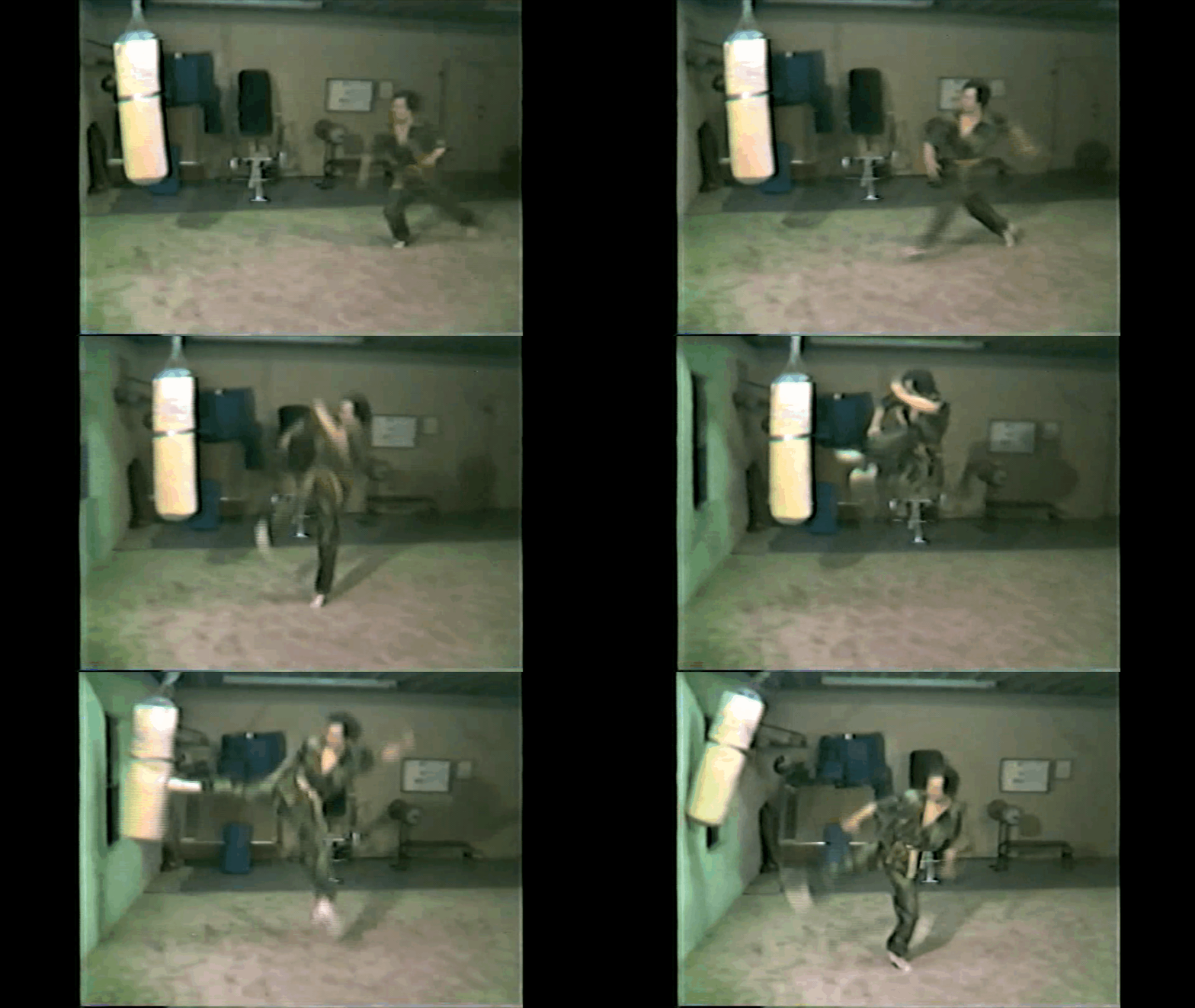
When I used the striking tiger stance to dodge my Karate/TKD opponent's high kick, they all hate me of doing that. When I drop low, my opponent's high kick makes no sense.

If Chinese wrestling, you can use striking tiger posture to grab on your opponent's leading leg ankle and pull him down. This is why when you drop into this stance, your hand has to be able to reach to your foot. This flexibility need training.

caught_ankle1.webp


The striking tiger stance can also be used for floor sweep.


it doesn’t become any more martial or healthy.
If your hand can touch your foot, does it make you healthier?

Flexibility makes you feel young. Feel young makes you happy. Happiness makes you healthier.

 
Last edited:
Back
Top