Eight Pieces of Brocade 八段錦 and Five Animal Frolics 五禽戏

I learned a Five Animal set (Tiger - Monkey - Snake - Dragon - Crane) in 1991. A lot of internal binding while externally stretching and external binding while internally stretching, depending on the animal.

Have practiced it every week or so since learning it, but it requires a lot of tendon 'ability', and mine isn't what it used to be.
 
Last edited:
If you practice as in the first video, you will get something. If you practice as in the second video, you tell me.
 
If you practice as in the first video, you will get something. If you practice as in the second video, you tell me.
In the 1st video, the open bow and shoot arrow exist in the form Bagua Quan that I learned when I was 11. I'm always interested in any training that coordinate body movement with breathing.

For the 2nd video, I think this Chinese video is better. The deer and bird can have MA application.


neck_surrounding.webp
 
Last edited:
It's worth doing. This exercise fixed a nexk problem I had for more than 20 years. I haven’t done this exercise in a while but will make it a daily part of my life as I'm making some healthy changes to my life. over the year I haven’t been giving enough time for me and body maintenance. None workout type stuff. Mainly centering and inner health focus on how the small stuff functions. Which I understand has a big effect on how the big stuff works. I'm dedicating so high quality "Me" time. My body just doesn't bounce back like it used to.
 
It's worth doing. This exercise fixed a nexk problem I had for more than 20 years. I haven’t done this exercise in a while but will make it a daily part of my life as I'm making some healthy changes to my life. over the year I haven’t been giving enough time for me and body maintenance. None workout type stuff. Mainly centering and inner health focus on how the small stuff functions. Which I understand has a big effect on how the big stuff works. I'm dedicating so high quality "Me" time. My body just doesn't bounce back like it used to.
I believe the Chang Taiji that the body movement coordinate with breathing inhale and exhale came from 八段锦 Ba-duan-jin.

八段锦非寻常操演,需以呼吸为纲,身随气走, 吸气时想像云朵绕着手臂往上飘,呼气时让肩膀顺着气往下沉. 手到哪里,呼吸就到哪里,别让动作抢了呼吸的先.
The Eight Brocades is no ordinary exercise; it must be guided by the breath, with the body following the flow of qi. As you inhale, imagine clouds swirling around your arms and floating upward; as you exhale, let your shoulders sink gently with the breath. Where the hand goes, the breath follows—don’t let movement steal the lead from the breath.

The SC 13 Taibo "羅漢观天 (Luo Han Guan Tian) Lou Han looks at sky" is similar to the 1st move of 八段锦 Ba-duan-jin.


my_13_2.webp
 
If you believe in "nature breathing", can you do

- "inhale" when you drop your arms and bend your body down?
- "exhale" when you raise your arms and bend your body back?

Can you violate the principle of:

- open -> air in, and
- close -> air out?
 
Last edited:
That's not nature breathing. Nature breathing means don't worry about the breath, as if you did not know there are different kinds of breathing. This is the true and ancient way to practice, as described by confucius, lao tzu and chuang tzu. The reason why breathing methods were invented later is to provide shortcuts. If you are not looking for shortcuts you do not need to worry about breathing.

Also with regards to '18 lohan hands' and 'five animal exercises', those who have boots on the ground know that there are dozens if not hundreds of these forms and they're all different. The problem is so bad that the terms have come to mean nothing more than the foundation set of whatever art you are doing. For example, I was taught the 18 hands of lohan in an eagle claw school and I was taught the five animals qigong somewhere else, and they're not what is shown above.

I saw a video of a descendant of Hua Tou performing five animal qigong. It looked like random shaking with no purpose. It was originally a spontaneous kind of qigong. The nonspontaneous kind was invented many generations after Hua Tou died, but the descendants of his descendants who wanted something more structured. The disciples of Hua Tou had to write everything down in their own practice and as they remembered hua tou, because they couldn't find any of his notes. That's why there is so much fragmentation.

However, after a great deal of experimentation you can discover the truth, using special methods.

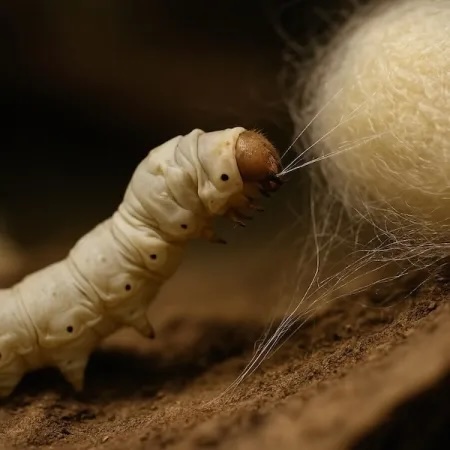
Also with regards to the length of the silk, that is such a funny joke. I considered the question for a moment and then I realized the answer. If you don't know the answer then you don't know, if you do know the answer, well, then you do know the answer. I expect that you should be able to know the answer. That is the basic requirement. Here look i'll tell you the answer. It's for 1300 meters. If you still don't know I will explain to you the structure and physical properties of silkworm cocoons. Because, clearly, nobody knows what I am talking about. A silkworm cocoon is between 0 and 2cm in circumference during the lifetime of it's reeling. This means that it makes over 130,000 rotations as it is reeled.

What's more, it takes anywhere from 3 to 8 days to produce the cocoon, and reeling the raw silk from it would have been a continuous, labor-intensive process, taking much longer depending on the desired length and quality of the final thread. The entire process, from the worm spinning its cocoon to the final silk thread, was not measured in a single, specific time frame but rather in continuous, manual effort. During the replacement of the cocoon, which most people never witness, therefore it appears as an infinite, continuous spinning proccess that has no beginning and no end. This looks like something, but you probably don't know what it is because you haven't seen it so in that case you wouldn't have any basis for comparison. But, it serves you to know an analogy is in fact being made.

What's more, a silkworm spins its cocoon by moving its body in a figure-8 pattern, a process that takes up to 8 days to complete. Therefore as the thread reveals, it produces a roundabout top to bottom front to back motion that appears to produce left first to right second horizontal rotation as the cocoon spins. It is amazing to watch, it definitely looks like something! The cocoon itself remains stable and upright, like -- hmm, ahh, like a tombstone. What an odd analogy but again, you might not be able to see it but that is why the analogy is given as it is, because when you see it then you will recognize it as being true.

There are many other secrets -- true secrets -- surrounding silk production that have been kept secret by the Chinese for thousands of years, much like the secrets of Ma La powder. Did you know that the quality of the silk produced by silkworms depends on what they eat?

There are so many fascinating things about silkworms, but another important factor to consider, is that although much has been revealed, not everything about silkworms necessarily applies 100% to silk reeling as a martial arts or qigong practice. You cannot necessarily figure it out yourself. You must seek out someone who knows in order to be taught. As for me my teachers are retired so I cannot reccomend them to you and although I have traveled far I have not found anyone suitable as a replacement. Therefore, if you have a good teacher, give them a gift and say thank you for teaching me.
 
Last edited:
That's not nature breathing. Nature breathing means don't worry about the breath, as if you did not know there are different kinds of breathing.
We are talking about the same "nature breathing" here. The only difference is whether your body movement try to coordinate with your breathing or not.

When you inhale and your arms are moving from your right to your left, if you

- want to coordinate your arms with your breathing, your arms have to move faster.
- don't, your arms can move as slow as you want to.

In both cases, your breathing is still nature.
 
I've trained 8 pieces of brocade with 4 different teachers.. I wasn't looking for different teachers, just had the opportunity and took it.
 
Interesting reading...

We had some people practice Eight Pieces of Brocade (八段錦) for a while.
My teacher later mentioned he felt the training wasn’t really in line with our approach and advised against continuing it.

His view was that while Ba Duan Jin is good for general health and loosening the body, it builds habits that can interfere with more refined Taiji work — especially the continuity and natural breathing we try to maintain.

It’s not that it’s “wrong,” just that its structure doesn’t fit the direction of our practice.


Interesting thoughts on silk worms,,,
silk.jpg


Any thoughts on Pulling Silk (抽丝 / Chōu Sī) vs Winding Silk (缠丝 / Chán Sī)

That thread—you didn’t invent it.
You just stopped pulling too hard to feel it.
 
His view was that while Ba Duan Jin is good for general health and loosening the body, it builds habits that can interfere with more refined Taiji work — especially the continuity and natural breathing we try to maintain.
Let's define "nature breathing" as inhale -> exhale -> inhale -> exhale -> ... that has nothing to do with the body movement.

Is your "Taiji continuity and natural breathing" different from nature breathing?
 
Breath without thinking on it is natural breath - automatic breath

Put mind on breath to force breath pattern is not natural breath - manual breath
 
Breath without thinking on it is natural breath - automatic breath

Put mind on breath to force breath pattern is not natural breath - manual breath
Agree with you 100% there. This is why the mind should be put on the body movement and not on the breathing. The nature breathing is independent. Whether your body movement wants to be coordinated with your breathing or not is what we are discussing here.

I don't understand why Taiji breathing can be any different from nature breathing.
 
Is your "Taiji continuity and natural breathing" different from nature breathing?

Nature breathing is unaware of movement.
Taiji breathing is aware within movement.

This means that once you’ve relaxed to the point where you can feel the breath at any point in the body, the intent of movement will naturally coordinate with it — expanding and contracting as one. It’s not something practiced consciously, but something that arises on its own when body, intent, and breath are no longer separate.
 
Nature breathing is unaware of movement.
Taiji breathing is aware within movement.

This means that once you’ve relaxed to the point where you can feel the breath at any point in the body, the intent of movement will naturally coordinate with it — expanding and contracting as one. It’s not something practiced consciously, but something that arises on its own when body, intent, and breath are no longer separate.
What you have said is exactly what I have said, "Body movement is coordinated with breathing".

But I don't understand what you have said, "Taiji breathing is aware within movement". It seems to me that you said, "Taiji breathing is coordinated with movement".
 
Last edited:
Breathing isn't a linear, binary + and -, or 1 - 2, respiratory function of the kinds of breath work involved in deeper practices of taiji. The same holds true regards qigong practices if the practitioner has gained a depth of understanding and insight beyond the superficial, simplistic manner in which OP and others are attempting to discuss it.

Diaphragmatic Impulse is how I describe it with words. In practice, it can be readily understood/indelibly 'felt' by raw beginners in less than 20 minutes of working through a set of really simple exercises. A raw beginner's ability to hold the framework and tensegrity that promotes the development of that 'state' is another thing altogether and not so easy.
 
Back
Top