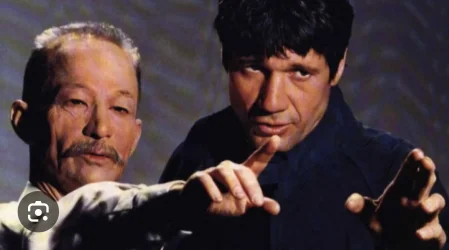
I could've sworn there was a recent discussion on this topic, but the most recent version of this thread I could find was back in 2006. That thread is old enough to be an adult today. I thought I'd revive this question for current members.
What makes a Master? More specifically: what makes a good one? (Or Professor, Sensei, Sifu, Level 5 Wizard Extraordinaire, whatever it is in your art).
I know the simple answer is based on being Black Belt, or 4th or 5th degree and/or completing some class. But what does it really mean? What is it that separates the honorary title from the normal coach or instructor? What is it that separates a good honored teacher from a mediocre or a bad one?
I may or may not have an essay due in the intermediate future that's prompting this question.
Now this is in my wheelhouse!
1. Bloom’s Mastery Learning
Bloom, B.S. (1968) ‘Learning for mastery’, Evaluation Comment, 1(2), pp. 1-12.
Bloom, B.S. (1984) ‘The 2 sigma problem: The search for methods of group instruction as effective as one-to-one tutoring’, Educational Researcher, 13(6), pp. 4-16.
2. Vygotsky’s Zone of Proximal Development (ZPD)
Vygotsky, L.S. (1978) Mind in society: The development of higher psychological processes. Cambridge, MA: Harvard University Press.
3. Bruner’s Scaffolding Theory
Bruner, J.S. (1966) Toward a theory of instruction. Cambridge, MA: Harvard University Press.
4. Dreyfus Model of Skill Acquisition
Dreyfus, H.L. and Dreyfus, S.E. (1980) ‘A five-stage model of the mental activities involved in directed skill acquisition’, Operations Research Center Report No. ORC 80-2. University of California, Berkeley.
5. Schön’s Reflective Practitioner
Schön, D.A. (1983) The reflective practitioner: How professionals think in action. New York: Basic Books.
6. Mezirow’s Transformative Learning Theory
Mezirow, J. (1991) Transformative dimensions of adult learning. San Francisco: Jossey-Bass.
7. Collins et al. on Cognitive Apprenticeship
Collins, A., Brown, J.S. and Holum, A. (1991) ‘Cognitive apprenticeship: Making thinking visible’, American Educator, 15(3), pp. 6-11.
8. Ericsson’s Deliberate Practice and Mastery
Ericsson, K.A., Krampe, R.T. and Tesch-Römer, C. (1993) ‘The role of deliberate practice in the acquisition of expert performance’, Psychological Review, 100(3), pp. 363-406.
For metanalyses, look up either Patrick Griffin or Hattie (can't remember which) - the publications use scale efficacy to measure a number of things that are most impactful on a learner.
For mastery, Bloom would be most appropriate. Mastery essentially means to know all, adapt all, transform all, and have the aforementioned qualities recognised.
Any good Master (capitalised) will admit that they've mastered nothing. It's just a title.