The Importance of Stretching

Since beginning to train in MA a year ago, I have started to do stretching on a daily basis and I find it especially helpful the morning after a training session. This is when my legs get very tight. Despite the tightness, they will loosen up nicely after a couple good standing hamstring stretches (I do seated too). I typically stretch for 10-15 seconds at a time and bend my knees on the way up, then go back down. When I do cool down stretches, I keep my head up so I don't pass out. At the age of 38, stretching is absolutely paramount to avoid pulling a muscle.


👍

Found that even if one feels they are loose and stretched they may not be.
Recently had a go with something called plantar fasciitis “ on my r-foot
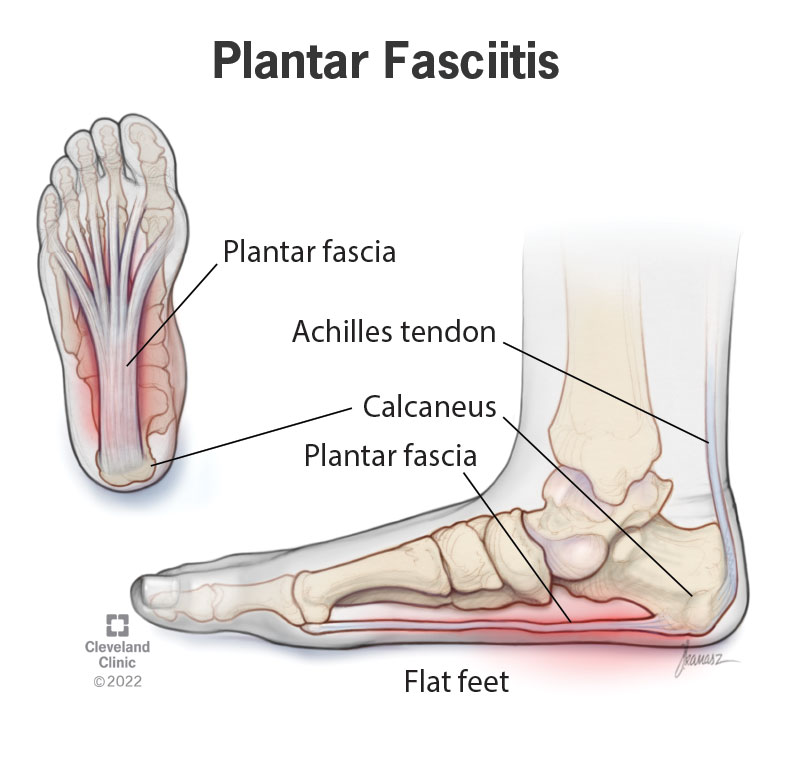
14709-plantar-fasciitis.jpg

Not fun. 😳

By the time I was able to see the foot doctor most of the symptoms started to go away through targeted stretching on my own.

Guess as one gets old , things start to show up.
 
Freddy Mercury was the very trumpet of gods. I could hardly imagine a more tuned instrument. Pavarotti maybe.
I think he was the greatest singer/songwriter in my lifetime. He was taken too soon. Would have loved to have seen what else he would have come up with
It seems you haven’t heard of Taylor Swift 😐
Actually, that gal is right up there with anyone.
She’s genius personified.
 
Hi all,
< joke for today >
Why did they turn off the Wi-Fi, on the farm?
< answer >
Because the cows kept downloading moooooooooooosic

* it is okay to smile *
regards,
Matt
 
👍

Found that even if one feels they are loose and stretched they may not be.
Recently had a go with something called plantar fasciitis “ on my r-foot

14709-plantar-fasciitis.jpg

Not fun. 😳

By the time I was able to see the foot doctor most of the symptoms started to go away through targeted stretching on my own.

Guess as one gets old , things start to show up.
One thing I get often is foot cramps, I think it is also due to my flat feet. I stretch every day because if I don't, I will get quite tight and stiff feeling. My flexibility has greatly increased though over the past two years.
 
👍

Found that even if one feels they are loose and stretched they may not be.
Recently had a go with something called plantar fasciitis “ on my r-foot

14709-plantar-fasciitis.jpg

Not fun. 😳

By the time I was able to see the foot doctor most of the symptoms started to go away through targeted stretching on my own.

Guess as one gets old , things start to show up.
I suffered with this and fallen arches (which are perfectly normal for some) until I stopped wearing orthotics to support my fallen arches and started wearing barefoot footwear (with a wide foot box and zero drop from heel to toe) After a few tentative weeks, the muscles of my feet strengthened to point where there was no pain at all, especially when jumping around barefoot in the dojo! My hallux (big toe) has stopped pointing inwards too; no disfigured, bunioned toes for me!
 
One thing I get often is foot cramps, I think it is also due to my flat feet.
Like I said above, I had foot pain for decades because of ‘flat(ish) feet’. Once I ditched the orthotics and removed arch supports from my other footwear, my foot muscles strengthened over a few weeks/months and now I have no pain. Try it!

The only problem is that gobtaining wide foot box/zero drop formal footwear is impossible. His Majesty The King often laughs at my odd shoes.😐
 
Like I said above, I had foot pain for decades because of ‘flat(ish) feet’. Once I ditched the orthotics and removed arch supports from my other footwear, my foot muscles strengthened over a few weeks/months and now I have no pain. Try it!

The only problem is that gobtaining wide foot box/zero drop formal footwear is impossible. His Majesty The King often laughs at my odd shoes.😐
Hmm but the thing is I haven't used arch supports. Maybe I should go with gel inserts?
 
Hmm but the thing is I haven't used arch supports. Maybe I should go with gel inserts?

In researching my problem, it seems that everyone's feet are different—no one-size-fits-all solution. Some people do well with arch supports, others need something else depending on what's actually causing the pain. Culture plays a role too: different places developed different footwear based on their own needs and aesthetics, not always with foot health in mind.

The real goal isn't just adding arch support—it's reducing strain on the plantar fascia while keeping the foot comfortable. That could mean better shoes, orthotics, heel cushioning, stretching, or changing up your activities. A podiatrist can help figure out what makes sense for you.

Western vs. TCM

Western: Focuses on the inflamed fascia itself—reducing inflammation, stretching, and correcting mechanics with orthotics, night splints, NSAIDs, steroid shots, and calf stretches.

TCM: Focuses on Qi and blood flow along the Kidney and Bladder meridians in the foot. Instead of just fighting inflammation, it works to unblock stagnant energy and strengthen weak organs. Needles and massage go beyond the heel—to the lower back, knees, or even hands—since those areas connect to the same meridians.

My problem seems to be getting better....it is interesting 🤔
 
Nooooo! Gravel and razor blades!

😂
I used to work in Class 10 clean rooms in Korea—Samson, Hyundai, LG. For those who don't know, Class 10 means you're limited to 10 particles of 0.5 micrometers or larger per cubic foot (10,000 per cubic meter). We had to suit up head to toe, in what was called bunny suits...only ones eyes could be seen...

Two-Men-Walking-in-a-Cleanroom-Gown.png


They had these clean room booties we called "pain shoes." Inside the sole, there was this little raised bump that dug right into your foot. Hurt like hell until you got used to it. We asked our Korean coworkers what that was about. They said it's supposed to stimulate an acupoint. Everybody laughed. "note: found..no references to this". maybe something used only at that fab...

There are no chairs in the clean room, so you're on your feet 8 to 10 hours a day. Interesting work, a real hassle getting in and out of the clean room.
 
Last edited:
In researching my problem, it seems that everyone's feet are different—no one-size-fits-all solution. Some people do well with arch supports, others need something else depending on what's actually causing the pain.
Our feet evolved over millions of years and bipedal motion much later. We evolved to walk, barefoot, of course over rocks, sand, gravel, thorny vegetation etc. Even until the middle ages, footwear consisted of simple leather sheathing around the foot. It’s only in recent years that the footwear industry have decided we need arch supports, hyper-raised heels and soft cushioning that detaches us from the feedback our feet give us from the terrain. I don’t think it’s a coincidence that foot, leg and lower back problems have come to the fore at the same time.
Culture plays a role too: different places developed different footwear based on their own needs and aesthetics, not always with foot health in mind.
Is that your justification for wear those high heel Louboutins at the weekend 🙄😉
The real goal isn't just adding arch support—it's reducing strain on the plantar fascia while keeping the foot comfortable.
Tens of thousands of years bare foot walking. Our feet are designed to to operate without ‘support’. There’s no such thing as a flat foot. Feet always have some degree of a functional arch, it’s just some are more arched than others.
That could mean better shoes, orthotics, heel cushioning, stretching, or changing up your activities. A podiatrist can help figure out what makes sense for you.
KA CHING!🤑 (for the podiatrist)

You all know I’m a dyed-in-the-wool scientists who make decisions on empirical data and evidence. In my mid 20’s my feet started hurting and I was prescribed an orthotic insert. They did the job but I noticed I could never really walk around barefoot without foot pain. Then Karate training, especially with sessions with lots of leaping and lunging back and forth results is very painful feet. Then I thought about how primitive humans managed to hunt climb and use a sword in bare feet and my journey began. By sheer coincidence, my academic colleague began running (our intended) student projects on barefoot running which I second marked and the data wa compelling.

These are my everyday our door wear now (for the last couple of years) and I now have no…zero foot pain. They only cost £30 too!
20260725_094344.webp


20260725_094351.webp

20260725_094358.webp
 
This explains it all very simply…

You’ve all had some sort of arch support over the decades, many of you have foot/lower back/leg pain. ‘Insanity is doing the same thing over and over again and expecting different results’…try something new that’s virtually free for a few months (remove your arch supports) and see what happens.
 
If you prefer your information to come from very hairy or heavily tattooed people…
 
Also, have noticed the seemingly increasing number of people who walk with ‘duck feet’ (out toeing)? Just observe when you’re out and about and I do wonder if this might be associated with modern footwear. It looks really slovenly! 😄 Certainly obesity changes the gait toward out toeing, but even slimmer people seem to be doing it now 🤷🏾‍♂️
 

Interesting video.

noticed the disclaimer:

~~~~Medical Disclaimer~~~~ All information, content, and material of this website is for informational purposes only and are not intended to serve as a substitute for the consultation, diagnosis, and/or medical treatment of a qualified physician or healthcare provider.

The presenters argue that many chronic cases diagnosed as plantar fasciitis are actually plantar fasciosis and base their treatment recommendations on that distinction. At the same time, their disclaimer states that the video is not a substitute for diagnosis or treatment by a qualified healthcare provider.

If the diagnosis itself—plantar fasciitis versus plantar fasciosis—can change the treatment approach, determining which condition is actually present should be the first step, what a podiatrist is trained to evaluate.

Why one would want to see a foot specialist.
 
Last edited:
Born to Run by Christopher McDougall is a very interesting read on the running potential found within the human species. He also talks heavily on the concept of barefoot running and how modern athletic shoes with heavy arch support and cushioning may actually contribute to the very injuries that they are intended to protect from.


My take on it is that the human foot is designed to run safely barefoot, with the caveat that the world we live in is often completely paved over which is an unforgiving surface on which to run. So yes, we are meant to run barefoot, but on grass, dirt, sand, and sometimes rock, but not strictly on pavement and nothing else. I think injuries can happen then, and my own experience seems to confirm it, for me at least. Run barefoot in the park, and sometimes on pavement. But not only on pavement.
 
Interesting video.

noticed the disclaimer:

~~~~Medical Disclaimer~~~~ All information, content, and material of this website is for informational purposes only and are not intended to serve as a substitute for the consultation, diagnosis, and/or medical treatment of a qualified physician or healthcare provider.

The presenters argue that many chronic cases diagnosed as plantar fasciitis are actually plantar
fasciosis mean pathology of the fascia rather than fasciitis = inflammation of…
and base their treatment recommendations on that distinction. At the same time, their disclaimer states that the video is not a substitute for diagnosis or treatment by a qualified healthcare provider.

If the diagnosis itself—plantar fasciitis versus plantar fasciosis—can change the treatment approach, determining which condition is actually present should be the first step, what a podiatrist is trained to evaluate.
Legal requirements especially in the litigious USA.
Why one would want to see a foot specialist.
Because they…you know…have a…well…foot problem.

Please ignore my experiences, that’s all they are and carry on what you’ve been doing for many years.

Best of luck.
 
Born to Run by Christopher McDougall is a very interesting read on the running potential found within the human species. He also talks heavily on the concept of barefoot running and how modern athletic shoes with heavy arch support and cushioning may actually contribute to the very injuries that they are intended to protect from.


My take on it is that the human foot is designed to run safely barefoot, with the caveat that the world we live in is often completely paved over which is an unforgiving surface on which to run. So yes, we are meant to run barefoot, but on grass, dirt, sand, and sometimes rock, but not strictly on pavement and nothing else. I think injuries can happen then, and my own experience seems to confirm it, for me at least. Run barefoot in the park, and sometimes on pavement. But not only on pavement.
There was a bloke in Sheffield, where I once lived and worked, who ran everyday barefoot on the pavement, on the road in the park, in the rain, wind and snow and probably glass, gravel and dog sh*t! It was astounding.

Running barefoot changes your gait so you land on the ball of you foot rather than the heel as you do with bulky footwear and so the foot strike impact forced are much reduced because of the springiness of the achilles tendon.

It’s not for everyone but I think for foot pain, shedding pointed training and other shoes and adopting wide foot box, zero drop shoes is the panacea. Why is the longest part of the shoe in the midline when the hallux is usually the longest toe? That point causes bunions by pushing the hallux inwards.
 

Latest Discussions

Back
Top