Shock Power

Any time someone tells you any variant of "you can only learn this here" it's nonsense. Any time someone tells you about magical chi balls, it's nonsense.

An interesting take... there is a difference between something being magical and something simply being outside one's experience or method.

Some things are difficult to understand without having felt them, particularly when the skill isn't part of the strategies or training methods of one's own system. Why would we assume someone should understand something they've never trained or experienced?

In Southern Mantis, for example, the Phoenix-eye fist is a specialized method of point striking traditionally associated with acupuncture points and ideas concerning qi and its movement in the body.

Whatever one thinks of the traditional explanation, there is noth
tumblr_o6wwe3yIvO1v6w3juo1_640.jpg
ing inherently magical about developing a specialized striking method or what it's based on...
for those using the methods.

Iron Palm and Burning Palm are likewise specialized hands developed through extensive training.

The underlying idea is to develop something unfamiliar and therefore difficult for someone to deal with directly.

Some specialized skill sets take considerable time to develop—as was apparent when BJJ first became widely encountered.

Historically, methods were also sometimes kept within relatively small groups precisely because unfamiliarity could preserve an advantage.

Of course, ā€œsecret knowledgeā€ can also make very good marketing, and there are certainly people willing to capitalize on that.
 
Last edited:
Some specialized skill sets take considerable time to develop.
Here is the problem for CMA training.

One CMA teacher in Houston told me when he grew up in South Korea, he used Phoenix-eye fist that his praying mantis teacher taught him in street fights. The result was not very good. Maybe he was too young to be able to develop his Phoenix-eye fist to be effective. The problem is, one day when he has developed his Phoenix-eye fist, he may be too old to use it in street fight.

Some people in the past who treated MA training as the only thing they did, they could spend 8 hours in MA training daily. Today, we no longer have that environment. To expect someone to spend 20 years to develop some MA skill/ability can be unrealistic.

Today, most people emphasize on "spending" instead of on "saving". When one didn't "save" enough when he was young, he will have nothing to "spend" when he gets old.

MMA is popular today. Can we expect those MMA guys all live till their 90 years old? One of my MT friends told me that a professional MT fighter can only last in his career for 6 years. Not sure those 6 years of body abusing may give them trouble during their old age. They didn't save enough when they were young. They just spent too much instead.
 
Last edited:
MMA is popular today. Can we expect those MMA guys all live till their 90 years old? One of my MT friends told me that a professional MT fighter can only last in his career for 6 years. Not sure those 6 years of body abusing may give them trouble during their old age. They didn't save enough when they were young. They just spent too much instead.
A lot of these guys here have careers much longer than 6 years...
 
Some people in the past who treated MA training as the only thing they did, they could spend 8 hours MA training daily. Today, we no longer have that environment. To expect someone to spend 20 years to develop some MA skill/ability can be unrealistic today.

If it's unrealistic, maybe that's why many who feel they have the skill really don't. Reducing the time required doesn't necessarily produce the same skill; it may simply lower the standard of what people accept as having it.

Those who know they have the skill have little need to prove it to others.

My teacher once mentioned that his teacher told him it would take 20 years to develop a certain skill.

He smiled and said, ā€œI did it in 15.ā€
 
Old MA saying said,

- Knowing defeat fast.
- Fast defeat slow.
- Slow defeat not-knowing.

Fast is good. But knowing is better. There is a lot of training in order to reach to the "knowing" level. How to open your opponent's guard can be MA 101.
Wab25's idea of what a guard might be is based on her experience, but there are lots of different guards that she maybe hasn't trained or learned.

My instructor is 3" taller with a 4" reach advantage. He trained Hung Gar before taiji and had lots of full-contact experience in different formats, and he's a fencing instructor...

My guard against a guy with that size advantage is going to be much different than one I use against a guy my size or smaller. At any rate, my guard had nothing to do with him moving first.

...your teacher...
"If the opponent doesn't move, I don't move - if he moves a little, I move first"
 
There are always openings in any guard.
The "rhino guard" is designed that it has no opening. If you intend to punch at your opponent's head, your attacking arm will have no option but to contact his arms first.


The main purpose of the "rhino guard" is not only used for defense. It's used to separate your opponent's both arms away from his head (open your opponent's guard).

 
Last edited:
My guard against a guy with that size advantage is going to be much different than one I use against a guy my size or smaller. At any rate, my guard had nothing to do with him moving first.
My guard doesn't change based on his size. What changes here is my distance and angle management. My guard changes according to the opponent's tactics and to employ my own.
 
The "rhino guard" is designed that it has no opening.
I stand corrected. All other guards should be discarded.... anyone not using a rhino guard, just doesn't know how to fight....

Just hope your opponent does not feint high with punches, keeping the rhino high and throw a straight kick to the body, underneath the rhino.... legs are longer than arms.

Hope he doesn't raise his knee to feint a straight kick, lowering the rhino to block a kick and then step in with an overhead punch.

Hope the other guy does not step to the side, baiting you to turn and throw a round house kick to the very open ribs.

Hope the other guy does not press in and sweep the front foot.

Why don't I see rhino guard in boxing, kick boxing or mma? I mean its the perfect guard and has no openings... why isn't being used?
 
Hi Martail Talk, and all,

If you learn martial arts some,
then you have a big advantage
against an untrained attacker,
in many scenarios

Many of the techniques that I have learned,
allow you to defend yourself with
overwhelming force

that is, you totally overwhelm your attacker,
to the point that it is not a threat any more.

Also, there is the move of
cross and cover
where you create space between yourelf
and a downed opponent.

As a retired martial arts instructor,
I do not find myself afraid of the public.

Used to have a bully problem, as a child,
but now, I am my own worst enemy.

It is also a good skill to know how to
use your words,
so you can talk yourself out of a
possibly bad situation

best of luck, to you, on your journey
Matt
 
My guard doesn't change based on his size. What changes here is my distance and angle management. My guard changes according to the opponent's tactics and to employ my own.
Bully for you

As a lowly boxer I was taught to adjust my guard accordingly. Essentially, if you have to raise your eyes to meet their eyes, lower your stance height and lengthen your guard.

Also, apply the 'Big, Middle, Little' rule for your toes. If you have to lower your eyes or keep them level to meet theirs, you can probe with your shortest jab which has your big toe pointed through their center. If you have to raise your eyes to meet theirs, aside from adjusting your guard, you want to lengthen your jab by aiming somewhere between your middle to little toe through their center and lower your stance a bit. Those are very basic basics and not subject to fantasist debate or theory - just lots of bagwork and sparring

Anyway, Kung Fu Wang started making hard and fast rules about clearing the guard even though he wasn't there to get the gist of the lesson I wrote about, which was; 'It's all fun and games until someone loses an eye'
 
Just hope your opponent does not feint high with punches, keeping the rhino high and throw a straight kick to the body, underneath the rhino.... legs are longer than arms.
When using the rhino guard, you close/shut-down your front door (your center between your arms) completely. You force your opponent to go through your side doors (on both sides of your arms).

The rhino guard is good to deal with head punch. You hide your head between/behind your arms. It's not good to deal with body kick or foot sweep that your opponent attacks the other part of your body. If your head punch also include grab/pull, you can still use it to pass the rhino guard, and enter through your opponent's side door. Here we assume the grab/pull is not used.

Why don't I see rhino guard in boxing, kick boxing or mma? I mean its the perfect guard and has no openings... why isn't being used?
If you have boxing gloves or MMA gloves, you can't lock your fists together, your rhino guard will not be strong enough to deal with any powerful punch. If your opponent can separate your rhino guard, your opponent can enter your front door, your rhino guard will be meaningless.

The rhino guard idea came from the ancient "Wusong Breaks Manacles". When you have manacle on your wrists, your opponent cannot break your arms apart. Your opponent can only enter through your side doors. Your opponent cannot enter your front door.

 
Last edited:
'It's all fun and games until someone loses an eye'
You are correct. If your opponent can attack you before you can raise your arm, you may already lose even before the fight start. Fast defeat slow.

The Zimen system doesn't believe in guard. The Zimen system believes a fight starts from your hands next to your knee.

There is a Zimen basic training, that is:

- Both you and your opponent have both hands next to the knees.
- Your opponent punches at your face, you try to block it.

IMO, this can be the most realistic street fight training.
 
The Zimen system doesn't believe in guard. The Zimen system believes a fight starts from your hands next to your knee
šŸ‘ agree with this…although context has a lot to do with it…


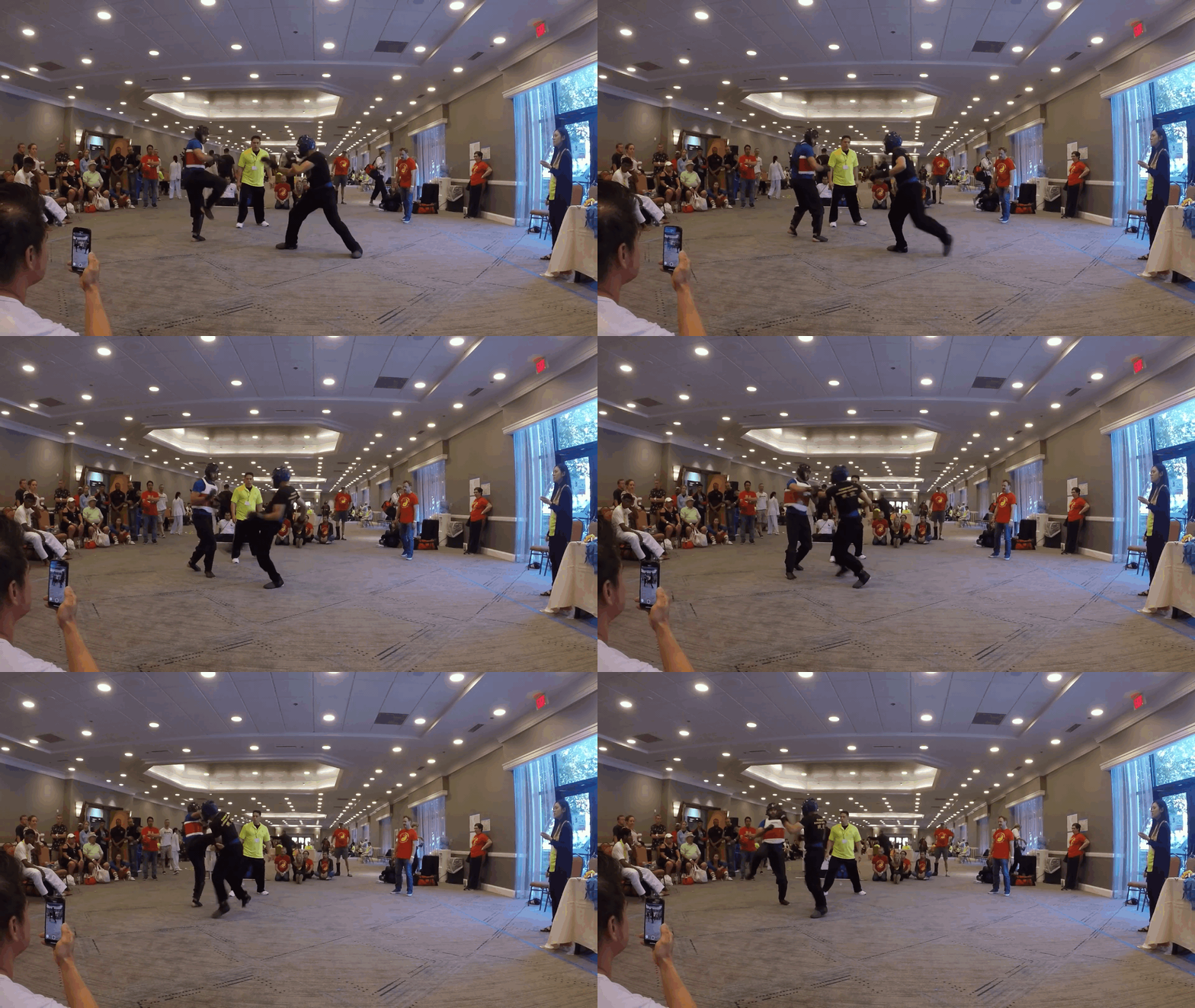
If you have boxing gloves or MMA gloves, you can't lock your fists together, your rhino guard will not be strong enough to deal with any powerful punch. If your opponent can separate your rhino guard, your opponent can enter your front door, your rhino guard will be meaningless.

The rhino guard idea came from the ancient "Wusong Breaks Manacles". When you have manacle on your wrists, your opponent cannot break your arms apart. Your opponent can only enter through your side doors. Your opponent cannot enter your front door.

Good demo šŸ‘
The fighting styles of back then, where probably a lot different then now.


The basic problem with this type of ā€œguardā€ is that the guard itself becomes the target. There is no need to reach past it or target the body directly. Take what is offered and work with that.

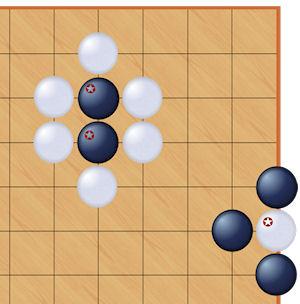
There is a game called Weiqi, or Go….
GoCapture1.jpg


The same idea can apply here. The guard isn't necessarily something that has to be penetrated or gotten around. It is something the other person has already placed into the relationship.


Work with what is given, join and follow where they go, the manacles themselves illustrate your point.
Let their own position become part of what contains them—while they cannot figure out yours.

ā€œI know him; he does not know meā€ comes to mind.

Like Weiqi, the advantage isn't necessarily gained by attacking the obvious target directly. It comes from understanding the relationship better than the other person does—knowing what is available to you while giving them as little as possible to work with.
 
Last edited:
The basic problem with this type of ā€œguardā€ is that the guard itself becomes the target.
This is the beauty of the rhino guard. it can be used as a drill that drill a hole between your arms and get to your head.

giant_drill_machine.webp


If you pay attention on my rhino guard, you try to use your arms to deal with my arms, it will give me better change to use my arms to separate your arms away from your head and obtain a head lock on you (my main purpose).

Rhino guard is just like a back fist. When your opponent uses back fist on you, he wants you to block it so he can obtain a clinch. If you avoid arm contact, it's hard for your opponent to obtain his clinch.

Rhino guard (bait for arm contact) is an excellent bridge to change a striking game into a wrestling game. That's the main reason I like it.
 
Last edited:
Like Weiqi, the advantage isn't necessarily gained by attacking the obvious target directly. It comes from understanding the relationship better than the other person does—knowing what is available to you while giving them as little as possible to work with.
You may make a fight too complicate. Head lock is one of my favor MA skills. I have always told my students that after they have learned "head lock" and "single leg" from me, they can leave and find themselves another MA teacher. This is why the goal of my entering strategy is always toward the head lock.

If I can use rhino guard to obtain a head lock on my opponent, I can take him down right at that moment. The striking game then turns into a grappling game. If I spend all my effort and try to get my opponent on a head lock, I can force my opponent to fight the way that I prefer. So, to drill a hole between my opponent's arms and get a head lock can be the most effective finish game strategy for me. This way, I don't have to waist energy on unnecessary moves.

Separate your opponent's arms away from his head -> get a head lock -> use leg break to take him down.

 
Last edited:
Separate your opponent's arms away from his head -> get a head lock -> use leg break to take him down.

Take what is offered → join it → follow its changes → let the relationship reveal what becomes available.

If I can use rhino guard to obtain a head lock on my opponent, I can take him down right at that moment. The striking game then turns into a grappling game. If I spend all my effort and try to get my opponent on a head lock, I can force my opponent to fight the way that I prefer. So, to drill a hole between my opponent's arms and get a head lock can be the most effective finish game strategy for me. This way, I don't have to waist energy on unnecessary moves.


"Be Water, My Friend.
Empty your mind.
Be formless, shapeless, like water.
You put water into a cup, it becomes the cup.
You put water into a bottle, it becomes the bottle.
You put it into a teapot, it becomes the teapot.
Now water can flow or it can crash.
Be water, my friend."

— Bruce Lee

Take what is offered. Join and follow its changes. Don't decide beforehand what the relationship must become; allow the relationship itself to reveal what is available.

Be like water—not because water is passive, but because it doesn't decide its shape before encountering the situation.
 
Last edited:
Back to the "shock power" discussion.

The "shock power" is the opposite of the "penetrate power". What's the major difference between these 2?

General "penetrate power":

 
Take what is offered → join it → follow its changes → let the relationship reveal what becomes available.
When your opponent

- kicks at your groin, are you going to drop your guard and block his kick?
- punches at your face, are you going to use your arm to block his punch?

Your opponent's offer can be a trap. You don't want to fall into it. You also don't want your opponent to lead the fight the way he want you to fight.

This is why I don't like to take my opponent's offer. I like my opponent to take my offer instead. A groin kick followed by a face punch is always a good offer to my opponent.

 
Last edited:

Latest Discussions

Back
Top