Follow along with the video below to see how to install our site as a web app on your home screen.
Note: This feature may not be available in some browsers.
What do you intend to achieve when your arms touch on your opponent's arms?insist that Tuishou is merely about flowing with a partner with very light touch and feeling each other without much objective.
What do you intend to achieve when your arms touch on your opponent's arms?
You may have 2 different purposes:
- In striking art, you want to guide your opponent's leading arm to jam his own back arm. You can then punch him with your free hand.
- In wrestling art, you want to control your opponent's arm/arms so you can apply your leg skill.
If you have purpose in mind, you will not do it "without much object".
I’ve speculated on this before, could it be that traditionally CMA challenge/competition fights especially on the leitai arena(raised platform) started in the touch hand position, and it’s from there push hands idea developed?
![]()
bruce lee and bob wall - Bing
Intelligent search from Bing makes it easier to quickly find what you’re looking for and rewards you.cn.bing.com
Why doesn't the opponent not empty intention within his arms or can he ?
Maybe try answering the question directly — or describe how you approach it in your own practice, if you can.What do you think?
I know those are not what you believe, and I agree with your post 100%. What you have addressed many others "without much objective" is like training solo form and daydream at the same time.Hey, um... are you aware that when I wrote "without much objective", I am referring to how many others define Tuishou and that it's not referring to my own belief?
I said all that because I have encountered many beliefs (that I don't agree with) such as:
I've encountered all sorts of ideas of Tuishou that I don't agree with, but those are not my beliefs.
- Pushing too hard = not real Tuishou because Tuishou must be "barely-touching".
- Initiating = Wrong which leads them to then think between two high level Taiji masters... nothing would happen because neither would initiate and world peace has been achieved since no violence can occur if no one initiates.
- Tuishou has no applications. Applications = bad because it's "technique-oriented".
- Tuishou is all about "bouncing" someone away.
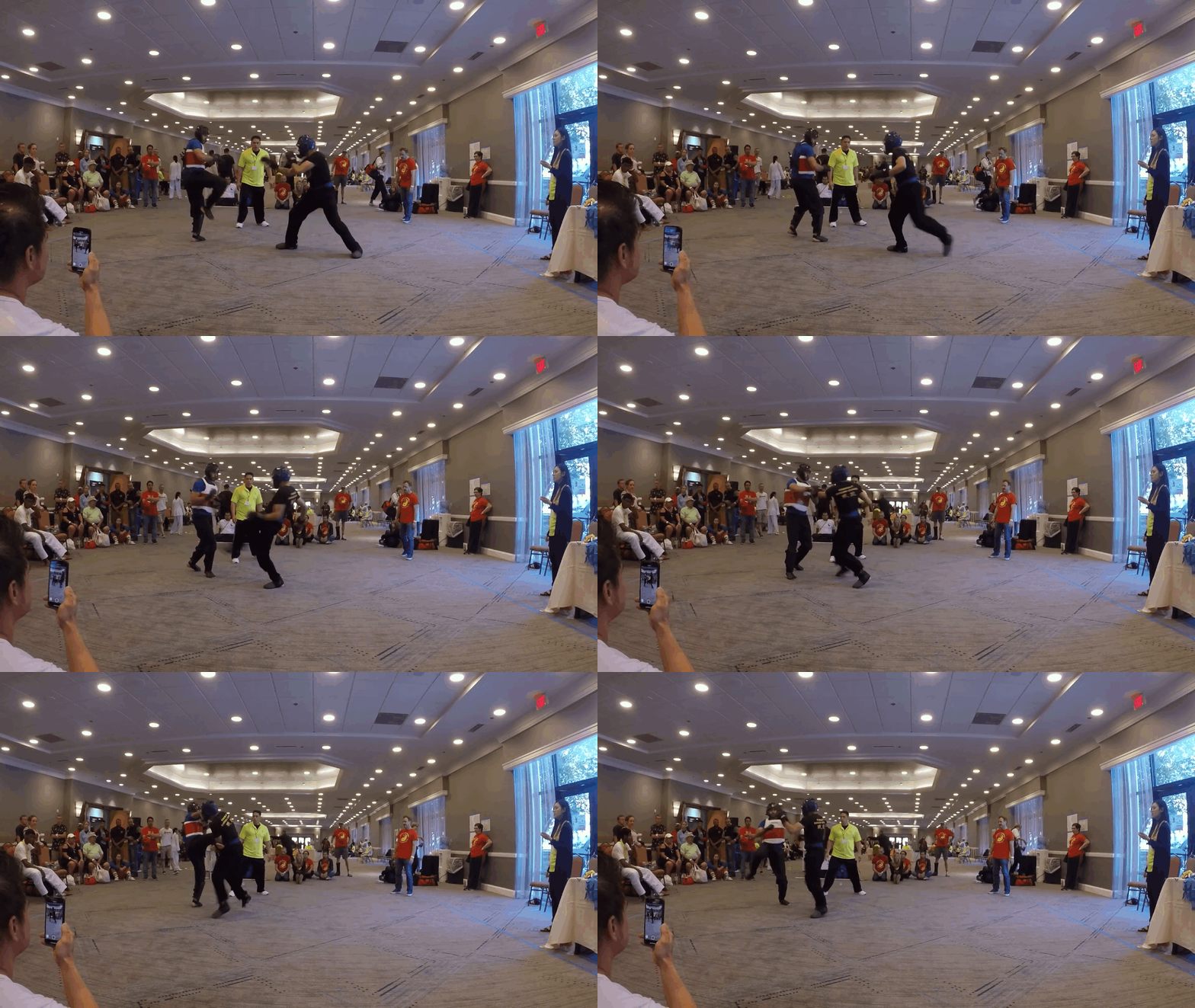
Traditionally CMA challenge/competition fights are like this. The moment when 2 are close in punching range, one intends to knock the other out.I’ve speculated on this before, could it be that traditionally CMA challenge/competition fights especially on the leitai arena(raised platform) started in the touch hand position, and it’s from there push hands idea developed?

Traditionally CMA challenge/competition fights are like this. The moment when 2 are close in punching range, one intends to knock the other out.
Are they the Nanjing 1930ish competitions ?Is there any evidence of Leitai matches actually starting with two opponents in physical contact already?
Because when I google Leitai matches, the old videos I am seeing have both fighters starting a distance.
Your pic won’t open for me, but yes boxing function like that, touch gloves go back to one’s corner then the fight start, I speculated that old Chinese challenge fight started directly with the touch “gloves”.
Chang Taiji
- emphasizes 1 move is either 1 inhale or 1 exhale. The breathing speed control the form speed (This is not normally followed in other Yang Taiji). Chang Taiji 108 moves form takes about 5 minutes.
Chang Taiji also uses natural breathing. Your body movement follow your breathing speed (not the other way around). This training is very important. Not only your body movement can coordinate with your breathing, but also you can sense your body movement that help your breathing such asnatural breathing, no time at all
Had a Xingyiquan shifu once tell me, if you can only strike with power, I will hit you right after you exhale... I have agreed with that since he said it.... always, IMO, natural breathingChang Taiji also uses natural breathing. Your body movement follow your breathing speed (not the other way around). This training is very important. Not only your body movement can coordinate with your breathing, but also you can sense your body movement that help your breathing such as
- punch/kick out (exhale),
- pull punch/kick back (inhale),
- raise arms (inhale),
- drop arms (exhale),
- arms move out (inhale),
- arms move in (exhale),
- body raise (inhale),
- body drop (exhale),
- ...
There are a lot of benefit if you always think about your breathing.
For example, the Taiji ending include:
- Arms move out (inhale).
- Arms move in (exhale).
- Arms separate (inhale).
- Arms drop (exhale).
That's a good point. Most of my karate instructors emphasized a hard exhale on executing a technique. My current instructor has us do that during combos, but also executing a whole combo while exhaling in one steady breath. Its like a whole different world.Had a Xingyiquan shifu once tell me, if you can only strike with power, I will hit you right after you exhale... I have agreed with that since he said it.... always, IMO, natural breathing
It is said by the wise masters that you should never expel more than 2/3 of your air. If you can't do a whole combo in that one breath, the combo is too long.That's a good point. Most of my karate instructors emphasized a hard exhale on executing a technique. My current instructor has us do that during combos, but also executing a whole combo while exhaling in one steady breath. Its like a whole different world.
In CMA, 1/8 is the minimum amount of air that you need to reserve in your lung (in case you need to use it to cancel out the outside force).It is said by the wise masters that you should never expel more than 2/3 of your air. If you can't do a whole combo in that one breath, the combo is too long.