Some children still train the way I did

Kung Fu Wang107

Sr. Grandmaster
MT Mentor
Last login streak
137 day(s)
Max login streak
137 day(s)
Last edited:
After this many years, I'm glad to see some children still train the way I did. In this video at 2.21 - 2.25, those children are hopping with 1 leg while holding a pole. This drill can train single leg balance very well.



After this many years, I'm glad to see some children still train the way I did. In this video at 2.21 - 2.25, those children are hopping with 1 leg while holding a pole. This drill can train single leg balance very well.


i could maybe do this after about maybe 3-4months, of trying and bashing my head in, heck i even have trouble keeping my balance on both legs!
 
i could maybe do this after about maybe 3-4months, of trying and bashing my head in, heck i even have trouble keeping my balance on both legs!
When the ground game start to get popular. If you take your opponent down, you want to go down with him, you don't care about your single leg balance any more. It's useful when you take your opponent down, you then take off.

To take your opponent down and lose your own balance is easy. To take your opponent down and still remain balance is much harder.

 
Last edited:
I don’t see any children training the way i did these days. At least not in my area. And i’m not surprised, insurance would likely not coyit and people these days are much mire inclined to sue

No mats, no protective gear, sparring, throwing and take downs. In both Japanese Jiujitsu and pre-Olympic taekwondo of the early to mid/late 70s. As a matter of fact the jiujitsu dojo was also a fencing school. Walls lined with fencing foils and fencing masks. And i can tell you even lightly hitting a fencing mask, will cut up your knuckles, i did that just joking around. The jiujitsu school had a carpet, but no carpet pad. The TKD school had a linoleum floor. Mo throws there, but we had takedowns

But to be honest, I don’t think i would let my kids train like that these days. I had a hard enough time watching the Aikido classes and the entire dojo floor was a mat
 
So why all the hopping on one foot?
The hopping is just trying to remain rooting leg balance when your body momentum is still spinning. It's just a personal test. There is no extra combat value there.

Some hopping on one foot can be seen at 1.42 - 1.52.

 
Last edited:
The hopping is just trying to remain rooting leg balance when your body momentum is still spinning. It's just a personal test. There is no extra combat value there.
It may just be me.... but to me the hopping makes it look like you don't quite have the balance you want, but are trying to regain it... similar to gymnastics when they dismount, they are supposed to stick the landing with out hopping or taking steps... if they are landing with control and on balance, they do not need hops, steps or other contortions. Maybe its because when we want to show control and balance in a one legged sweeping throw, we hold the sweep position: head and body bent forward, sweeping leg back and held high..... we throw and remain in that finish position (T pose) until uke lands, then you wait a second and slowly regain your upright posture.
 
It may just be me.... but to me the hopping makes it look like you don't quite have the balance you want, but are trying to regain it... similar to gymnastics when they dismount, they are supposed to stick the landing with out hopping or taking steps... if they are landing with control and on balance, they do not need hops, steps or other contortions. Maybe its because when we want to show control and balance in a one legged sweeping throw, we hold the sweep position: head and body bent forward, sweeping leg back and held high..... we throw and remain in that finish position (T pose) until uke lands, then you wait a second and slowly regain your upright posture.
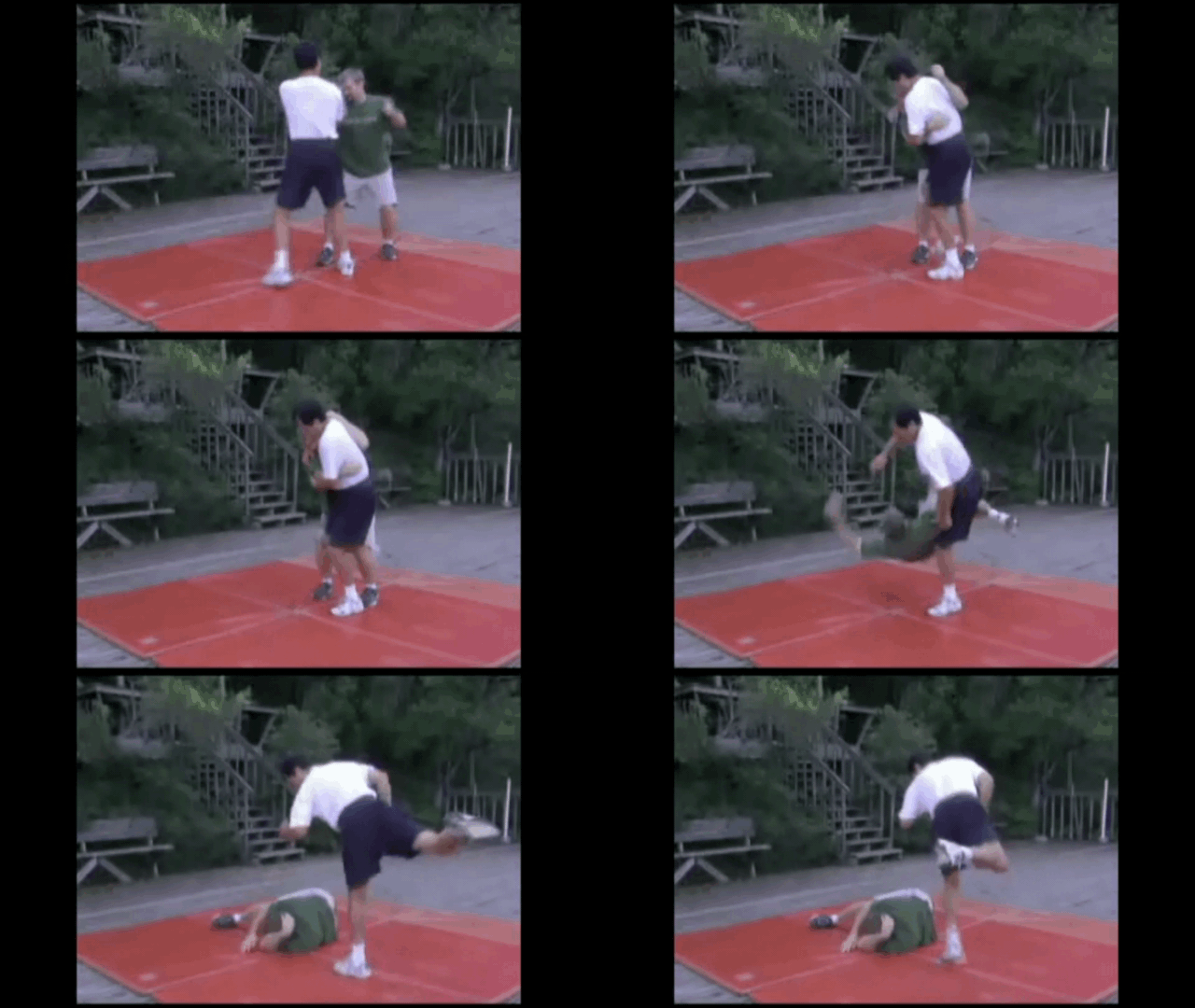
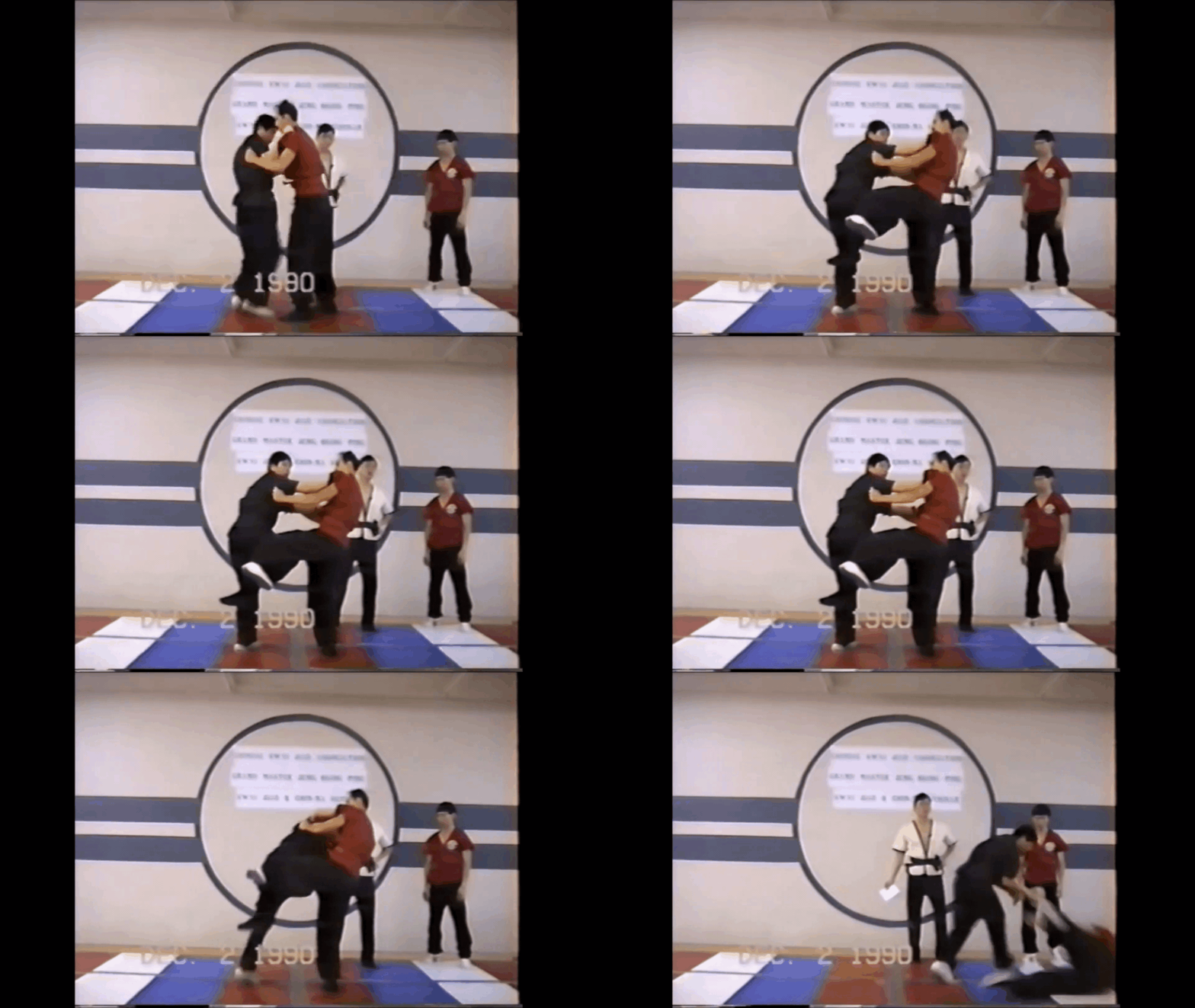
Besides balance training, hopping can be used to move in or move back without dropping your foot. When you hop back, you can give your opponent extra space to fall safely. You don't want your opponent to fall on your knee or foot and drag you down.

Old Chinese wrestlers always love to say, "I can throw you and watch you falling while my leg is still in the air." It's kind of showing off.


Here is an example of hop forward:

 
Last edited:
I do think to allow those children to work on weight in their young age is a bad idea. They need to grow tall and not to grow wide.
 
Old Chinese wrestlers always love to say, "I can throw you and watch you falling while my leg is still in the air." It's kind of showing off.
This is the way we do that same thing (unfortunately, this is not me doing the demo.... but it is what we aspire to):


skip to 40 seconds in.... watch his balance during and after the throw.
 
This is the way we do that same thing (unfortunately, this is not me doing the demo.... but it is what we aspire to):


skip to 40 seconds in.... watch his balance during and after the throw.
There are 2 different ways to train balance.

1. You never move your gravity center outside of your base (most people train this way).
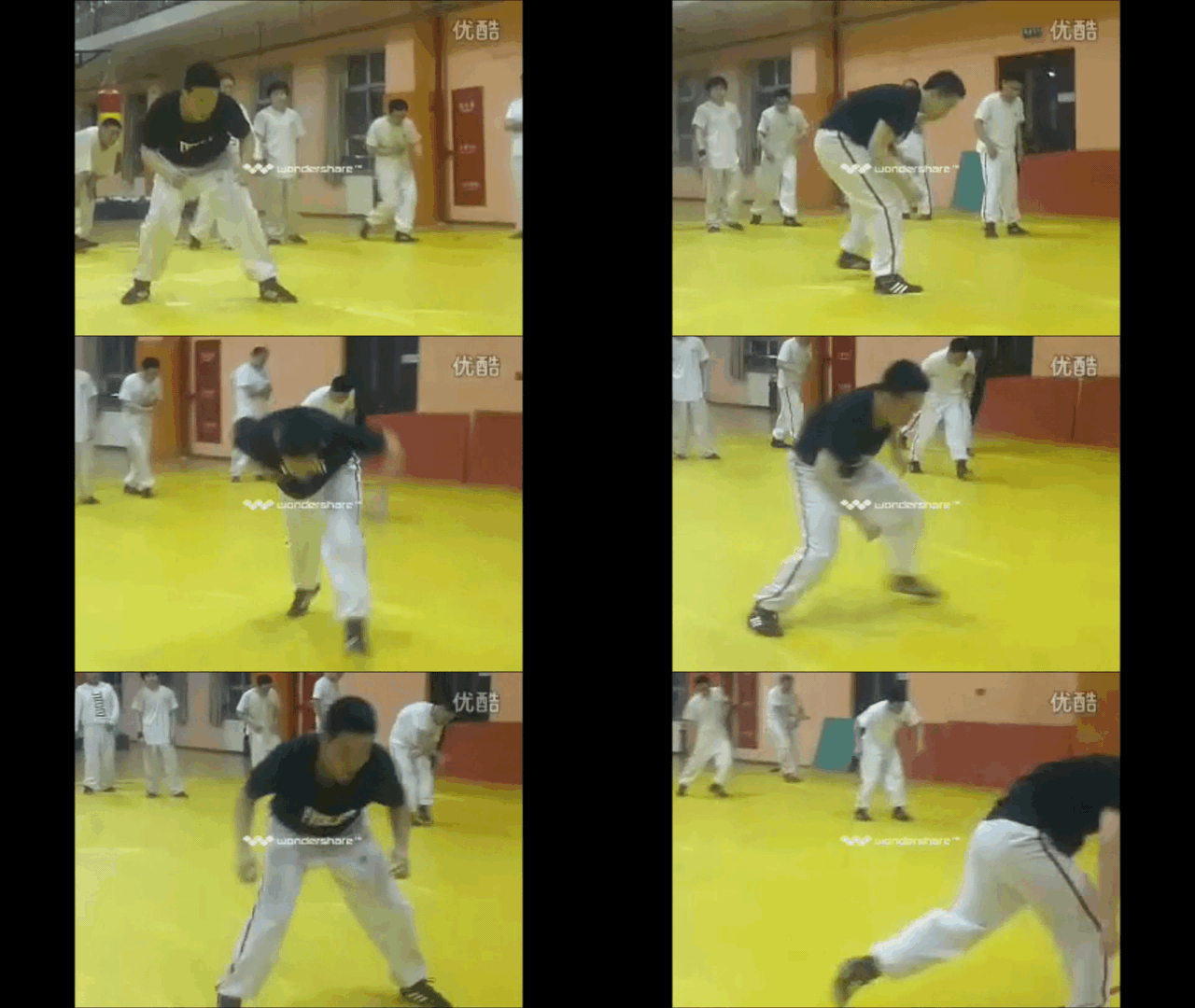
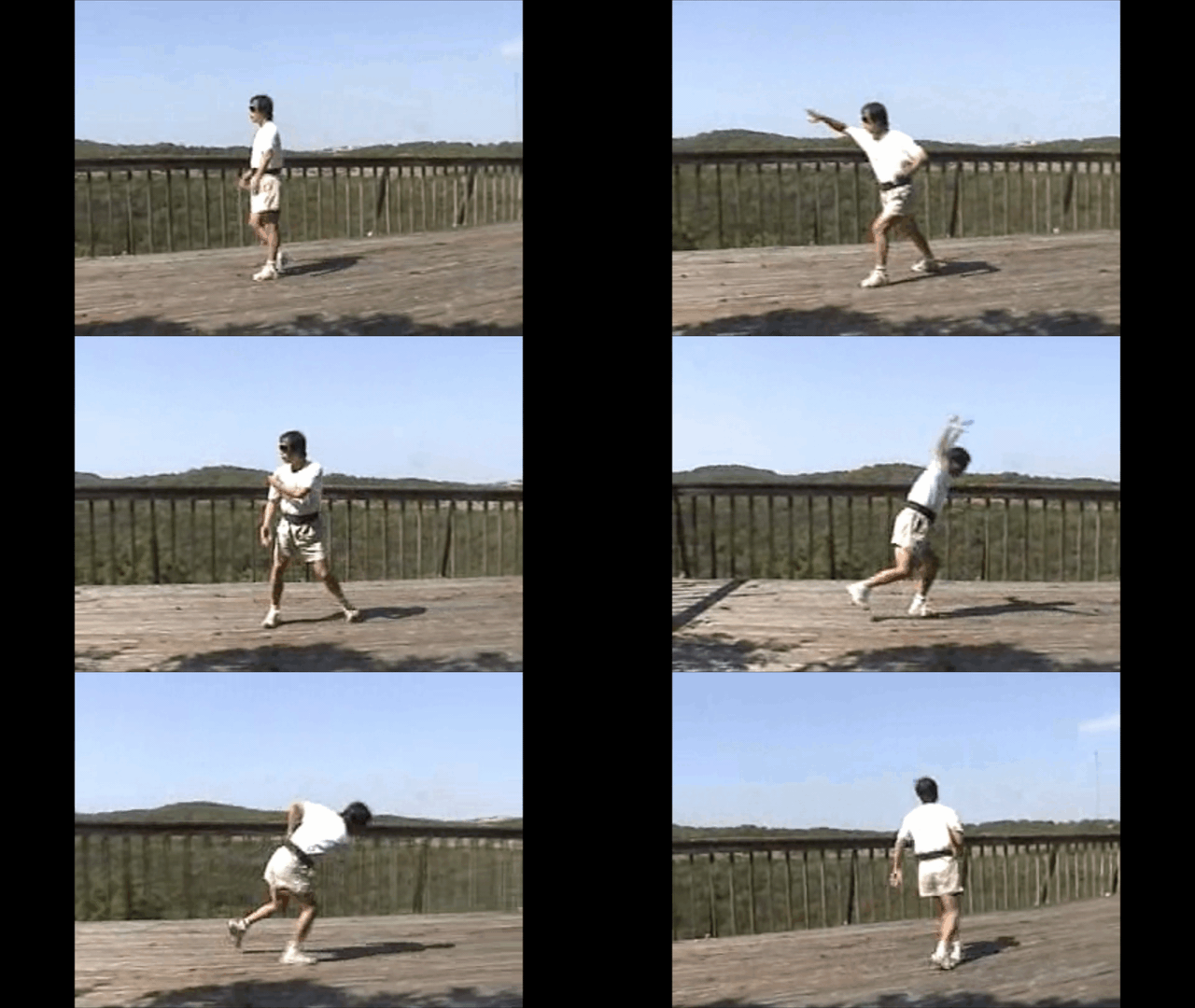
2. You move your gravity center outside of your base, lose your balance, you then regain your balance back (not too many people train this way).

IMO, 2 has advantage over 1. You can take advantage on your extra momentum. It's like to do a 1/2 way sacrifice throw.

Examples of lose balance intentionally and then regain balance back.


2. You move your gravity center outside of your base, lose your balance, you then regain your balance back (not too many people train this way).
Everybody practices this way.... until they learn to stay on balance.

IMO, 2 has advantage over 1. You can take advantage on your extra momentum. It's like to do a 1/2 way sacrifice throw.
You can absolutely use your extra momentum while staying in balance.

Your first video above, the guy uses his momentum but stays on balance... he lands on one foot, then steps down into the stance. The second video, the guy so over commits himself, he almost throws himself off the mat. The opponent can very easily blend with that over commitment and use that momentum in a counter throw.
 
TBH I hope kids aren't training the way I did, because most of the training I did was, shall we say, outside the dojo. I hope nobody is out there going through the same hell I did. Sadly, I doubt that.
 
Everybody practices this way.... until they learn to stay on balance.

You can absolutely use your extra momentum while staying in balance.

Your first video above, the guy uses his momentum but stays on balance... he lands on one foot, then steps down into the stance. The second video, the guy so over commits himself, he almost throws himself off the mat. The opponent can very easily blend with that over commitment and use that momentum in a counter throw.
There is difference between:

1. You can't do but you try to do.
2. You can do but you try not to do.

You can maintain balance, but you try not to maintain balance is the key.

I do agree that momentum can be 2 edges sword. Your opponent can take advantage too. But if you want to combine take down and take off, momentum is the key.

This 2 videos show "You can maintain balance, but you try not to".


Last edited:
Everybody practices this way.... until they learn to stay on balance.


You can absolutely use your extra momentum while staying in balance.

Your first video above, the guy uses his momentum but stays on balance... he lands on one foot, then steps down into the stance. The second video, the guy so over commits himself, he almost throws himself off the mat. The opponent can very easily blend with that over commitment and use that momentum in a counter throw.
had to alter my training and guess my body figured out how? can`t stand to wide on my stances, only in practice do i go deep with my front cross overs or rear cross overs, when practicing my punches if i punch to hard i lose my balance(mild cerebral palsy) even with my knees bent.
 

Latest Discussions

Back
Top