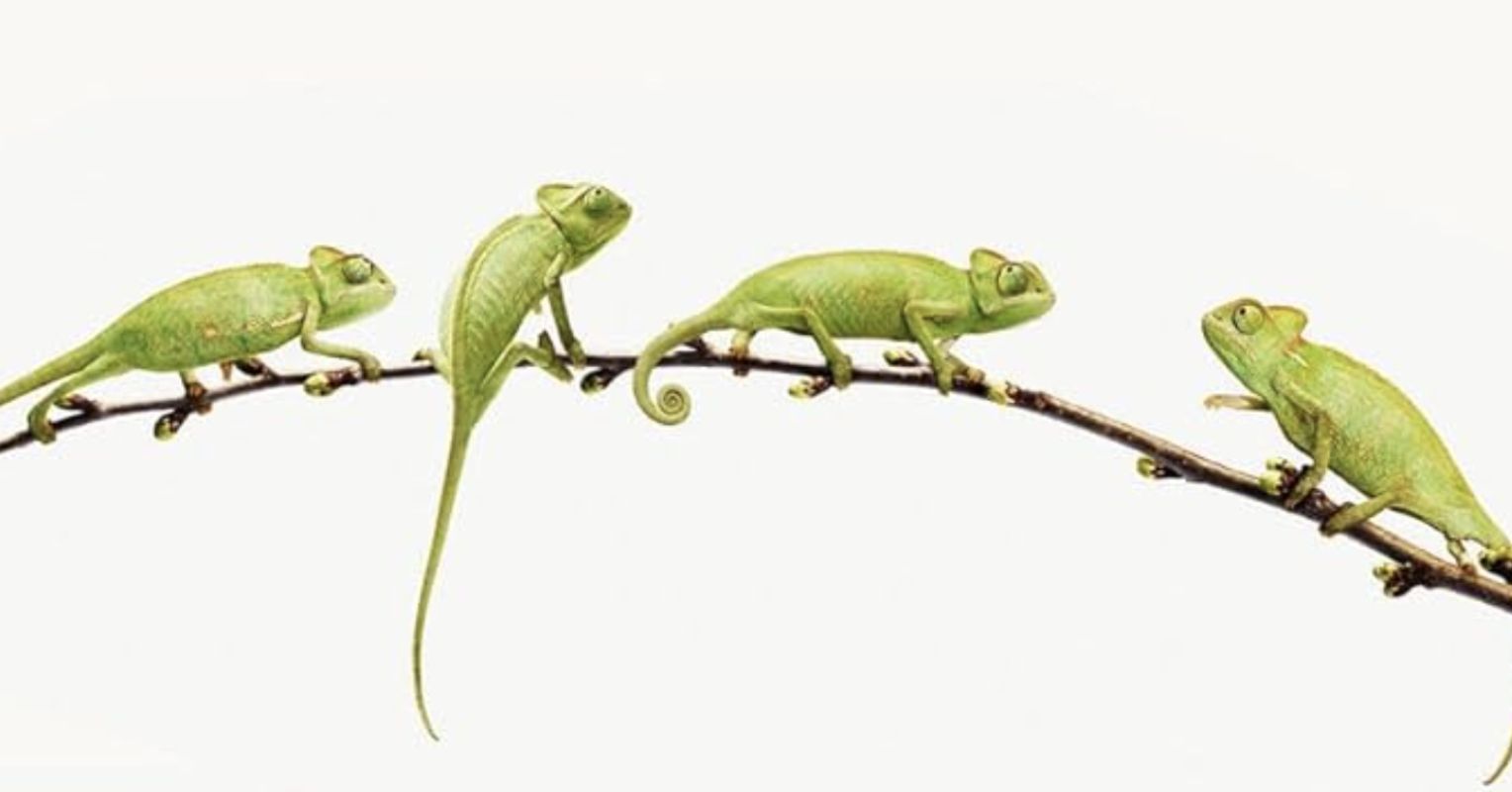
Otroverts

There is no such thing as ā€œgetting poked in the wrong placeā€ or ā€œgod forbiddingā€œ.
I would go as far to say that evolution explicitly depends on poking all the places, in particular those god has forbidden. It's the variation that confirms what becomes "effectively" forbidden. But even so, the noise always challenges the rules in a healthy way. What looks "forbidden", is deviation from the norm, which only means "average".

Who wants to be average, hands up?
 
Well, I guess since the discussion of Otroverts is now a discussion about other things, I'll toss my nickel into the kitty.

When people describe themselves as "brutally honest", generally they're really just unfiltered, feel entitled to say things that are hurtful and insulting, and expect everyone else to accommodate them. "Brutal" is doing a lot more work than "honest" in that description.

I appreciate frank, direct discussion, and am quite direct at times. I also think it's possible to be direct, and kind and empathetic. Honesty without consideration is just assholery.
Believe me, they are not being "Brutally Honest" It is just the culture. And frankly I appreciate it. A whole lot less sugarcoating. And never has anyone of the Chinese people I have come across this with describe themselves as brutally honest, it is just, as I said, the culture. And the frank honesty, at least to me, is refreshing
 
Believe me, they are not being "Brutally Honest" It is just the culture. And frankly I appreciate it. A whole lot less sugarcoating. And never has anyone of the Chinese people I have come across this with describe themselves as brutally honest, it is just, as I said, the culture. And the frank honesty, at least to me, is refreshing

So a friend of mine has worked in China for the last 20 years and he noticed a few things, and tried to explain them:

1. Publicly, the Chinese are disinterested and even avoidant of strangers (his explanation was the insurance structure of China, as well as a shared psychosocial avoidance since Mao's regime; association with unknown people could lead to said people doing something illegal, and punishment is shared, often extending to the family as well)

2. The utter destruction of China's national identity as a shared culture in the 20th century has lead many Chinese to feel disillusioned, voiceless, apathetic, and in his words "zombified" (he compared this to Japan, which didn't suffer a nation wide cultural decimation, and so the Japanese have centuries old extant social etiquettes, traditions, arts, despite a lot of that culture being imported from mainland China)

3. "Linguistic assertiveness"; Mandarin has no word for "no"*, so the language is either a statement of "accepting/denying ___". This is very different to English, where we have borrowed words from French, Latin, German, etc., functioning to colour the English language with nuances and idioms where we're fortunate to convey poetic and prosaic concepts with depth

*
Mandarin often answers yes/no questions by repeating the verb, rather than using a standalone yes/no word.
 
Believe me, they are not being "Brutally Honest" It is just the culture. And frankly I appreciate it. A whole lot less sugarcoating. And never has anyone of the Chinese people I have come across this with describe themselves as brutally honest, it is just, as I said, the culture. And the frank honesty, at least to me, is refreshing
Not suggesting otherwise. I was actually trying to highlight a distinction between people who are frank (as you describe) and people who are ā€œbrutally honestā€ which is all too common in America. You don’t have to beat around the bush to be considerate and empathetic.
 
Controversially, I don’t beieve in free speech because with it comes great responsibility that many are unable to uphold; Andrew Tate, Nazis, Kristi Noem, Katie Hopkins, Nigel Farage, RFK Jr… You can have your opinions but you shouldn’t necessarily be allowed to broadcast it out into the wider world without prior scrutiny because too many people are unable to differentiate the likely from the unlikely.
Of course free speech (with some limitations) is one of the foundational cornerstones of the United States. Yes, even idiots and fools and liars and sh**heads have the right to say their piece and try to spread their ideas. But that freedom also gives us the right to stand up and protest loudly when the government acts oppressively or criminally, and allows us to hold events like the nationwide No Kings rallies in protest of the administration, and to stand up and protest the heinous actions of ICE and their ilk. ICE has been trying to target protesters and intimidate the public into silence. They have been trying to chill the free speech of this nation. That is what the repression of free speech looks like in this nation: it is used to silence the public and embolden an oppressive regime.

In large part, free speech got us into this predicament. The current regime spread their ideas which took hold in a segment of the population, and now we have MAGA. But free speech is a big part of what will turn the tide and help this nation to reverse course.
 
When I worked in a psychology department we had several Chinese post-grad students doing Work psychology masters with regards call centres. They said very similar things about what is deemed perfectly acceptable to say in China compared to the West. They added that if a person was seen smiling all the time (as customer-facing staff are often told to do) without good reason, they were considered simpletons! šŸ˜†

I think a Nazi salute is probably taken things a bit far, however! It’s actually illegal to perform this movement in Germany and is a criminal offense.
In Tokyo(late 80’s) i was in a bookstore in a mall , suddenly someone tapped my shoulder, I turn and see a young guy in full ss uniform greeting me with same salute and line as the Beijing chauffeur and then began pointing att underlined words in the book he had in his other hand, I didn’t understand anything of it, I heard the two guys at the counter behind giggling and looked askingly at them and they just pointed whirling index finger to their heads sign. Apparently a crazy guy that usually came to the store.
The good thing in that bookstore was they had plenty of martial arts books and I found out about Taikiken from a book there, which lead me to Yiquan which lead me to come to study it in China
 
So a friend of mine has worked in China for the last 20 years and he noticed a few things, and tried to explain them:
Where in China has he lived & worked? Because none of this is making much sense to me
1. Publicly, the Chinese are disinterested and even avoidant of strangers (his explanation was the insurance structure of China, as well as a shared psychosocial avoidance since Mao's regime; association with unknown people could lead to said people doing something illegal, and punishment is shared, often extending to the family as well)
Not been my experience at all. But Chinese are very aware of what is legal and illegal and know when they can get away with stuff and when they can't. Literally thousands of electric scooters in Beijing, they do not need to be registered and you don't need a license and they are breaking laws regularly. They are also very aware of the major difference between the cultural revolution and Mao, and every other premier they have had all the way to the current Xi Jinping.
2. The utter destruction of China's national identity as a shared culture in the 20th century has lead many Chinese to feel disillusioned, voiceless, apathetic, and in his words "zombified" (he compared this to Japan, which didn't suffer a nation wide cultural decimation, and so the Japanese have centuries old extant social etiquettes, traditions, arts, despite a lot of that culture being imported from mainland China)
Kind of hard to compare Japan to China on much of anything, they are very different countries and cultures and have. been for centuries, cultures were never all that similar. I do not live in China, but the people I have seen, meant, talk to in Beijing and Hong Kong I would never classify as Zombified. Will be in Shanghai and Xi'an soon, and I am pretty sure none I see or meet will fall into the catagory of "Zombified". My wife was born at the beginning of the cultural revolution and lived in Bejing, through it. and none of her fmily there would fall under. I have heard some scary stuff that happened during the cultural revolution, have a friend (Chinese) who was an english teacher during the cultural revolution, and he said he was very lucky students liked him. Another friend was sent to a re-education camp. Ironically he recently retired here in the USA, but returned to China to live during his retirement

There was an attempt at the destruction of the Chinese identify with its history, and in some cases it was successful, in others, not at all. To there was no "utter destruction"
3. "Linguistic assertiveness"; Mandarin has no word for "no"*, so the language is either a statement of "accepting/denying ___". This is very different to English, where we have borrowed words from French, Latin, German, etc., functioning to colour the English language with nuances and idioms where we're fortunate to convey poetic and prosaic concepts with depth
That's just wrong

äø bù - no
äøē”Ø bĆŗyòng - no need
äøč¦, bĆŗyĆ o - don't want
ę²”ęœ‰ mĆ©iyĒ’u - don't have
äøč”Œ bùxĆ­ng - not okay
äøåÆčƒ½ bù kěnĆ©ng - impossible

And there are literally thousands of Chinese idioms that range from funny to done right vulgar.
*Mandarin often answers yes/no questions by repeating the verb, rather than using a standalone yes/no word.
Also just plain wrong

heard this during conversations many time

bù bù bù

Also one needs to understand the rules of grammar in english do not apply to the rules of grammar in most other languages, including all of the dialects in China, including Mandarin.
 
Where in China has he lived & worked? Because none of this is making much sense to me

Beijing, Shanghai, and Guangzhou.

Kind of hard to compare Japan to China on much of anything

I wasn’t saying Chinese people today refuse to talk to strangers or anything like that. My point was about historical context. During some of the Mao-era campaigns, especially the Cultural Revolution, associating with the wrong people could have consequences. That kind of environment did affect social trust at the time. Obviously modern China is very different and people socialise normally, particularly in cities.

So in comparing Japan and China, we have two culturally similar nations that dealt with Western influence quite differently (e.g. Opium Wars, Portuguese expulsion, sovereign trade ports and treaties); China embraced the West while Japan completely isolated itself. I could go on, but the case study is broad.

I would never classify as Zombified. Will be in Shanghai and Xi'an soon, and I am pretty sure none I see or meet will fall into the catagory of "Zombified".

I was being hyperbolic.

The point I was trying to make was about how decades of political campaigns and tight information control can shape public behaviour and what people feel comfortable saying openly.

That sort of thing isn’t unique to China either, every society has some degree of social pressure and narrative control but China just happens to have a political system where that pressure is more visible bevause of the centrally controlled political regime.

So it wasn’t meant as an insult towards Chinese people themselves, more a comment about how political environments can influence how people express opinions in public. This has not changed as much as people believe since Mao's dictatorship.

Also just plain wrong

heard this during conversations many time

bù bù bù

Also one needs to understand the rules of grammar in english do not apply to the rules of grammar in most other languages, including all of the dialects in China, including Mandarin.

Not quite... yes, words like äø (bù) and ę²”ęœ‰ (mĆ©iyĒ’u) are used all the time. What I was getting at is that Mandarin often answers yes/no questions by repeating the verb rather than using a single universal "ye" or "no" word like English does.

For example:
ä½ åŽ»å—ļ¼Ÿ (Are you going?)
去 — go
äøåŽ» — not go

The key distinction here is that äø in fact means "not".

So Mandarin obviously can say "no", it just structures responses differently.
I think we actually agree on most of this — the disagreement seems more about how it was phrased than the underlying points.
 
Beijing, Shanghai, and Guangzhou.


I wasn’t saying Chinese people today refuse to talk to strangers or anything like that. My point was about historical context. During some of the Mao-era campaigns, especially the Cultural Revolution, associating with the wrong people could have consequences. That kind of environment did affect social trust at the time. Obviously modern China is very different and people socialise normally, particularly in cities.

So in comparing Japan and China, we have two culturally similar nations that dealt with Western influence quite differently (e.g. Opium Wars, Portuguese expulsion, sovereign trade ports and treaties); China embraced the West while Japan completely isolated itself. I could go on, but the case study is broad.


I was being hyperbolic.

The point I was trying to make was about how decades of political campaigns and tight information control can shape public behaviour and what people feel comfortable saying openly.

That sort of thing isn’t unique to China either, every society has some degree of social pressure and narrative control but China just happens to have a political system where that pressure is more visible bevause of the centrally controlled political regime.

So it wasn’t meant as an insult towards Chinese people themselves, more a comment about how political environments can influence how people express opinions in public. This has not changed as much as people believe since Mao's dictatorship.


Not quite... yes, words like äø (bù) and ę²”ęœ‰ (mĆ©iyĒ’u) are used all the time. What I was getting at is that Mandarin often answers yes/no questions by repeating the verb rather than using a single universal "ye" or "no" word like English does.

For example:
ä½ åŽ»å—ļ¼Ÿ (Are you going?)
去 — go
äøåŽ» — not go

The key distinction here is that äø in fact means "not".

So Mandarin obviously can say "no", it just structures responses differently.
I think we actually agree on most of this — the disagreement seems more about how it was phrased than the underlying points.
We are derailing this thread. I will correct that in a minute, if possible. If you wish to discuss further, please feel free to PM me
 
Last edited:
@Gyakuto; my apologies for derailing this thread, and my apologies for my first post in it where I did not take it seriously. And here is why I didn't. I have taken more psychology in college than any one person should and not have a major in it, I find it an interesting topic. However when I read "New" in a Psychology discussion my brain immediately shifts to another newer concept I read about a few years back, 'Positive Psychology' Which after much reading I came to to conclusion it was a way to make yourself feel better about yourself by blaming others for all your problems. Now not being a Psychology professional, I a willing to admit i may be missing the point there. But after reading your original post without prior bias I have a more serious answer
I wonder if the majority of combat sporters/martial artists fall into this new category of personality types? Does chime with you? Are you bemused by large group social behaviours?


(Taken from ChatGPT via an article in the Guardian newspaper)

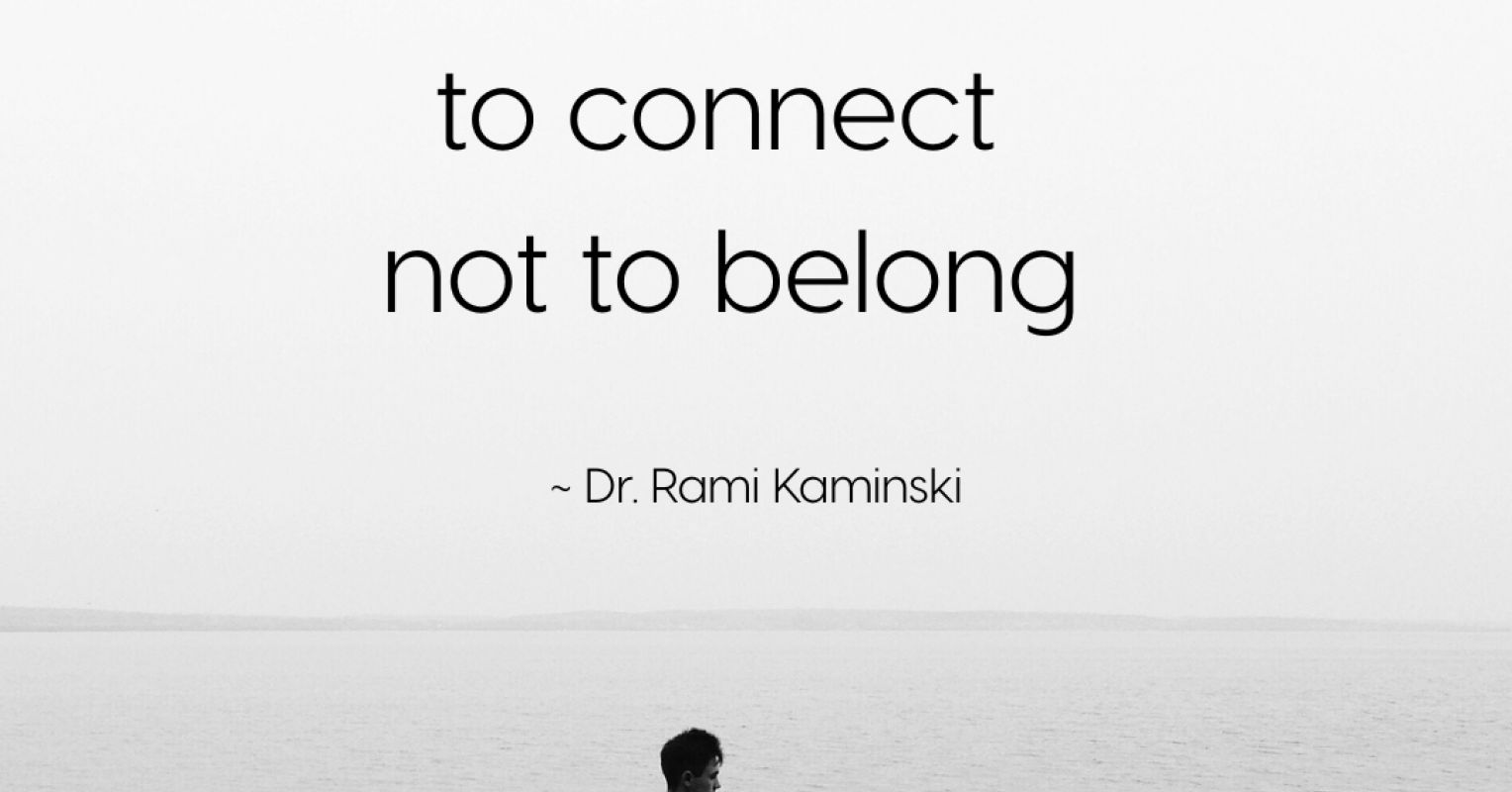
An otrovert is a recently identified, "third" personality type—introduced by psychiatrist Dr. Rami Kaminski in 2025—describing individuals who are comfortable in social situations but feel like permanent outsiders who never fully merge with groups. Derived from "otro" (other), they are characterized by extreme independence, original thinking, and a preference for deep one-on-one connections over group belonging.

Key Characteristics of Otroverts:

  • Independent Thinkers: They do not conform to group norms or peer pressure, often thinking for themselves and operating on their own wavelength.

  • The "Observer" Role: They are friendly and socially capable, often charming or witty, yet feel as if they do not belong to the crowd
  • Not Quite Introvert or Extrovert: Unlike introverts, they aren't necessarily drained by people, and unlike extroverts, they do not gain energy from being part of a large crowd or following the crowd's mood.
  • Deep Connections: They prefer meaningful, one-on-one conversations rather than being a "social butterfly".
  • Self-Worth: Their sense of self is not conditioned on group approval.

Dr. Kaminski cited historical examples of potential otroverts as Frida Kahlo, Franz Kafka, and Albert Einstein.

Except for the fact, that I do not like social gatherings all that much, outside a select group of people: Martial Artists, Auto mechanics, (Surprisingly) Law Enforcement. most of that applies to me.

I have worked in IT for over 25 years, 20 years of that in my previous office, and although I can logically conclude I was part of the group, I never truly felt I was.

Never considered myself a intorvet or an extrovert, but that could be because I tend to rarely feel part of a group. So by the above description, for the most part I might be an Otrovert. I shall need to read more about this.
 
I saw this on TV and was bemused at the attendees behaviour. Is that their idea of ā€˜fun’?
Fun if you like large crowds, koud music and ABBA... and I am not a fan od any of those. However in my youth I went to many concerts with large crowd, and loud music.... that I enjoyed.... didn't like ABBA then either
I felt ā€˜uneasy’ watching this video and had to stop!
Other than the first video with the face starting to look like the cheeks were dissolving, I got through it OK, nothing really exciting or upsetting


So a friend of mine has worked in China for the last 20 years and he noticed a few things, and tried to explain them:

1. Publicly, the Chinese are disinterested and even avoidant of strangers (his explanation was the insurance structure of China, as well as a shared psychosocial avoidance since Mao's regime; association with unknown people could lead to said people doing something illegal, and punishment is shared, often extending to the family as well)

2. The utter destruction of China's national identity as a shared culture in the 20th century has lead many Chinese to feel disillusioned, voiceless, apathetic, and in his words "zombified" (he compared this to Japan, which didn't suffer a nation wide cultural decimation, and so the Japanese have centuries old extant social etiquettes, traditions, arts, despite a lot of that culture being imported from mainland China)

3. "Linguistic assertiveness"; Mandarin has no word for "no"*, so the language is either a statement of "accepting/denying ___". This is very different to English, where we have borrowed words from French, Latin, German, etc., functioning to colour the English language with nuances and idioms where we're fortunate to convey poetic and prosaic concepts with depth

*
Mandarin often answers yes/no questions by repeating the verb, rather than using a standalone yes/no word.
Overall it’s the same here in China as ā€œanywhere elseā€ when it comes for initiative to interact with strangers, everything from most introvert to most extrovert .
I can believe that of course during the ten year period of the cultural revolution common Chinese kept away from interaction with foreigners, but they kept away from many ā€œChineseā€ things too.
It’s however interesting, that China throughout history have had plenty of foreign influences, whole dynasties that been established annd ruled by ā€œforeigners ā€even the current political rule was not of Chinese origin.
Japan on the other hand has a much longer history of being isolated, not until our modern era they been ā€œforcedā€ to open up
 
When I was a teenager in the era of early 1980s punk, I was called the f word you refer to more often than not because of colored hair or mismatched clothing, jewelry or the like. Ignorant people often say these things because they are afraid of things they don’t understand or can’t put in a box (see what I did there?). Often times law enforcement was fond of this word in reference to us kids. I pretty much never hear this word used any more. Words are just that. Some people used to like to use words like radical or bitchin to describe something they liked, I recently started using the phrase ā€œyoga pantsā€ for the same purpose. ā€œThat car was yoga pants!ā€ My wife thinks I’m ridiculous, which is true, but I’m amusing myself with it until it catches on. You heard it here first.

In the UK that f word means something completely different. The 3 letter word is a cigarette, the longer word is a meatball.
Also in the UK we say something is 'pants' when it's useless or rubbish. 😁
 
Back
Top