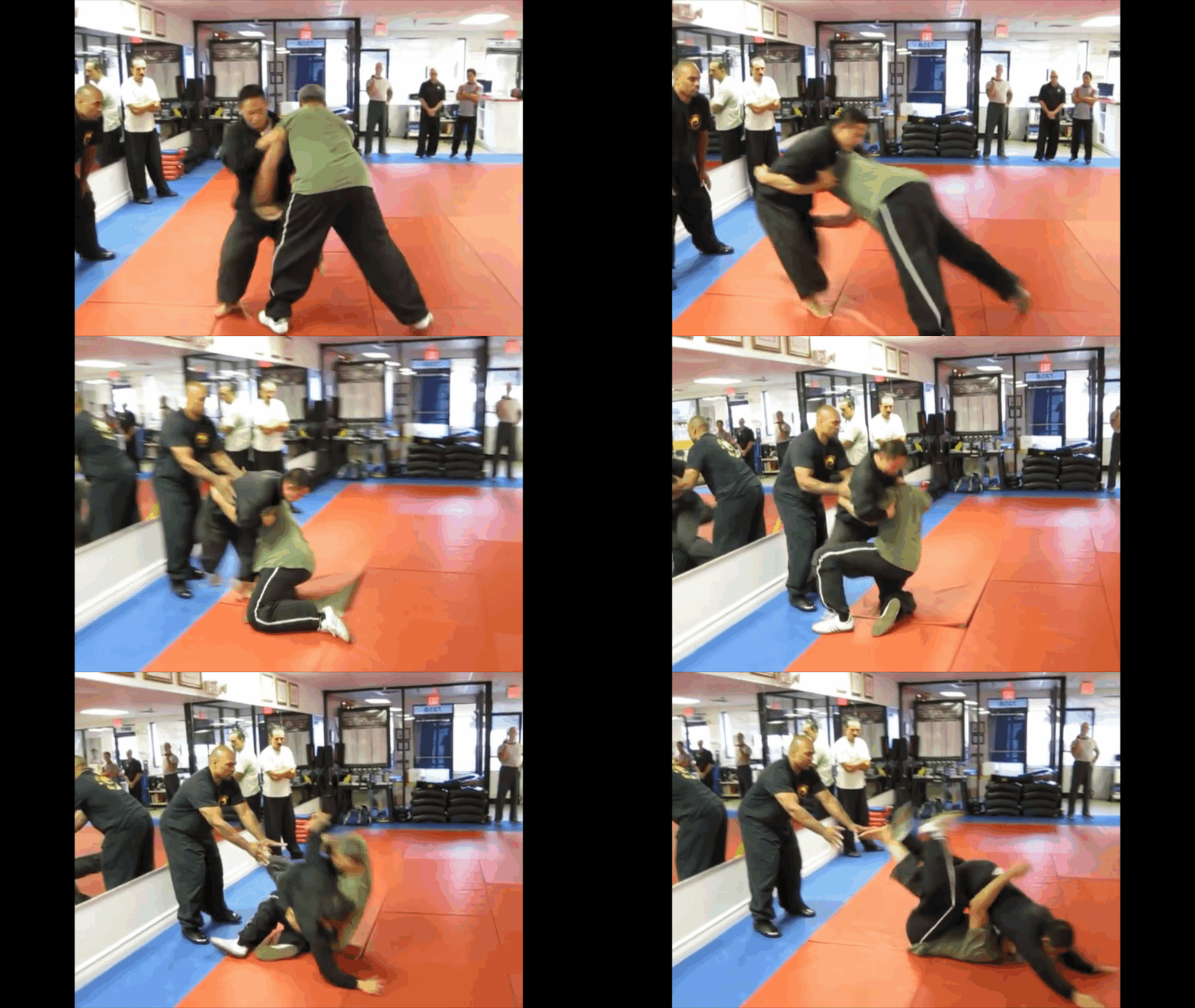
National Push Hand Champion vs Random Person

I’ve worked with people who compete regularly in Taiwan’s push-hands events a couple of yrs back..

Not a fan of competition myself — understand why some train for it.
They train hard, very hard. Anyone who thinks it’s just “soft Taiji” should try stepping in with them.

There are stories of strong fighters being surprised when facing skilled practitioners —

" One year, a member of Gracie’s family from Brazil visited the park. Respect was exchanged between the two parties and the agreement on the rules were made. After three short rounds of free style pushing, Gracie went home with dirt on his back."


8th World Cup Tai Chi Championship

An interesting clip shot by a friend of mine who competed in another division

Yeah, this video would be an example of the: "ARUGH! PUSH FAST AND HARD!" approach. Very common.

I don't think anyone is going to accuse that as "just soft Taiji". I think many in the Taiji community would have the opposite accusation.

And this generally create two camps: "Applied Taiji should appear effortless and soft" vs "Applied Taiji will appear messy and ugly because sparring is chaotic."

Personally, I think if "skill" is the metric, then one should question whether one's approach is limited to their own weight class or if it can be applied to someone bigger and heavier. If the method is to bum-rush the opponent, then its effectiveness will decline across weight disparity a lot faster than other methods.
 
Let me guess. If a guy just got really strong he would beat a bunch of guys who have focused on technique.
This is the problem of the static Taiji PH. When you push me, I can't use my stealing step footwork, spin myself, and lead you into the emptiness.

The static Taiji PH is just like the game that we all played when we were in our grade school. You and your opponent stand in bow-arrow stances with foot touching each other. Your right hand hold on your opponent's right hand. You try to push/pull your opponent's right hand to force your opponent to lose balance without moving your feet. Does this training have any combat value? I really don't think so. The reason is simple, if your opponent is not allowed to move his legs, a simple "knee seize" can take him down. Why do you need to go through all those troubles?

 
Last edited:
This is the problem of the static Taiji PH. When you push me, I can't use my stealing step footwork, spin myself, and lead you into the emptiness.

The static Taiji PH is just like the game that we all played when we were in our grade school. You and your opponent stand in bow-arrow stances with foot touching each other. Your right hand hold on your opponent's right hand. You try to push/pull your opponent's right hand to force your opponent to lose balance without moving your feet. Does this training have any combat value? I really don't think so.

I find it silly that Taiji PH bans rear head/neck control.

With how much they like to lean forward and push, it can be a useful way to shut all that down.
 
I find it silly that Taiji PH bans rear head/neck control.

With how much they like to lean forward and push, it can be a useful way to shut all that down.
You can do much more in dynamic PH. If you can move back faster than your opponent's advance, you can lead your opponent into the emptiness (kiss dirt).

 
FYI - the original video is now marked private. That said, national/international champion of something without being part of a specific large organization doesn't mean much. I've met people who were technically national champions in their styles, and told me they only had two fights to win it, since 4 people showed up to that particular tournament. But it was broadcast nationally, and marketed as a national championship, so they had to get the title.
 

Latest Discussions

Back
Top