Oh I totally understand the way I train is far more optimized for green and blue, believe me. That said I have however found a trend that I am of two minds of. I see more than a few civilian instructors teaching the Isosceles stance for the following three reasons (note I am not saying the first two reasons are correct, simply that it is what is said.)
Fair enough. I've found that I prefer a nuanced position on it; sometimes one and sometimes the other, depending mostly on the student themselves.
1. A shooter can be taught to use the stance as a stable platform more quickly.
I've found that this depends very much on the person's prior experience and training. For a great many people, I completely agree.
2. In most civilian "self defense" situations (especially inside a home) the ranges are so close that blading to a target is of more limited benefit.
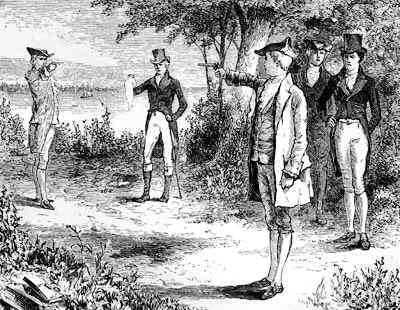
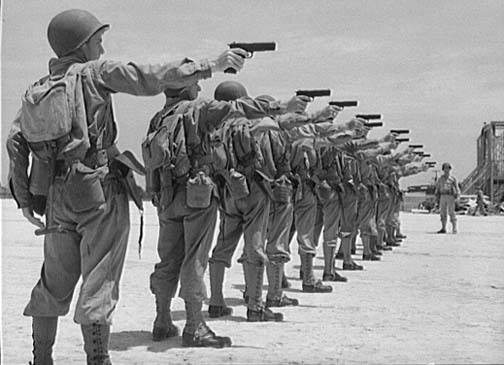
A fair point. Historically, it was not only argued, but considered an indisputable fact, that even the small difference was enough to justify the bladed stance. Understand here that I'm not taking this position, nor actually arguing one way or the other on this point, just presenting a historic perspective. I've found the Isosceles going back to pre-WWI. The contemporary experts recognized that the two-handed Isosceles stance offered better accuracy but sincerely believed, based on their own LEO and Mil experience, that it was wholly "impractical" (to quote one) for combat use based upon the contention, from what I've been able to tell, that it exposed more of the body to return fire. By WWII, the contemporary experts allowed that the Isosceles could be used for "deliberate" or "aimed" shots (i.e.: 'long range').
For my part, I see merit to both sides of that argument.
Now #3 here, I have seen enough studies to believe it to be correct but I can of course be wrong.
3. Under fight or flight, unless you train A LOT, your body instinctively will go into the Isosceles stance so you might as well train the shooter to take advantage of that dynamic. This way your training can primarily focus on simply having proper grip, trigger squeeze and sight picture.
Would it surprise you to know that I've held the same position for some little while now? When a person has no prior experience which could affect their responses (there are several), then the startle reflex does indeed mimic very closely the body position of Isosceles and it makes sense in those cases to train to the automatic response. That's the key for me on this point. What works toward a person's automatic response? One example is that Boxers and trained Martial Artists tend to automatically drop into a left-foot forward, slightly "bladed" foot position very similar to the Weaver. There are several other types of prior experience that could affect this but you get the idea.
Because most people have no prior experience and training which would nudge them to something other than the Isosceles, for them the Isosceles makes the most sense. But there are a lot more people than many modern instructors seem realize for whom prior training and experience may push them to Weaver (or even Off Hand in some cases). They have a script and they're sticking with it, using a one-size fits all approach instead of getting to know their student and individualizing the training to them.
I'm glad that you have a more nuanced view on this than seems to be the trend these days.

Peace favor your sword,
Kirk