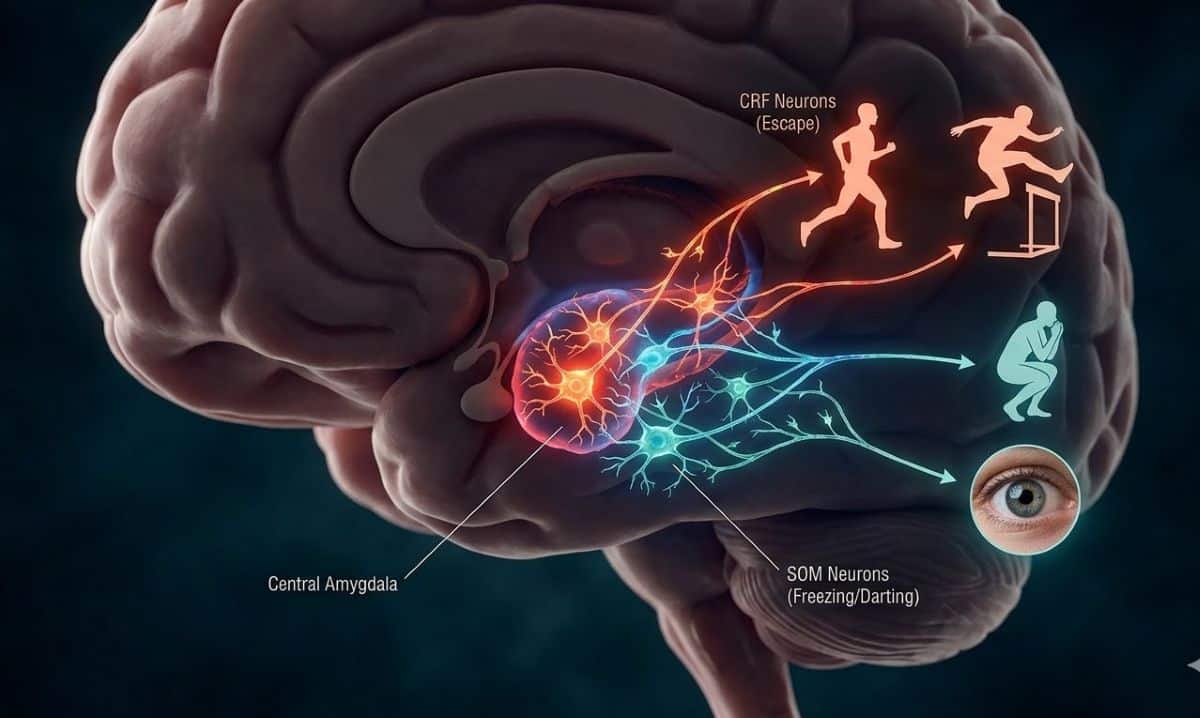
Freeze, flight or FIGHT!

Gyakuto103

Grandmaster
Supporting Member
Last login streak
112 day(s)
Max login streak
112 day(s)
This study might’ve identified the neural circuit(s) that cause either freezing in the face of a threat or actively escaping. I’d extend this finding and speculate if deep MA training causes the switch to more likely initiate a ‘fight back’ response?
 
This study might’ve identified the neural circuit(s) that cause either freezing in the face of a threat or actively escaping. I’d extend this finding and speculate if deep MA training causes the switch to more likely initiate a ‘fight back’ response?
Doubt it.
 
Maybe I missed something but I would rather read the study than an article about the study. My thoughts and questions revolve around hemispheres does the amygdala show activation only or do other areas show activation as well? I would think the other areas of the brain may condition how the amygdala processes the information. Right hemisphere may trigger one response while left hemisphere may trigger a different response. My interpretation is that the freeze response is more right hemisphere as the brain is trying to grasp the larger picture and evaluate the situation. While the left hemisphere is more equipped to focus on the flight response and immediate survival. I believe that the fight response is engaged as the situation dictates that flight is not possible. I think through repetitive exposure the left hemisphere can have an inhibitory factor on the freeze response but would not eliminate it completely but rather diminish the effects allowing a quick transition though the response into flight. As Rory Miller is quick to point out , everyone always freezes but it's a matter of duration and intensity.
 
I think training is going to make it less likely you respond with your lizard-brain FFF response, and more likely you make a decision guided by rational thought. That rational thought may be heavily skewed by emotion and/or adrenaline, but there will be more thought going into it than the untrained person.

An untrained person in a dangerous situation is:
  • Less likely to assess the danger before it's too late, and so they will be on the back foot already, scrambling to get their adrenaline going for the fight.
  • Less used to the adrenaline of a fight (whether from sparring or better from competition) in order to handle the hormone and not let it take complete control.
  • Going to spend a lot of mental energy imagining what their opponent can do or can't do, and what they can or can't do, based on assumptions and varying media they have consumed.
A trained person, on the other hand, is going to probably have a better idea of what is an acceptable encroachment into their personal space and where the danger zone is where they could be assaulted, more used to the adrenaline, and is going to have a subconscious understanding of martial arts enough that they can focus higher brain function on de-escalation, avoidance, or tactics and let their training handle the details of how martial arts works.

What I mean by this last piece is someone who is untrained is going to be trying to figure out what's realistic based on what they've seen in movies. They won't know how to separate real technique and strategy from choreography, or how to figure out what a human could actually do vs. what CGI, wires, and clever camera angles and quick cuts allow it to look like a human can do vs. what they themselves can actually do with limited training. They're going to be scrambling to come up with every possibility of what an opponent could do and try to rationalize what is realistic or not, as well as trying to figure that out plus their own limitations on the fly. That's a lot of brainpower spent on imagination that doesn't help in the moment.

Someone who is trained isn't going to worry about that. If your training is boxing, you're more likely to focus on keeping folks out of range, and if they get too close for comfort you're gonna pop em. If your training is wrestling, then as soon as they're close enough to get ahold of, your training will let you control them and take them to the ground where you can continue to control them.

Even if your training is in "less realistic" martial arts like Taekwondo, you're at least going to have a sense of what ranges you're safe vs. in danger, and you'll have experience with techniques coming at you that you're going to have better reaction times than the untrained. And regardless of the fidelity of your training, you're going to have enough confidence in it that you're not going to be scrambling as much as an untrained person. Maybe there will be some scramble (especially if you never sparred), but at least you'll be picking between techniques you've trained instead of trying to analyze a billion possibilities for things you've never done.
 
No.

I don't think your state of mind in a fight is important.
Then why worry about emotions that come with fighting? I disagree with you here. If I shoot your dog, or smack your girl, you might be inclined to make foolish decisions based on your emotions or state of mind.
 
No.

I don't think your state of mind in a fight is important.
I’m not sure I’ve ever heard a more incorrect statement about the combat arts. Have you ever had a fight…and won? I think you’re just messing with us! 😅

‘A fighter should some feel fear - if not, they’re a psychopath’ -Greg Meehan boxing mindset coach.

I could stop there, but…


In the classical Japanese martial arts there are so many tomes about the optimal mindset in combat. professional boxers spend as much time on their mindsets as they do their fighting and fitness.

 
I’m not sure I’ve ever heard a more incorrect statement about the combat arts. Have you ever had a fight…and won? I think you’re just messing with us! 😅

‘A fighter should some feel fear - if not, they’re a psychopath’ -Greg Meehan boxing mindset coach.

I could stop there, but…


In the classical Japanese martial arts there are so many tomes about the optimal mindset in combat. professional boxers spend as much time on their mindsets as they do their fighting and fitness.

And all of it doesn't matter.

The idea that you will be mentally ready to fight someone is a bit of a misconception. And instead you kind of just have to fight them.
 
And all of it doesn't matter.

The idea that you will be mentally ready to fight someone is a bit of a misconception. And instead you kind of just have to fight them.
We had a kid in my BJJ gym go to a tournament. Gray-and-white belt. He gets to the tournament, sees that his opponent is a gray-and-black belt. Starts crying before the match even started. He lost. Our Professor told him that he didn't lose in the match. He lost 30 seconds before.

I saw the same thing a while later. A 3-round bracket. Me and one opponent had 4 stripes, the other guy was a fresh blue belt. He told us after the fight that he looked at our stripes and knew he wasn't going to win. I know I made him miserable during our round.

I've seen it in one of our adults. He showed up the fight and reminded me of the opening scene from Saving Private Ryan when they're in the boats about to invade Normandy. That level of stress. He barely even remembered the fight. Didn't listen. Didn't follow his gameplan. Felt horrible afterwards.

Mentality is absolutely a thing in fighting. If you go in with the wrong mentality, you're already beaten. If you go in without confidence, you're toast.
 
And all of it doesn't matter.

The idea that you will be mentally ready to fight someone is a bit of a misconception. And instead you kind of just have to fight them.
😂🤣 You’re winding us up! Well done…you’re funny 🤗
 
There’s a Samurai maxim about three inadequacies that may lead to you losing in mortal combat and they had a lot of experience of mortal combat, at least before 1603:

1) Kikioji- Being afraid on hearing your enemy's fearsome reputation.

2) Mikuzure - Being afraid on seeing that your enemy looks very fierce and strong.

3) Futanren- Inadequate training.


3 is mitigated by effective, practical training strategies, but 1 and 2 required some sort of mental preparation because it is one’s mind that is making you stumble.
 
This study might’ve identified the neural circuit(s) that cause either freezing in the face of a threat or actively escaping. I’d extend this finding and speculate if deep MA training causes the switch to more likely initiate a ‘fight back’ response?

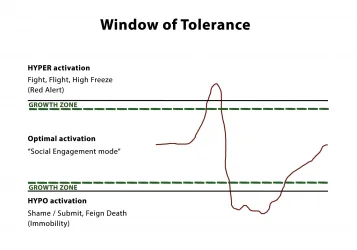
So there are one of four states someone can arrive at if they're aroused (i.e outside their window of tolerance; disregulated):

Hyperarousal (heightened and irrational)
1. Fight
2. Flight

Hypoarousal (isolated and apathetic)
1. Fawn
2. Feint

A good martial artist shouldn't be disregulated.

1774689222840.webp

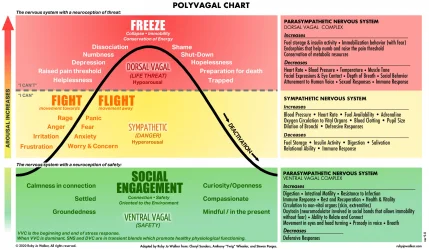
And a more detailed model:

1774689724344.webp
 
Last edited:
The idea that you will be mentally ready to fight someone is a bit of a misconception. And instead you kind of just have to fight them.

That’s not how it works. You don’t just fight. If it was that simple, people wouldn’t freeze under pressure.

What actually happens is your body decides before you do, and without training most people hesitate or shut down.

That’s why Japanese martial arts focus on mushin (無心). No mind, no hesitation. It’s not about getting yourself fired up, it’s about removing that split second delay where you second guess and get hit.

Musashi talks about this in The Book of Five Rings. Act without letting the mind linger. No pause, no doubt.

Same with suki (隙). The gap... that's mental as much as physical. You either trained out hesitation or you didn’t. That’s what shows up.

Or you "see red" LOL

Don't see red.

 
Last edited:
What actually happens is your body decides before you do, and without training most people hesitate or shut down.
Even with training people freeze and shut down because they think they will be in a good mental state.

And if they are not they are in trouble .

So don't worry about your mental state.

And just fight.
 
That’s why Japanese martial arts focus on mushin (無心). No mind, no hesitation. It’s not about getting yourself fired up, it’s about removing that split second delay where you second guess and get hit.

Musashi talks about this in The Book of Five Rings. Act without letting the mind linger. No pause, no doubt.
Being a sociopath takes quite a bit of work. So I am not sure if the juice is worth the squeeze.
 
We've focused on 3 of the 5 F's generally related to instinct.

I think Sumo is the martial art that helps most with Feed.

And I can't remember the last F, but I think it had something to do with Brazilian Jiu-Jitsu.
 

Latest Discussions

Back
Top