Chasing Bushido

  • Thread starter Thread starter Deleted member 61138
  • Start date Start date
D

Deleted member 61138

Guest
I am currently reading this excellent book by Richard Amos about his life in Karate and am finding it to be as inspiring in its own way as CW Nicol's "Moving Zen".
I have also gotten to know Richard via Facebook and have found him to be a nice person and generous of spirit.
Has anyone else read the book and if so, what were your thoughts on it?
 
I was especially interested in reading material about Mikio Sahara...I like him and his attitude to Budo karate...A lot of people are critical of him and I understand why but I like him
 
I’ll paste my Amazon review of the book here.

I enjoyed this book very much. It’s well-written in an easily digestible style and really couldn’t put it down, rationing it to 30 minutes-reading per day in order to spread out the pleasure of reading it! The first section is about the authors formative years learning Shotokan in the south of England but having supportive parents and teachers who ferried him up to that fabled Red Triangle in Liverpool. How I envy him of that parental support. The action then moves to the USA but is so ā€˜whistle-stop’ that it might as well have been omitted.

The real meat and potatoes of the the book is when the author jets off to Japan to train at the JKA honbu/Hoitsigan in Tokyo. It gets really interesting from here on in. The author gives his all to his training and avoidance of cultural/Karate faux pas to put him in a position where he might, in the fullness of time, be admitted to the mythical JKA Instructor’s course (Kenshusei) with the recommendation of the mysterious ā€˜Mr K’. It quickly becomes clear that some of the senior sensei that the author idolises are, not to put too fine a point on it, sadistic thugs (Kagawa, Aramoto, Yahara for example) with nothing to do with martial arts and instead more to do with sport Karate, prestige and probably money. They beat-up students whom they feel may have slighted them or not paid them sufficient respect, beasting them in military fashion which, by any stretch of tradition, has no bearing on ā€˜traditional’ martial arts training (see ā€˜Koryu Bujutsu -Classical Warrior Traditions of Japan.’ Edited by Diane Skoss. ā€˜Budo for the masses, Bujutsu for individuals.’ p26-29). There are many stories of humiliation, beatings, and violence rather than nurturing the next generation of karateka. They were not averse to using psychological put-downs too. Apparently when of of these ā€˜seniors’ passed the author in the street, the JKA instructor gagged on seeing him...clearly an affectation designed to humiliate. The author even refers to a tactic of imagining he was somewhere else, or reciting noble speeches from Henry V when he was being used as a punch/kick bag - a well documented method employed by many victims of physical/sexual abuse. I was dumbfounded to read the author would wonder if this was the day he’d end up in hospital or even die, as he cycled to training. The teaching methods of the JKA was more to do with nationalist militarism and sadistic thuggery than with martial training (ibid.).The JKA of that time (1990s) was clearly a sadist’s lair and any admiration I had for these senior teachers evaporated the further I read.

Reference was made to the political split within the JKA but the diplomatic author gave few details. However you can read an account of them here and be further disgusted by the the pettiness of these supposedly great ā€˜men’ The Split Of Shotokan

I did enjoy the account of the reverence with which the title of ā€˜sensei’ is held within the JKA’s Kenshusei. It is an honorific not dispensed lightly and even then, only by others. It contrasted (I inferred) the silliness and inauthenticity of self-proclaimed titles such as sensei, shihan, hanshi and ā€˜master’, particularly in the USA and increasingly so here in the U.K. Just read a copy of Blackbelt magazine and see practitioners with titles such as ā€˜lady sensei’ embroidered on there multi-stripped black belts! At least this particularly toe-curling example has correctly placed the title after the name!

And who is the mysterious Mr K. to which the author makes many references. He is able to arrange anything, sponsor any project or person with unlimited wealth and influence. He sounds decidedly dodgy to me!

In conclusion, an excellent book, well-worth reading and I hope the author writes a follow-up about his post-JKA years.


I got my other half (a Shotokan first Dan) to read it and she too was hurried by the behaviour of these senior teachers.
 
I’ll paste my Amazon review of the book here.

I enjoyed this book very much. It’s well-written in an easily digestible style and really couldn’t put it down, rationing it to 30 minutes-reading per day in order to spread out the pleasure of reading it! The first section is about the authors formative years learning Shotokan in the south of England but having supportive parents and teachers who ferried him up to that fabled Red Triangle in Liverpool. How I envy him of that parental support. The action then moves to the USA but is so ā€˜whistle-stop’ that it might as well have been omitted.

The real meat and potatoes of the the book is when the author jets off to Japan to train at the JKA honbu/Hoitsigan in Tokyo. It gets really interesting from here on in. The author gives his all to his training and avoidance of cultural/Karate faux pas to put him in a position where he might, in the fullness of time, be admitted to the mythical JKA Instructor’s course (Kenshusei) with the recommendation of the mysterious ā€˜Mr K’. It quickly becomes clear that some of the senior sensei that the author idolises are, not to put too fine a point on it, sadistic thugs (Kagawa, Aramoto, Yahara for example) with nothing to do with martial arts and instead more to do with sport Karate, prestige and probably money. They beat-up students whom they feel may have slighted them or not paid them sufficient respect, beasting them in military fashion which, by any stretch of tradition, has no bearing on ā€˜traditional’ martial arts training (see ā€˜Koryu Bujutsu -Classical Warrior Traditions of Japan.’ Edited by Diane Skoss. ā€˜Budo for the masses, Bujutsu for individuals.’ p26-29). There are many stories of humiliation, beatings, and violence rather than nurturing the next generation of karateka. They were not averse to using psychological put-downs too. Apparently when of of these ā€˜seniors’ passed the author in the street, the JKA instructor gagged on seeing him...clearly an affectation designed to humiliate. The author even refers to a tactic of imagining he was somewhere else, or reciting noble speeches from Henry V when he was being used as a punch/kick bag - a well documented method employed by many victims of physical/sexual abuse. I was dumbfounded to read the author would wonder if this was the day he’d end up in hospital or even die, as he cycled to training. The teaching methods of the JKA was more to do with nationalist militarism and sadistic thuggery than with martial training (ibid.).The JKA of that time (1990s) was clearly a sadist’s lair and any admiration I had for these senior teachers evaporated the further I read.

Reference was made to the political split within the JKA but the diplomatic author gave few details. However you can read an account of them here and be further disgusted by the the pettiness of these supposedly great ā€˜men’ The Split Of Shotokan

I did enjoy the account of the reverence with which the title of ā€˜sensei’ is held within the JKA’s Kenshusei. It is an honorific not dispensed lightly and even then, only by others. It contrasted (I inferred) the silliness and inauthenticity of self-proclaimed titles such as sensei, shihan, hanshi and ā€˜master’, particularly in the USA and increasingly so here in the U.K. Just read a copy of Blackbelt magazine and see practitioners with titles such as ā€˜lady sensei’ embroidered on there multi-stripped black belts! At least this particularly toe-curling example has correctly placed the title after the name!

And who is the mysterious Mr K. to which the author makes many references. He is able to arrange anything, sponsor any project or person with unlimited wealth and influence. He sounds decidedly dodgy to me!

In conclusion, an excellent book, well-worth reading and I hope the author writes a follow-up about his post-JKA years.


I got my other half (a Shotokan first Dan) to read it and she too was hurried by the behaviour of these senior teachers.
Excellent review and nailed every point...As for Yahara and the others, I wouldnt like to have anything to do with them personally and I have experienced that kind of individual in some of the dojos I attended in the early 80's...What I do like about Yahara is his attitude to Budo karate in its purest forms.I watched the obsession with sport karate here in Australia pull the essence out of a great martial art and reduced it to a game of tag.I much prefer the approach and persona of Naka Sensei...He is my "go-to" these days
 
As I understand it the JKA has soften up a bit on its ā€mentalityā€ā€¦..because of the MMA vogue that came to attract more and more of the otherwise potential karate students .
The JKA has opened up for a broader student criteria to be enrolled
 
As I understand it the JKA has soften up a bit on its ā€mentalityā€ā€¦..because of the MMA vogue that came to attract more and more of the otherwise potential karate students .
The JKA has opened up for a broader student criteria to be enrolled
The martial aspect needs to be balanced with a duty of care...Naka Sensei seems to have a good handle on all that
 
Excellent review and nailed every point...As for Yahara and the others, I wouldnt like to have anything to do with them personally and I have experienced that kind of individual in some of the dojos I attended in the early 80's...What I do like about Yahara is his attitude to Budo karate in its purest forms.I watched the obsession with sport karate here in Australia pull the essence out of a great martial art and reduced it to a game of tag.I much prefer the approach and persona of Naka Sensei...He is my "go-to" these days
I do think many TMA have an erroneous perception of the nature of Budo and its teaching. If you can, do get hold of the ā€˜Koryu Bujutsu…’ reference that I cited, please do as it explains the true nature of ā€˜Budo attitude’. Koryu means ā€˜old school/style’ and so they do things the ā€˜old way’. The modern tough, rude, militaristic way of teaching and practise and teaching with students ā€˜marching’ up and down in lines was derived from the imperial, militaristic training of the armed forces in the prelude to the world wars. It is a modern, Western method and attitude and has very little to do with actual Budo.

Yahara seems is a sadist in my opinion. Amos suggested he was close to organised crime (look at his Yakuza permed hairstylešŸ˜†) and nobody can start a Karate dojo in Ginza district of Tokyo any more than anyone could in South Kensington or Fifth Avenue/Rodeo Drive, so Yahara was clearly ā€˜helped’ by people with lots of money. He’s what we’d call in England, a ā€˜dodgy bloke’ and a follower of Budo would not associate with criminality.

As for Mr K; an associate of mine who’s an 8th Dan in Shotokan Karate (šŸ™„) knowingly revealed his identity to me saying he was a businessman’, but his name meant nothing to me šŸ¤·šŸ¾ā€ā™‚ļø
 
Last edited:
I do think many TMA have an erroneous perception of the nature of Budo and its teaching. If you can, do get hold of the ā€˜Koryu Bujutsu…’ reference that I cited, please do as it explains the true nature of ā€˜Budo attitude’. Koryu means ā€˜old school/style’ and so they do things the ā€˜old way’. The modern tough, rude, militaristic way of teaching and practise and teaching with students ā€˜marching’ up and down in lines was derived from the imperial, militaristic training of the armed forces in the prelude to the world wars. It is a modern, Western method and attitude and has very little to do with actual Budo.

Yahara seems is a sadist in my opinion. Amos suggested he was close to organised crime (look at his Yakuza permed hairstylešŸ˜†) and nobody can start a Karate dojo in Ginza district of Tokyo any more than anyone could in South Kensington or Fifth Avenue/Rodeo Drive, so Yahara was clearly ā€˜helped’ by people with lots of money. He’s what we’d call in England, a ā€˜dodgy bloke’ and a follower of Budo would not associate with criminality.

As for Mr K; an associate of mine who’s an 8th Dan in Shotokan Karate (šŸ™„) knowingly revealed his identity to me saying he was a businessman’, but his name meant nothing to me šŸ¤·šŸ¾ā€ā™‚ļø
I always thought the marching up and down the hall was pointless and an inefficient way to teach students...lzy in fact.
 
teaching with students ā€˜marching’ up and down in lines was derived from the imperial, militaristic training of the armed forces in the prelude to the world wars.
It was also an efficient way to manage dozens of MA students in a class as was done in the public schools
I always thought the marching up and down the hall was pointless and an inefficient way to teach students
It could be pointless if the teacher and students lack enthusiasm. "Marching" is bad. Stepping with conviction to close distance to the visualized opponent, using it as a platform to launch an attack, and executing it with intent is good. It's what you make of it.
 
It was also an efficient way to manage dozens of MA students in a class as was done in the public schools

It could be pointless if the teacher and students lack enthusiasm. "Marching" is bad. Stepping with conviction to close distance to the visualized opponent, using it as a platform to launch an attack, and executing it with intent is good. It's what you make of it.
Most schools I have witnessed since 1982 devote the majority of the class to this practice, then theres some sport karate and a quick run through of kata at the end...Its lazy and superficial
 
I always thought the marching up and down the hall was pointless and an inefficient way to teach students...lzy in fact.
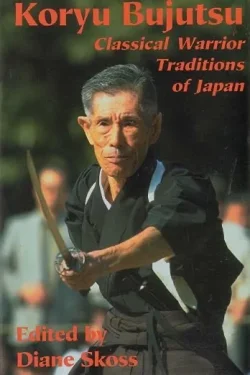
I think it was felt to be the opposite; very efficient like a factory production line where everyone could be observed and correction given out generically which is probably true for large classes. In the koryu (old schools) students worked in a convenient space in the dojo, often with a partner and the teacher would walk around to each little island of students and discuss, take questions, give advice etc much more individualistic (Koryu Bujutsu -Classical Warrior Traditions of Japan.’ Edited by Diane Skoss. ā€˜Budo for the masses, Bujutsu for individuals.’ p26-29). These koryu classes would have fewer students compared to the pre-war, militaristic classes.

Modern Iai classes are somewhere in the middle; the use of swords means students have to stand in a three metre square space to avoid injuring their classmates which usually means lining up. Then the teacher regularly calls ā€œSHÅŖGŌ!ā€ (集合 meeting) and specifics are clarified, practised and corrected. I think other martial arts classes use a similar system.
 
I do think many TMA have an erroneous perception of the nature of Budo and its teaching. If you can, do get hold of the ā€˜Koryu Bujutsu…’ reference that I cited, please do as it explains the true nature of ā€˜Budo attitude’. Koryu means ā€˜old school/style’ and so they do things the ā€˜old way’. The modern tough, rude, militaristic way of teaching and practise and teaching with students ā€˜marching’ up and down in lines was derived from the imperial, militaristic training of the armed forces in the prelude to the world wars. It is a modern, Western method and attitude and has very little to do with actual Budo.

Yahara seems is a sadist in my opinion. Amos suggested he was close to organised crime (look at his Yakuza permed hairstylešŸ˜†) and nobody can start a Karate dojo in Ginza district of Tokyo any more than anyone could in South Kensington or Fifth Avenue/Rodeo Drive, so Yahara was clearly ā€˜helped’ by people with lots of money. He’s what we’d call in England, a ā€˜dodgy bloke’ and a follower of Budo would not associate with criminality.

As for Mr K; an associate of mine who’s an 8th Dan in Shotokan Karate (šŸ™„) knowingly revealed his identity to me saying he was a businessman’, but his name meant nothing to me šŸ¤·šŸ¾ā€ā™‚ļø
 

Attachments

  • Image.webp
    Image.webp
    24 KB · Views: 16
Back
Top