Identifying scroll weights

opr1945157 44

Master Black Belt
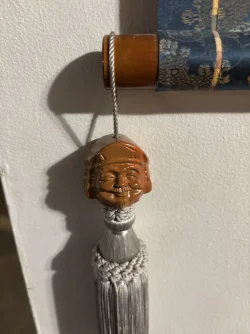
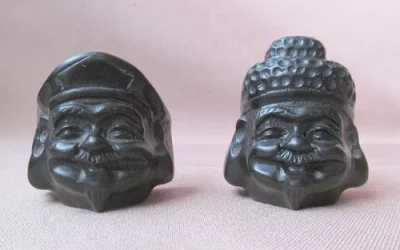
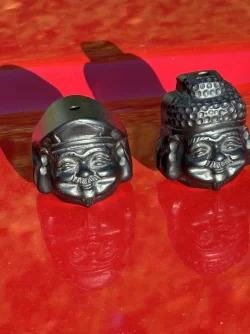
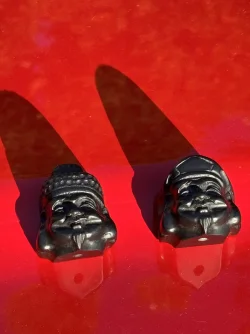
About 3 years ago I signed up to take Karate lessons. Over the course of time I became interested in Japanese hanging scrolls and weights. I became fascinated by scroll weights even though they are pretty meaningless on scrolls hanging in my hallway. Shortly after my first purchased weights I came across two sets of the one pictured. They were around $40, I think. I purchased one of the two sets. I have kept an eye out for more of them but never seen another set. anyone have more information on them. Thanks.
 

Attachments

  • face.webp
    face.webp
    148.1 KB · Views: 47
weird I just found this


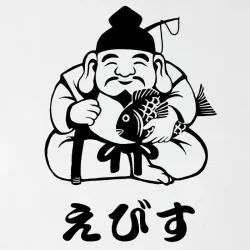
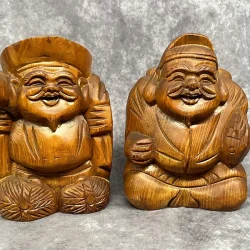
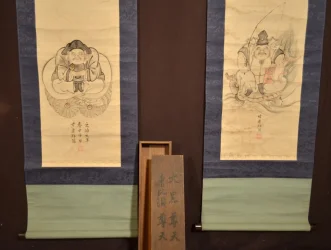
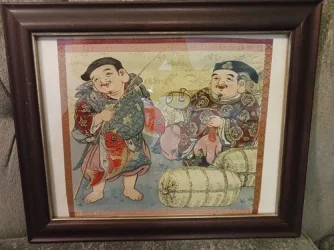
So, Ebisu and Daikokuten, included in the Seven Lucky Gods, have been worshipped together with other five lucky gods. These two gods are guardian of Japan’s most important primary industries, fishery and farming, hence they gradually became Japan’s most familiar gods. In accordance with the industrial modernization of the country, they were regarded as the gods of business prosperity. These two gods are generally worshipped together as a pair of gods of business prosperity mainly by merchants.
 

Attachments

  • ebisu-Categories.webp
    ebisu-Categories.webp
    29.6 KB · Views: 39
  • il_600x600.6168569184_1cat.webp
    il_600x600.6168569184_1cat.webp
    134.3 KB · Views: 38
  • il_1588xN.5094501122_9ft1.webp
    il_1588xN.5094501122_9ft1.webp
    138.2 KB · Views: 36
weird I just found this


So, Ebisu and Daikokuten, included in the Seven Lucky Gods, have been worshipped together with other five lucky gods. These two gods are guardian of Japan’s most important primary industries, fishery and farming, hence they gradually became Japan’s most familiar gods. In accordance with the industrial modernization of the country, they were regarded as the gods of business prosperity. These two gods are generally worshipped together as a pair of gods of business prosperity mainly by merchants.
Meiji era Hotei
 

Attachments

  • PXL_20260723_125127807.webp
    PXL_20260723_125127807.webp
    694.1 KB · Views: 41
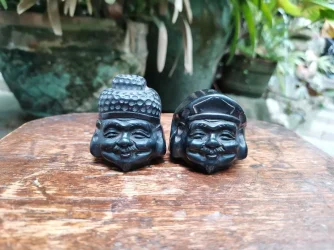
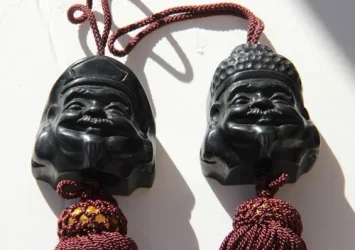
The selected region shows vintage Japanese black stone (often Nachiguro-ishi) carvings depicting Ebisu and Daikokuten, two of the traditional Seven Gods of Fortune (Shichifukujin). These pieces are commonly crafted as fuchin (hanging scroll weights)
 
I think it’s just the colour of the stone rather than a statement of any kind. In paintings, they are not depicted as having a dark skin tone.
 
Thanks. I have a scroll hanging outside my office. Guests are intrigued by it. I have weights on it even though the house is pretty air tight. I think they are cool. But the dark color of the weights makes it difficult to see. So I thought about painting the weights a light color. White or a light gray. However, I don't want to do anything inappropriate.
 
Thanks. I have a scroll hanging outside my office. Guests are intrigued by it. I have weights on it even though the house is pretty air tight. I think they are cool. But the dark color of the weights makes it difficult to see. So I thought about painting the weights a light color. White or a light gray. However, I don't want to do anything inappropriate.
No, I think painting would spoil the aesthetic.
 
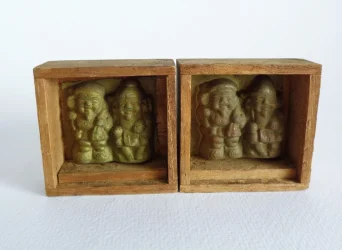
Black stone. I also found picture of green. But, it may just be the photo is distorted or monitor error.
 

Attachments

  • il_1080xN.4022728720_cp6z.webp
    il_1080xN.4022728720_cp6z.webp
    132.6 KB · Views: 34
  • s-l500.webp
    s-l500.webp
    28.1 KB · Views: 37
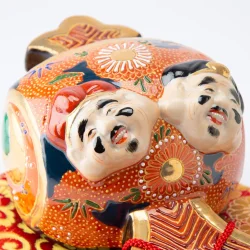
I would think that if color was an important element of their identity then items such as this would be the correct color.
 

Attachments

  • yommneda-tokodo-kutani-mallet-of-luck-with-ebisu-and-daikokuten-musubi-kiln-quality-japanese-...webp
    yommneda-tokodo-kutani-mallet-of-luck-with-ebisu-and-daikokuten-musubi-kiln-quality-japanese-...webp
    138.7 KB · Views: 31
or shown in one of these. Especially in one where coloring is already applied.
 

Attachments

  • s-l1600.webp
    s-l1600.webp
    146.4 KB · Views: 40
  • s-l500.webp
    s-l500.webp
    53.6 KB · Views: 37
I would think that if color was an important element of their identity then items such as this would be the correct color.
Paint comes off easily. Would you risk having such a coloured item near your prized calligraphy?
 

Core Meaning: What Each Figure Represents​

Ebisu is best understood as a distinctly Japanese deity connected to the sea, fishing, and fair commerce. In popular practice he supports steady livelihood rather than sudden windfalls: the kind of prosperity that comes from skill, patience, good relationships, and reliable work. In shops and workplaces, Ebisu can function as a visual reminder of sincerity and long-term trust—values that matter in traditional merchant culture as much as in modern business.

Daikokuten (often shortened to ā€œDaikokuā€) has a different backbone. He is widely venerated within Japanese Buddhism as one of the Seven Lucky Gods, but his roots connect to Buddhist protector traditions, including forms associated with Mahākāla. In Japan, Daikokuten’s character softened into a benevolent guardian of the household and provider of food and abundance. When people place Daikokuten at home, the intention is often protection of the family’s sustenance: the pantry stays full, the home stays stable, and resources are managed wisely.

The difference matters for buyers because it shapes what ā€œprosperityā€ means. Ebisu leans toward livelihood gained through work and social trust; Daikokuten leans toward the household foundation—food, storage, and the protective ā€œcontainerā€ that allows prosperity to accumulate without anxiety. When displayed together, they are not duplicates; they form a balanced pair: earning and sustaining.

One more nuance for international readers: while both figures can appear in Buddhist-adjacent contexts, neither is a ā€œBuddhaā€ in the strict sense of an awakened teacher like Shaka (Śākyamuni). If your aim is explicitly Buddhist practice (devotion, vows, meditation support), you may choose a Buddha or bodhisattva statue for the main altar and treat Ebisu/Daikokuten as protective or auspicious figures displayed respectfully in a secondary location.

​

 
Made of Nachi black stones that can be found on Jet-black Mountain or Plateau from the mountains of Mie prefecture.

(https://www.etsy.com/listing/125731...uten?msockid=3f327f1fc5ec65d30a296a25c46864ce)


Perhaps the stone comes in different shades? for example turquise comes in many colors.

Turquoise stone colors range from pure sky blue to deep apple green, shaped by the chemical makeup and mineral deposits within the earth. [1, 2]

Main Color Variations

    • Sky Blue / Robin's Egg Blue: This bright, vivid blue comes from a high concentration of copper. Stones like those from the famous Sleeping Beauty mine feature clean, even blue tones. [1, 2, 3, 4]
    • Greenish-Blue / Teal: A balanced mix of blue and green occurs when copper and iron mix in the stone's environment. [1, 2]
    • Apple Green / Lime Green: Higher amounts of iron or zinc create bright, vibrant green shades, common in stones from the Carico Lake mine. [1, 2, 3]
    • White / Cream: Rare white or pale grey tones (such as White Buffalo) contain magnesium, calcite, or quartz rather than copper. [1, 2]
    I have been told that diamonds, rubies, emeralds and saphires are the same except for the color?
 
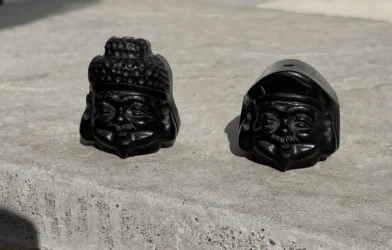
I mis-placed the weights at some point. A son found them. So here are two pictures taken around 6pm eastern time zone, USA. Slightly different angles. Notice the long shadow. Still black.
 

Attachments

  • cccc.webp
    cccc.webp
    199.5 KB · Views: 45
  • bbbbb.webp
    bbbbb.webp
    164.9 KB · Views: 37
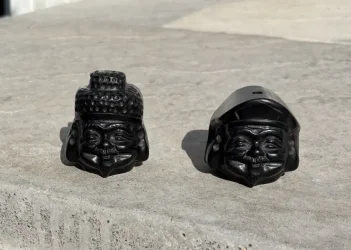
Direct sun at noon, local time. slight difference in angle, compare shadows in the two pictures. Still black.

I really like them.
 

Attachments

  • rrrrrrr.webp
    rrrrrrr.webp
    68.4 KB · Views: 35
  • yyyy.webp
    yyyy.webp
    82.6 KB · Views: 36
Back
Top