Appledog34 7
Purple Belt
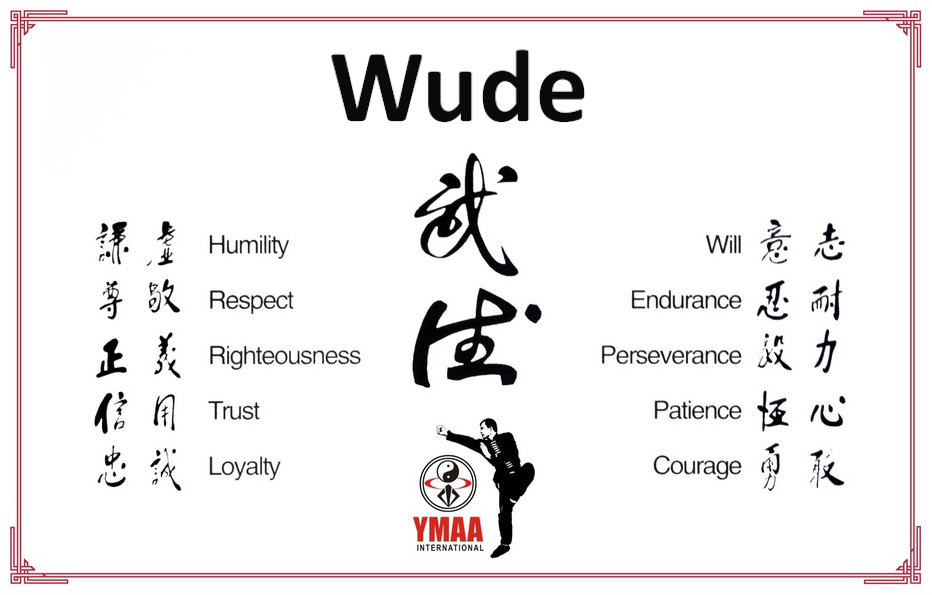
Today, there is no Wu De, not at all like it was before. It is not that it has been lost, but it has been ignored for so long by the modern world that it is on the verge of being forgotten. Therefore, when discussing where Wu De stands today, we must look to the previous generation for advice.
The previous generation here refers to the generation of martial artists during the years 1900 to approximately 1980. This refers to the cultural period where the teaching of the Four Books was in decline due to rising modern influence, and systematized versions of Confucian morality were spread among the population. Those generations are the previous generation. We are the current generation. If we want to explain this to the next generation we need to at least understand what they were talking about. Let’s begin by looking at some popular systematizations of Wu De found in Chinese martial society.
Chan Heung 1806-1875. Lam Sai Wing 1860-1943.
The Wu Bei Zhi (武備志, “Treatise on Armament”), compiled by Mao Yuanyi in 1621 is one of the most comprehensive military encyclopedias in Chinese history. Spanning 240 volumes, it documents not only weapons, tactics, formations, and fortifications, but also the ethical principles that should govern soldiers and officers. Soldiers were instructed to obey their superiors, act with honesty and courage, avoid unnecessary aggression, and serve the community responsibly. Mao Yuanyi’s work advocated that martial skill alone was insufficient and must be blanaced by a study of morality. Although this is textbook Confucianism, it is framed for practical use by military personel and due to it entering service in 1621 surely influenced the generation that witnessed the fall of the Ming dynasty.
Thus the ethical framework of the Wu Bei Zhi had a lasting influence on civilian martial arts. In effect, the text provided a template for integrating moral cultivation with martial training, bridging the gap between battlefield ethics and the social conduct expected of martial artists. This proved very popular when spreading martial arts among the civilian populace, because it allowed people to associate the Chinese cultural perspective with the moral high ground in general, not just specifically with the role of tempering great military power.
In conclusion, it appears the place of these "ten rules" and similar systematizations are, in fact, merely gate rules, which one must agree to before joining a school, and that a much greater, ongoing study of martial ethics must be undertaken -- together with martial training -- to fulfil the concept of "civil and martial together". One must study, at least a little bit, the Confucian ethics if one wishes to become a truly wise and adept practitioner of Chinese Kung Fu.
The previous generation here refers to the generation of martial artists during the years 1900 to approximately 1980. This refers to the cultural period where the teaching of the Four Books was in decline due to rising modern influence, and systematized versions of Confucian morality were spread among the population. Those generations are the previous generation. We are the current generation. If we want to explain this to the next generation we need to at least understand what they were talking about. Let’s begin by looking at some popular systematizations of Wu De found in Chinese martial society.
Ip Man’s Code of Conduct
The first thing we see is a connection to the past. One of the best examples of this is GM Ip Man’s Wing Chun code of conduct; Ip Man 1893-1972.- Remain disciplined; Conduct yourself ethically as a martial artist.
- Practice courtesy and righteousness; Serve the society and respect your elders.
- Love your fellow students; Be united and avoid conflicts.
- Limit your desires and pursuit of bodily pleasures; Preserve the proper spirit.
- Train diligently; Maintain your skills.
- Learn to develop spiritual tranquility; Abstain from arguments and fights.
- Participate in society; Be moderate and gentle in your manners.
- Help the weak and the very young; Use martial skills for the good of humanity.
- Pass on the tradition; Preserve this Chinese art and rules of conduct.
Chan Heung 1806-1875. Lam Sai Wing 1860-1943.
The Ten Rules of Martial Arts
Analyzing the wu de of past masters, we see many traditional Chinese martial arts schools and families had rules of entry (門規 mén guī, “gate rules”) or codes of conduct (武德規範 wǔ dé guīfàn) that students had to agree to before being accepted. These rules were often oral but sometimes written, and they combined Confucian ethics with practical expectations for discipleship, secrecy, and loyalty to the lineage. Many of them are extremely similar. For example, Chan Heung’s 10 rules of Choy Li Fut and Ip Man’s Code of Conduct are almost the same, and match the rules of many northern schools as well.Chan Heung’s 10 Rules of Choy Li Fut
GM Chan Heung (陳享, 1806 – 1875) was the founder of Choy Li Fut in 1836. He died 18 years before Ip Man was born. Chan Heung transmitted these rules when founding Choy Li Fut. They are intended to embed moral and ethical guidance within the practice. Multiple reputable sources including official school websites outline them consistently.- Practice daily and don’t abandon the path without reason.
- Train not only to improve physical skill and the body, but also to cultivate a good and patient heart.
- Never use your skills to commit injustice or harm others.
- Show utmost respect to your teachers and seniors.
- Treat fellow classmates with trust, friendship, and honesty; do not bully them.
- Do not fight fellow practitioners; use the tiger claw as a recognition symbol.
- Avoid excessive meat and alcohol—these can harm body and spirit.
- Do not show off your skills recklessly; only teach those of good character.
- Never misuse your abilities or put yourself above others; practice for strength and humility.
- These rules reflect the founder’s wishes—breaking them may lead to expulsion at the master’s discretion.
The Wu Bei Zhi
A quick survey of the various systematized codes of conduct in the 1800s and 1900s show that such gate rules are not unique to any particular school, and indeed are similar in the north and south. It appears as if they are all drawing from a common source. Some of this may be from Chinese culture –everything from Buddhism’s Eightfold Path to the Village Contract. Yet one writer in particular seems to have been the source for the ten rules discussed above: Mao Yuanyi (a northerner) – and his important, famous book – the “Wu Bei Zhi”. Let us travel back to 1621, right before the fall of the Ming Dynasty.The Wu Bei Zhi (武備志, “Treatise on Armament”), compiled by Mao Yuanyi in 1621 is one of the most comprehensive military encyclopedias in Chinese history. Spanning 240 volumes, it documents not only weapons, tactics, formations, and fortifications, but also the ethical principles that should govern soldiers and officers. Soldiers were instructed to obey their superiors, act with honesty and courage, avoid unnecessary aggression, and serve the community responsibly. Mao Yuanyi’s work advocated that martial skill alone was insufficient and must be blanaced by a study of morality. Although this is textbook Confucianism, it is framed for practical use by military personel and due to it entering service in 1621 surely influenced the generation that witnessed the fall of the Ming dynasty.
Thus the ethical framework of the Wu Bei Zhi had a lasting influence on civilian martial arts. In effect, the text provided a template for integrating moral cultivation with martial training, bridging the gap between battlefield ethics and the social conduct expected of martial artists. This proved very popular when spreading martial arts among the civilian populace, because it allowed people to associate the Chinese cultural perspective with the moral high ground in general, not just specifically with the role of tempering great military power.
Northern vs. Southern
The writing down of oral history that happened in the South was not as prevalent in the north. However when one examines the writings of the northern schools, very similar concepts to Chan Heung’s 10 rules are discussed, although not always collected into a singular list. Here are some examples we can draw from the various writings of the Northern schools:- Respect your teacher and elders. Encourage teamwork and help fellow students.
- Train correctly, diligently and daily; mastery requires patience.
- Use skill only for righteous purposes; do not bully or harm innocents.
- Avoid fighting outside the school; use skill responsibly.
- Maintain secrecy of techniques and forms.
- Cultivate courage, discipline, and moral character alongside martial skill.
Civil and Martial Together
Through its detailed attention to both technique and character, the Wu Bei Zhi helped reinforce the precedent that martial skill alone is insufficient; ethical cultivation is equally important. By codifying behavior alongside technique, the Wu Bei Zhi laid the groundwork for the structured moral codes that continue to define Chinese martial arts schools today, ensuring that the practice of martial arts serves not only self-defense but also the cultivation of virtue and the betterment of society. From this we understand, all of Chinese martial arts comes from a unified source – is “one family” – one which takes morality as it’s common guiding principle, not just combat effectiveness. Indeed, morality is the defining factor that makes Kung Fu what it is, without which it would just be any other martial art.Wu Bei Zhi and the Ten Rules
| Confucian Virtue | Wu Bei Zhi | Ten Rules |
|---|---|---|
| Loyalty & Filial Piety | Soldiers must be loyal to superiors and the dynasty; obey orders; honor elders. | CH: espect elders and teachers; IM: love country, respect parents; LSW: loyalty, filial piety. |
| Respect for Teachers | Respect commanders; follow chain of command; honor instructors. | Show respect and friendship to teachers and students. |
| Integrity, Trustworthiness | Do not betray comrades; honesty and reliability in orders and conduct. | CH: treat classmates with honesty; IM: moral conduct and trust; LSW: be trustworthy. |
| Humility & Modesty | Avoid arrogance; act within one’s station; do not overreach. | CH: do not show off; IM: moderate, gentle; LSW: avoid pride. |
| Control of Temper, Non-Aggression | Do not act rashly; avoid unnecessary fighting; obey rules of engagement. | CH: avoid fighting; IM: abstain from arguments; LSW: no reckless fighting. |
| Diligence, Discipline | Train soldiers regularly; maintain readiness; rigorous drills. | CH: practice daily; IM: train diligently; LSW: train hard. |
| Kindness, Righteousness | Protect civilians; serve righteous causes; ethical warfare. | CH: never commit injustice; IM: help vulnerable; LSW: help the weak. |
| Loyalty, Learning | Follow orders; maintain unit cohesion; do not betray secrets. | CH: only teach those of good character; IM: pass on art responsibly; LSW: pass art to worthy students. |
| Moderation | Avoid excess indulgence that weakens discipline; manage provisions wisely. | CH: avoid excessive meat/alcohol; Ip Man: limit desires; Hung Gar: practice restraint. |
| Community, Social Responsibility | Protect local population; maintain social order; act honorably in society. | IM: contribute to society; LSW: obey rules and serve community; CH: avoid harming innocents. |
In conclusion, it appears the place of these "ten rules" and similar systematizations are, in fact, merely gate rules, which one must agree to before joining a school, and that a much greater, ongoing study of martial ethics must be undertaken -- together with martial training -- to fulfil the concept of "civil and martial together". One must study, at least a little bit, the Confucian ethics if one wishes to become a truly wise and adept practitioner of Chinese Kung Fu.
Last edited: